OMM Redaksiyası

Saudi Arabia has said it will withstand Houthi missile and drone attacks. On Monday, the Saudi-led coalition fighting the Houthis in Yemen said it had intercepted missiles targeting Riyadh and the country’s southern regions.
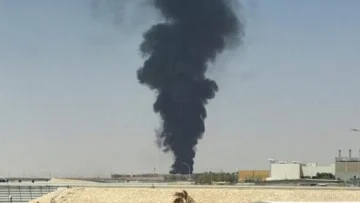
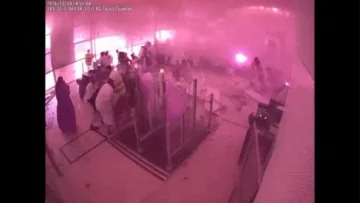
King Khalid International Airport in Riyadh has reportedly come under several attacks in a week. At least 12 people were killed and more than 300 injured in a strike on Saturday. The death toll rose to 13 on Sunday after an Indian national died of injuries. The victims included four Saudi nationals and eight foreign nationals, among them a U.S. citizen.
Saudi officials said six more people were killed and dozens injured in attacks on the airport from Tuesday through Thursday. A separate attack on Sunday killed a Pakistani national and injured 11 people. Reports put the overall death toll from attacks on the airport at about 20.
Air raid alerts reported in Riyadh and other regions
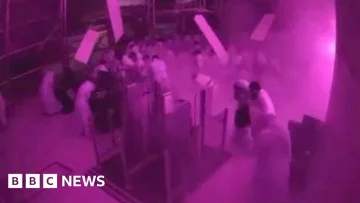
Regional officials said a missile struck the complex housing Terminals 3 and 4, used for domestic flights, on Saturday, prompting an evacuation. One passenger said they saw an object moving quickly across the sky, followed by part of the ceiling collapsing near a boarding gate.
At about 8:30 p.m. on Sunday, a passenger aboard an aircraft taxiing on the runway said a projectile fell on the airfield near several parked planes. After the coalition announced it had intercepted a missile over Riyadh, the Houthis claimed on Monday to have carried out another attack.
On Monday evening, Riyadh residents received phone alerts urging them to seek shelter because of a possible air threat. Soon afterward, loud explosions were reported in several parts of the city. Coalition spokesman Turki al-Maliki said the Houthis had launched one ballistic missile at Riyadh and two at Khamis Mushait in southwestern Saudi Arabia.
The attacks have raised concerns about the kingdom’s ability to protect its vast territory from long-range threats. Reports said the missiles and drones had travelled more than 1,000 kilometers to reach Riyadh. Saudi authorities have opened an investigation into how air defenses were breached, including during an attack that killed 13 people at King Khalid International Airport.
Flights canceled as events take different approaches
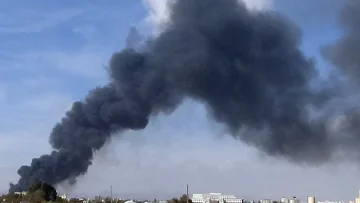
Other sites targeted include King Fahd International Airport in Dammam, on the Persian Gulf coast. The U.S. Embassy said the airport was attacked on Oct. 11. The Houthis also claimed to have attacked Riyadh and an Aramco facility in Yanbu, on the Red Sea coast.
After drones launched from Iraq struck the East-West oil pipeline in the Riyadh and Medina regions this fall, Saudi Arabia’s Energy Ministry suspended operations on the pipeline as a precaution. The Houthis have also reportedly continued missile attacks on southern Saudi Arabia.
Concerns have grown over the kingdom’s stockpile of missile interceptors. Reports say supplies are dwindling and Riyadh has appealed to Western and regional allies for additional military support. U.S. President Donald Trump said Washington could join Saudi strikes against the Houthis, while also saying the kingdom was capable of defending itself.
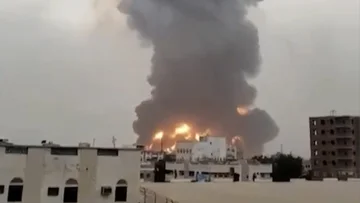
Houthi-linked media outlets reported on Tuesday that 48 people had been affected by Saudi airstrikes and fire from Saudi-backed forces in Yemen’s Taiz and Al-Jawf governorates. The reports did not specify how many were killed or injured. The same sources claimed that Sana’a and several other areas had also been bombed. These reports have not been independently verified.
The International Organization for Migration estimates that more than 216,000 people have been displaced in Yemen since fighting intensified in August, including at least 172,000 from Taiz governorate. The organization said at least 54 civilians had been killed, half of them children. Another 171 civilians, including 107 women and children, were reported injured.
The attacks have led to hundreds of cancellations and delays at Saudi Arabia’s main airports. According to Flightradar, 62 flights were canceled and 52 delayed at Dammam airport from Monday through late Tuesday. At King Abdulaziz International Airport in Jeddah, 133 flights were canceled and 85 delayed.
An aviation notice published on Oct. 12 said King Khalid International Airport in Riyadh was expected to remain closed until Oct. 17. Several international airlines, including Air India, IndiGo, Lufthansa, Air France-KLM and Etihad Airways, have suspended flights to Saudi Arabia and neighboring countries. Akasa Air canceled flights to Riyadh and Jeddah, while Philippine Airlines extended its suspension of flights to Riyadh until Nov. 29.
The European Union Aviation Safety Agency extended its warning to cover additional Saudi airspace because of risks from missiles, drones, air defense operations and falling debris. The U.S. Embassy in Riyadh said government employees must obtain special authorization before using any airport in the country.
European Commission President Ursula von der Leyen called the attack a “dangerous escalation.” The Misk Foundation, established by Saudi Crown Prince Mohammed bin Salman, said this year’s Misk Global Forum would not be held because of organizational and logistical challenges, but did not cite the airport attacks as the reason. Organizers of the World Petroleum Congress in Riyadh and the Future Investment Initiative, scheduled for Oct. 26-29, said the events would go ahead as planned.
Saudi officials have warned residents and visitors that filming and sharing images of missile interceptions, drones and strike sites could carry legal consequences. The U.S. Embassy confirmed on Monday that American citizens had been detained for filming recent events. It did not say how many people had been detained or whether they had been released.