 OMM Redaksiyası

Azerbaijan and Russia are stepping up efforts to expand the capabilities of the International North-South Transport Corridor (INSTC). The issue was discussed at a meeting with a Russian government delegation visiting Baku.
Shahin Mustafayev, Azerbaijan’s deputy prime minister, and Alexey Overchuk, Russia’s deputy prime minister, exchanged views on increasing the corridor’s capacity and improving transport and logistics infrastructure.
The sides also stressed the importance of ensuring the efficient operation of checkpoints along their shared border and modernizing them in the future.
According to the source, 3.9 billion kilograms of cargo were transported along the section of the corridor running through Azerbaijan last year. The forecast for 2030 puts this figure at 32,000 million tonnes.
Trade between the two countries rose 13.5% to $3.35 billion in the first eight months of 2025. Cargo traffic through the corridor increased 8.3% in the first nine months of that year.
Russia mainly exports crude oil, fuel, gold, wheat, steel and other industrial raw materials to Azerbaijan. Azerbaijan mainly ships agricultural products, including tomatoes, persimmons and hazelnuts, as well as polymers to Russia.
Russia is the largest buyer of Azerbaijan’s non-oil products. In 2025, Azerbaijan exported $1.174 billion worth of non-oil products to Russia, accounting for 32.37% of the total.
In 2025, Azerbaijan imported $3.736 billion worth of goods from Russia and exported $1.184 billion worth of goods to the country.
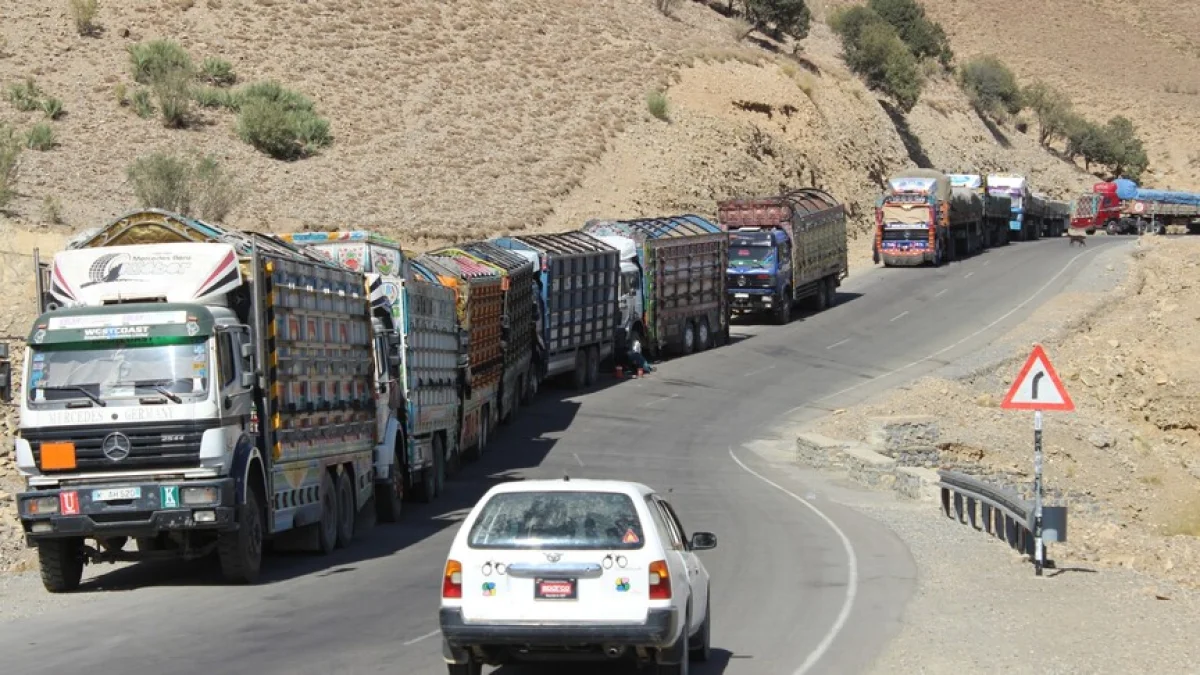
The International North-South Transport Corridor links Northern Europe with the Persian Gulf and Indian Ocean regions via Russia, the South Caucasus and Central Asia. The corridor comprises western, eastern and Trans-Caspian routes.
Iran is one of the key partners on the corridor’s western route. Overchuk said aligning transport infrastructure among Russia, Azerbaijan and Iran was important to make the route more attractive.