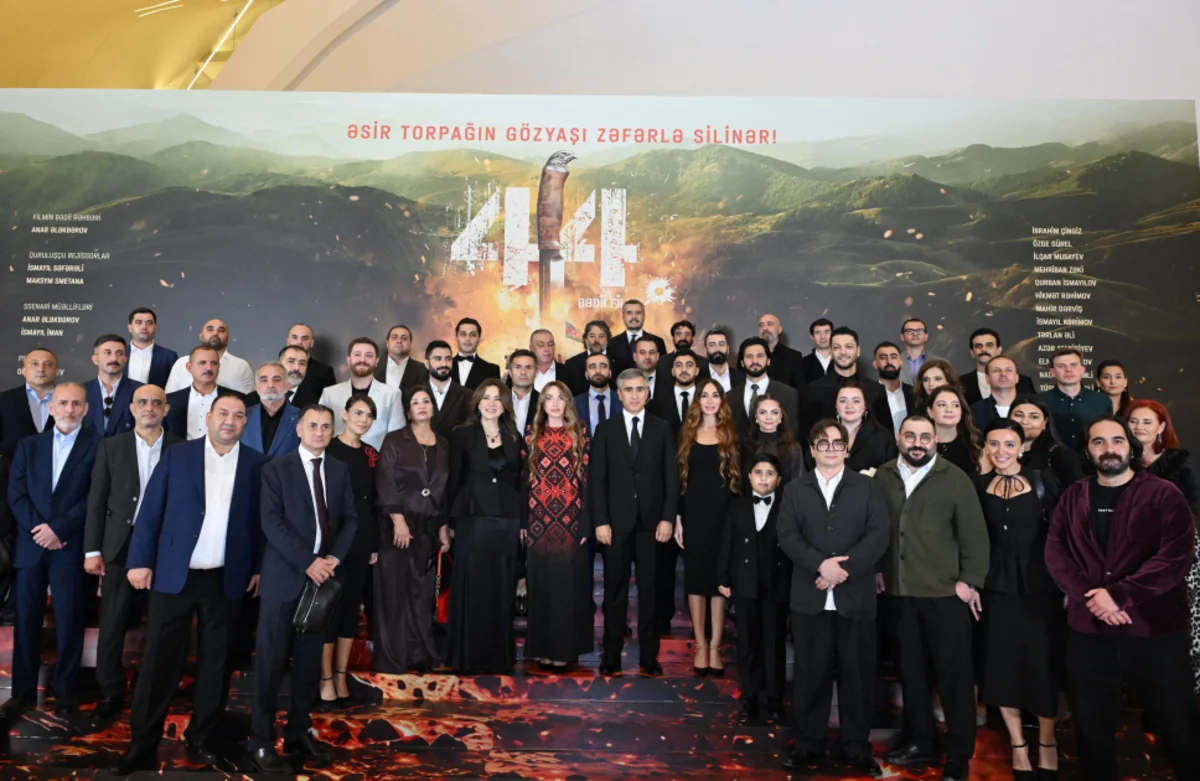
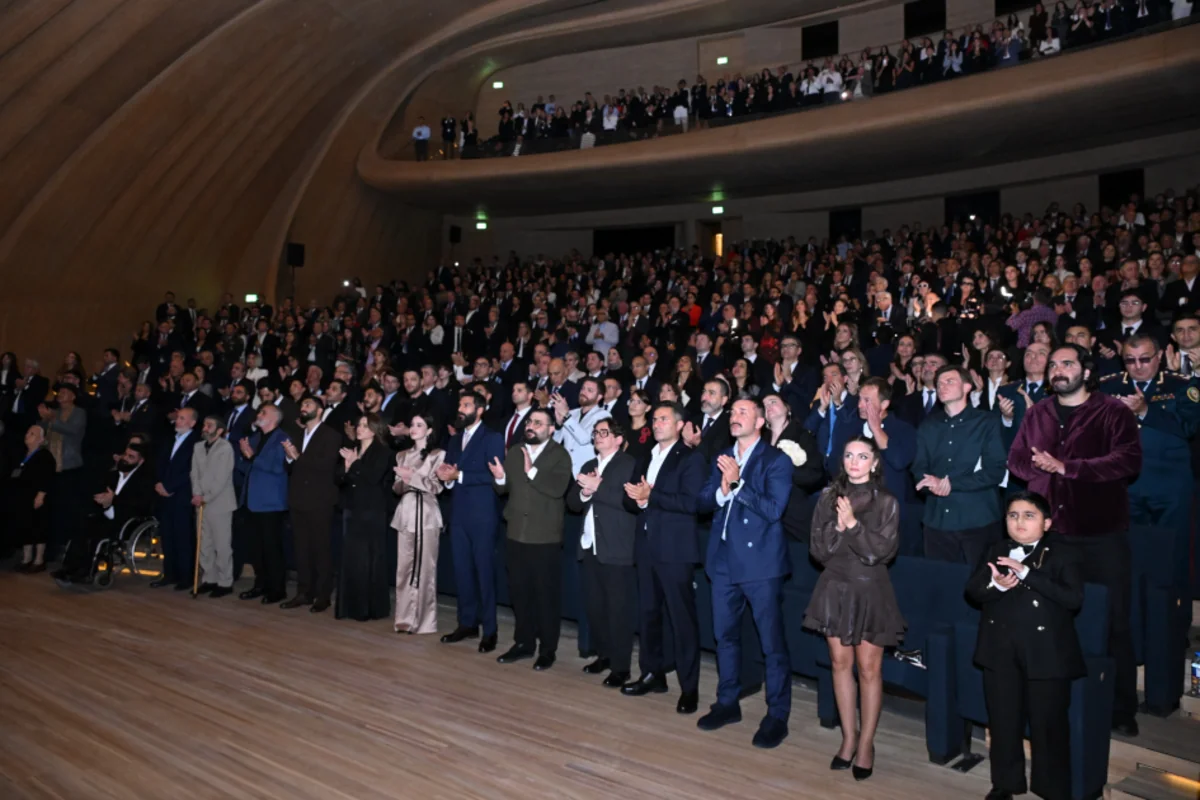
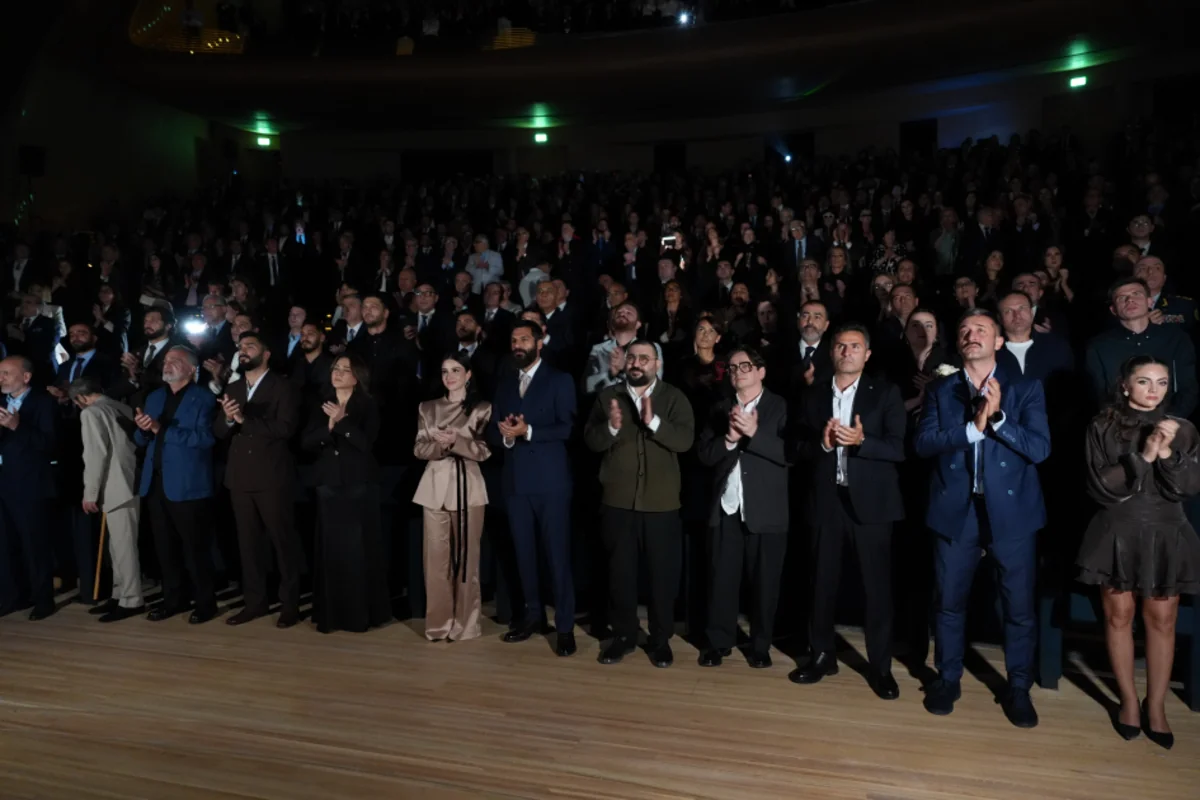
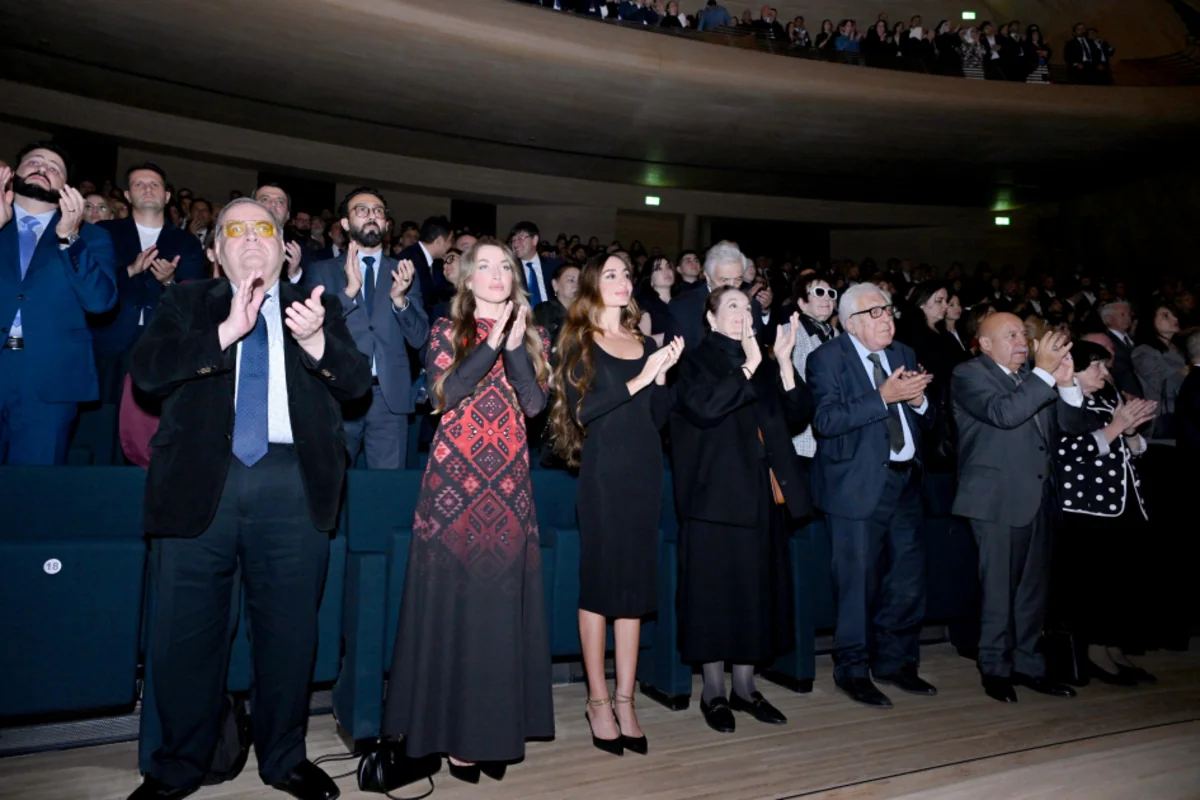
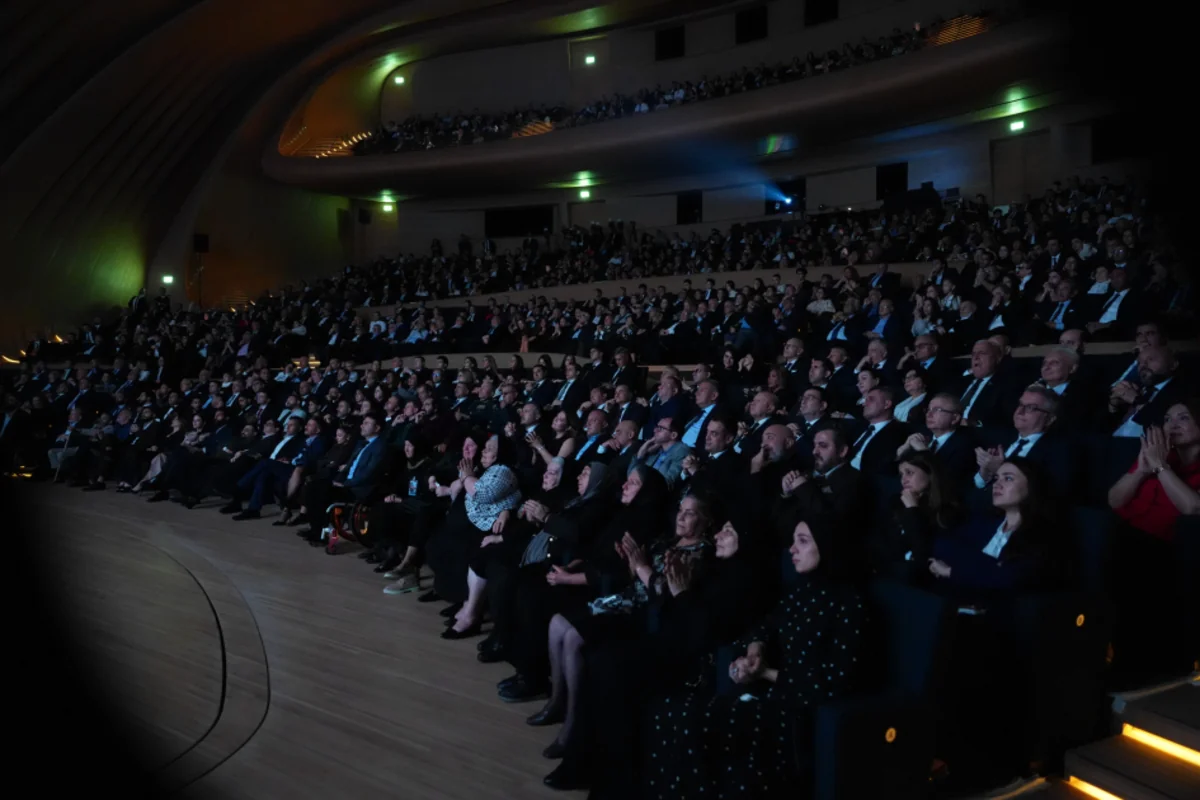
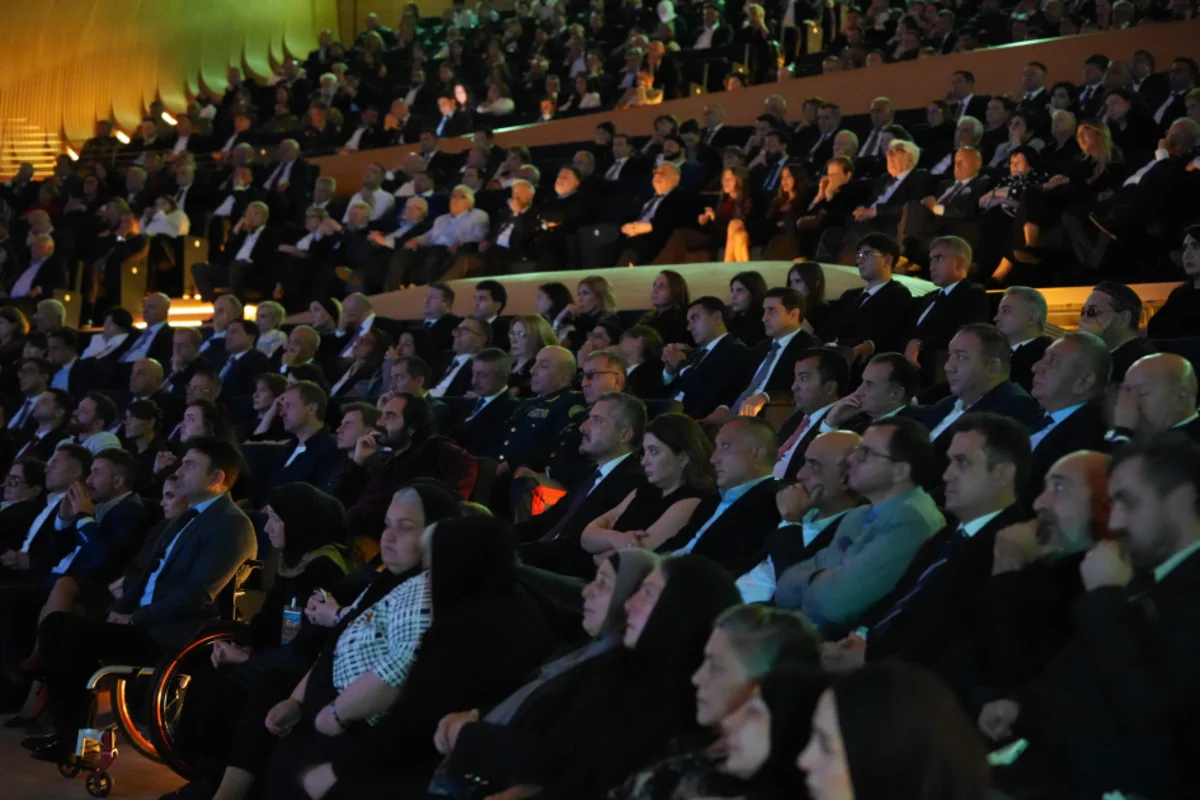
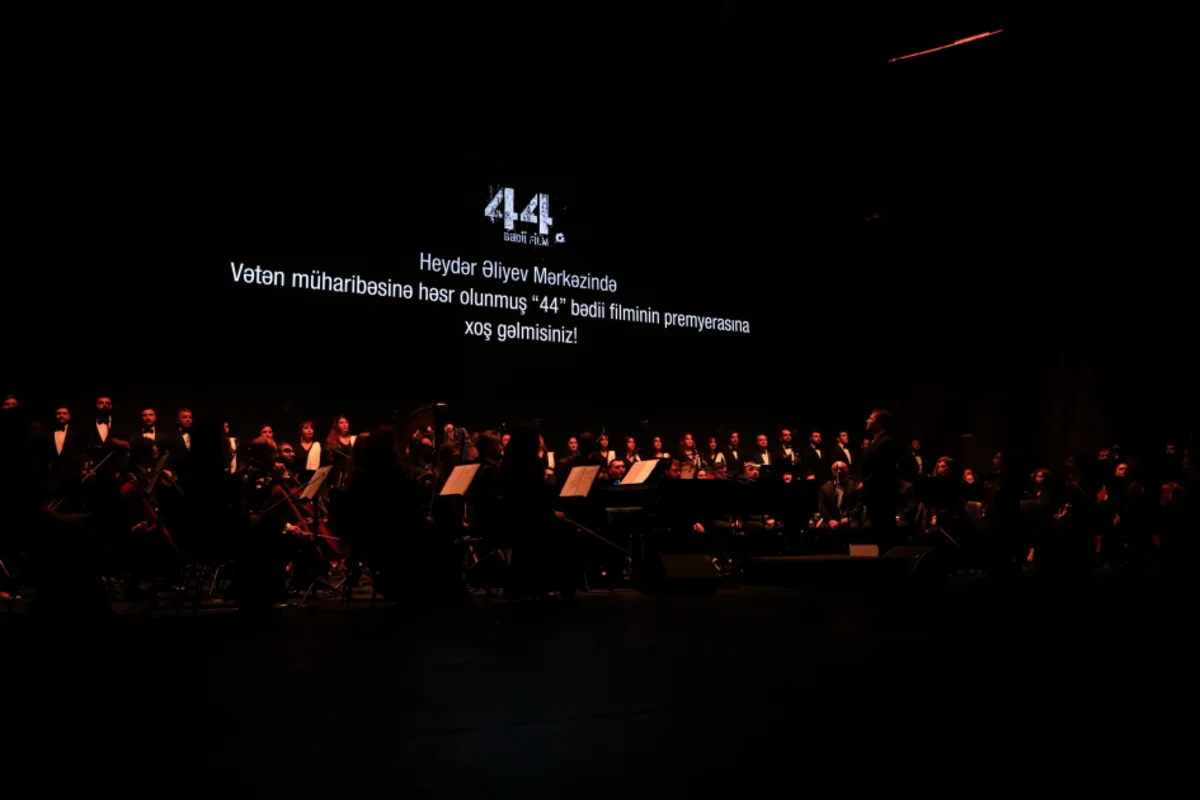
The feature film “44,” dedicated to the Azerbaijani people’s heroism in the Patriotic War and intended to foster patriotism among the younger generation and preserve historical memory, was presented to the public at the Heydar Aliyev Center on October 12.
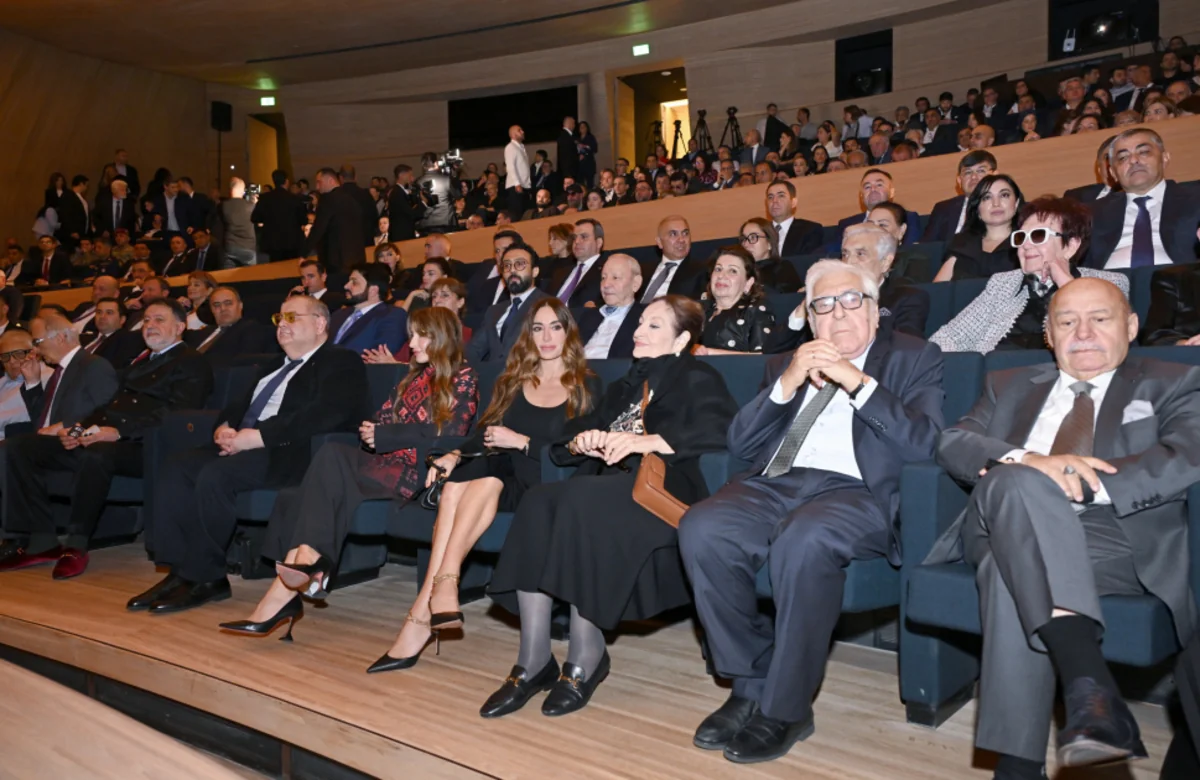
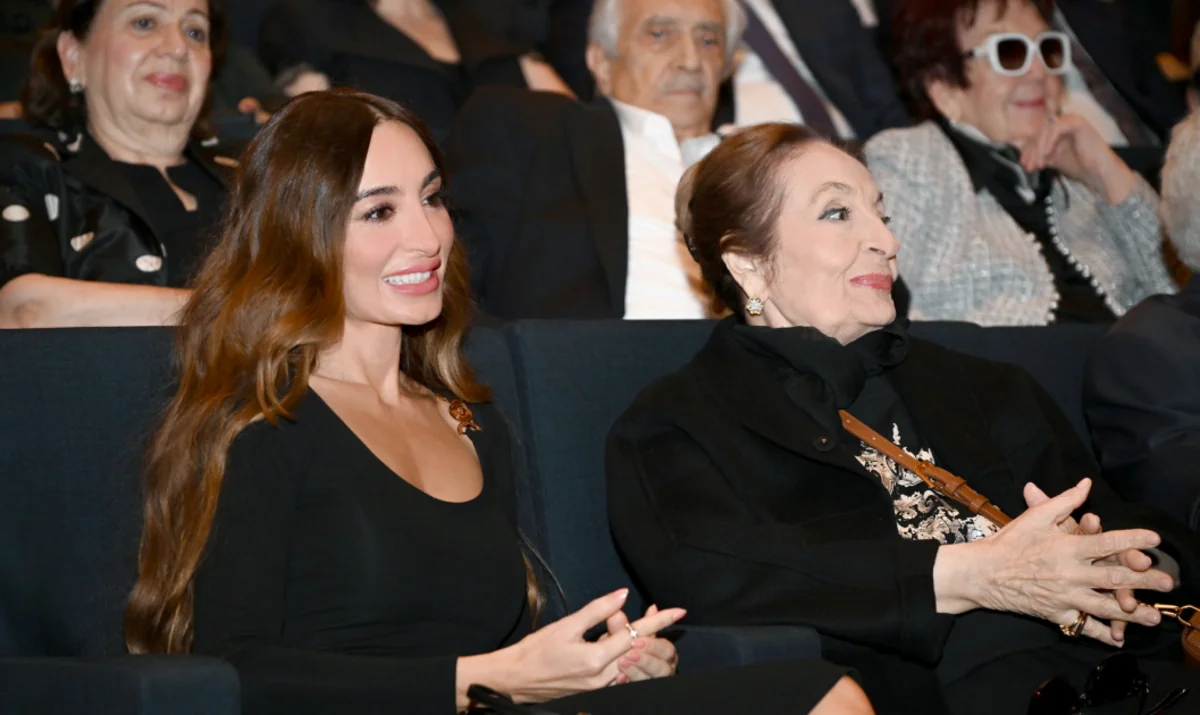
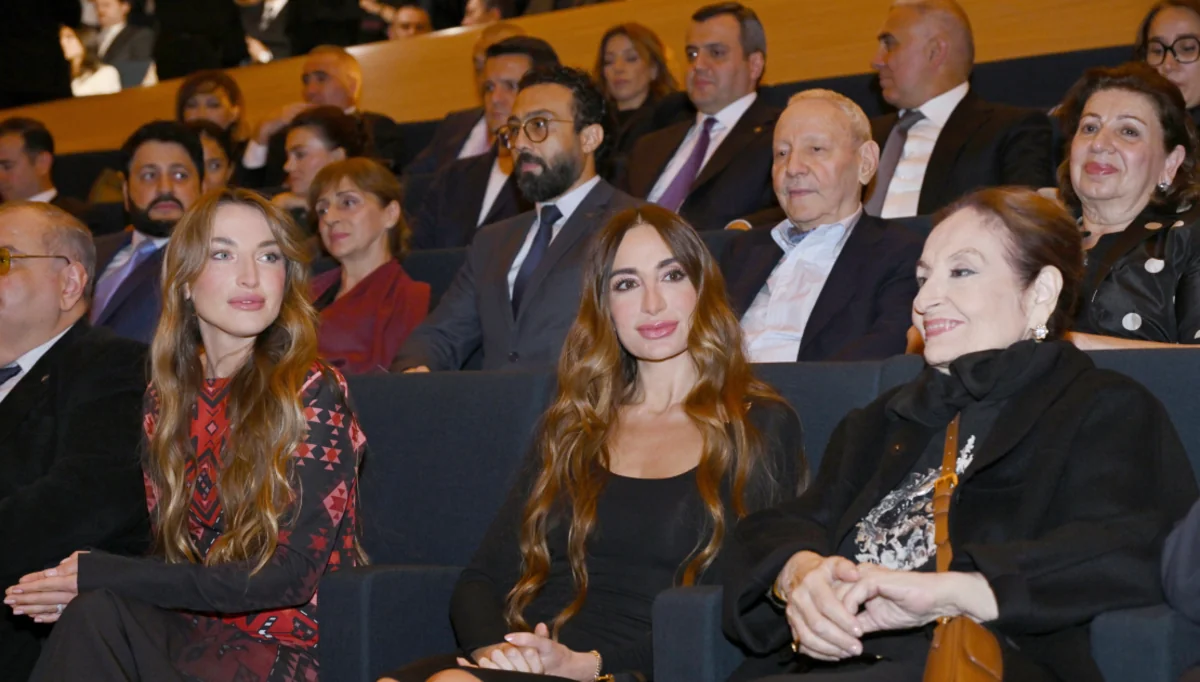
“Operative Information Center-OMM”, citing AZERTAC, reports that Arzu Aliyeva, head of the Baku Media Center, and Alyona Aliyeva attended the presentation ceremony.
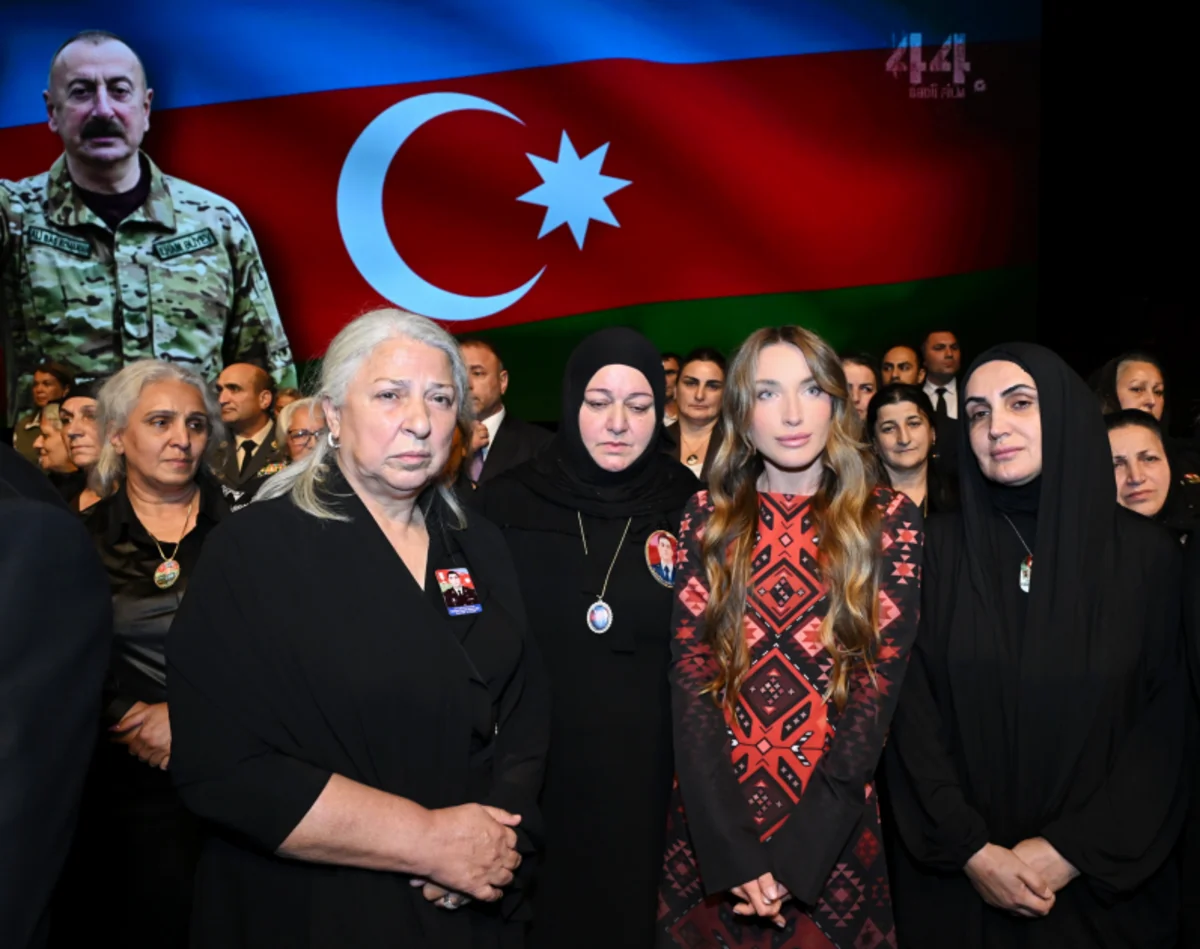
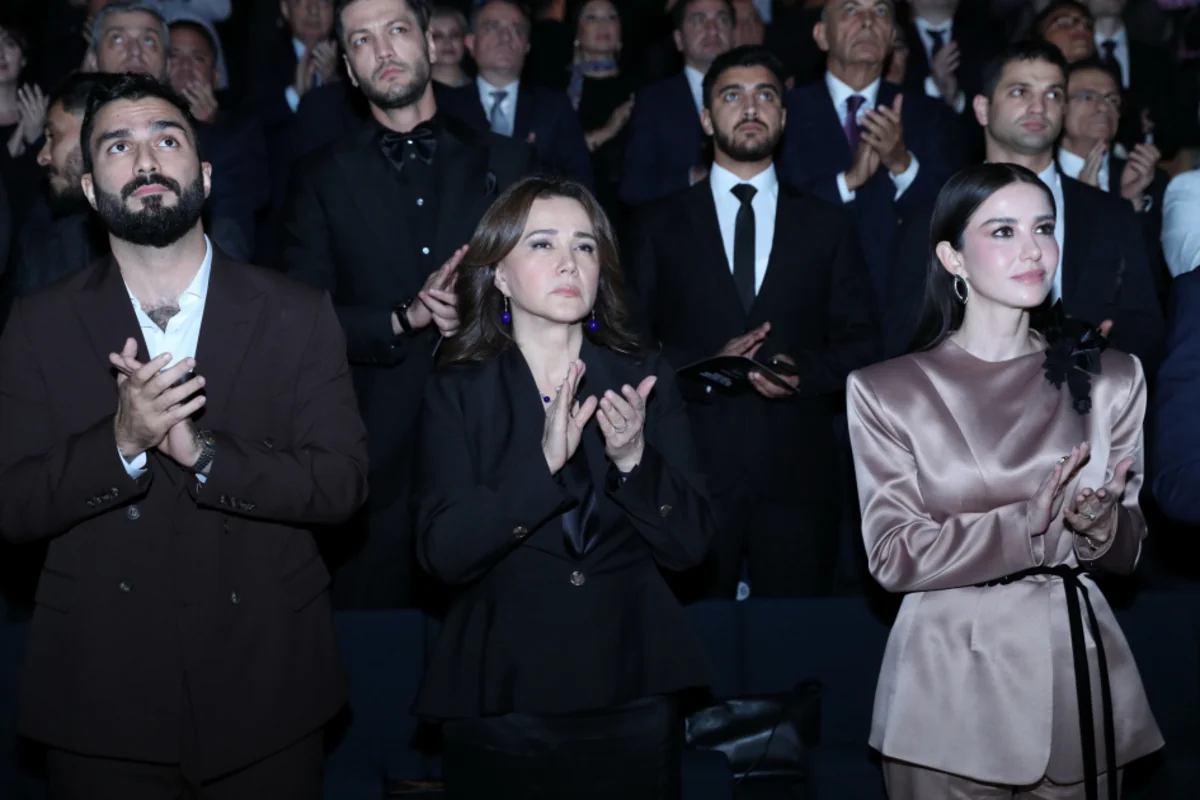
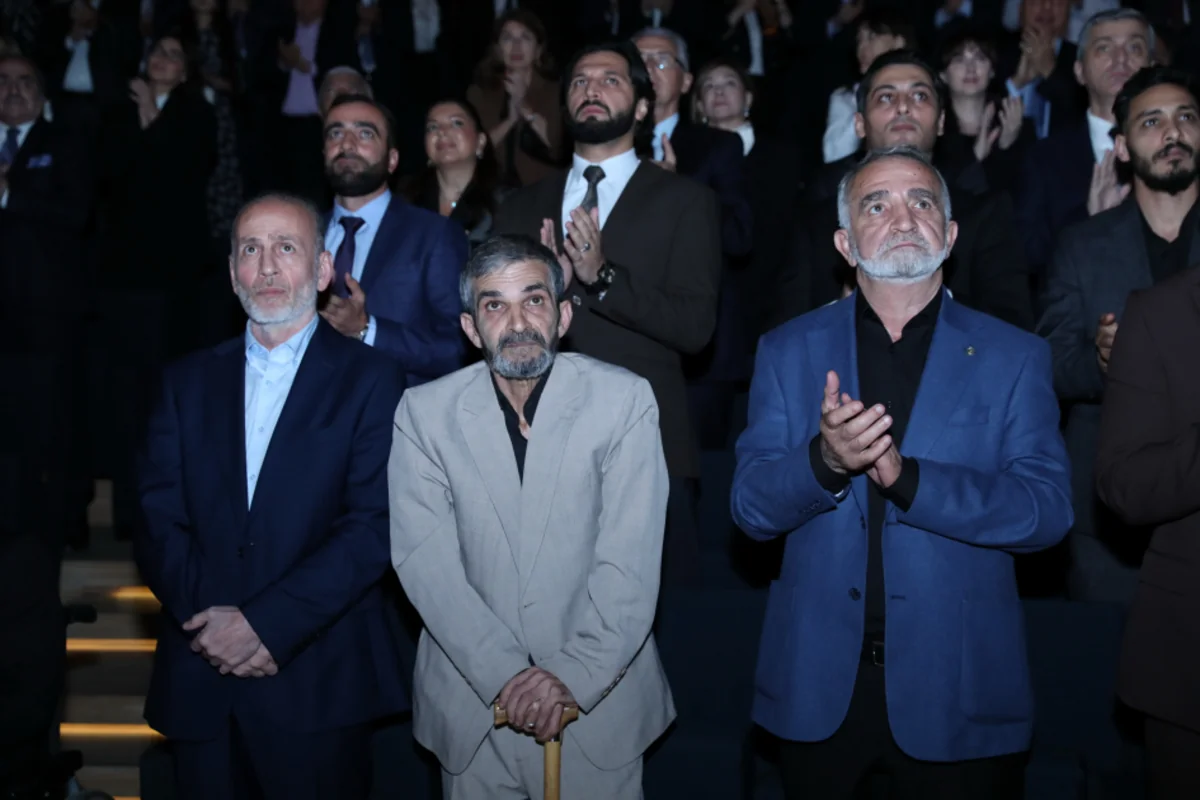
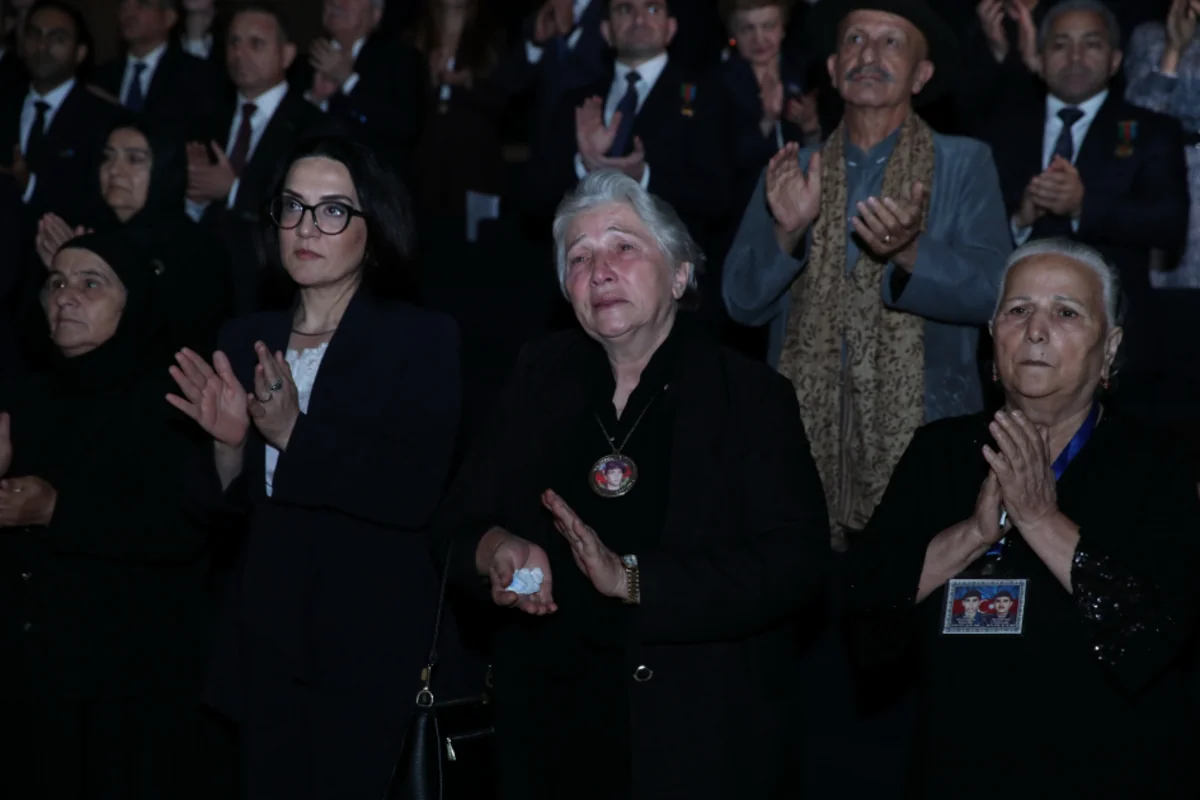
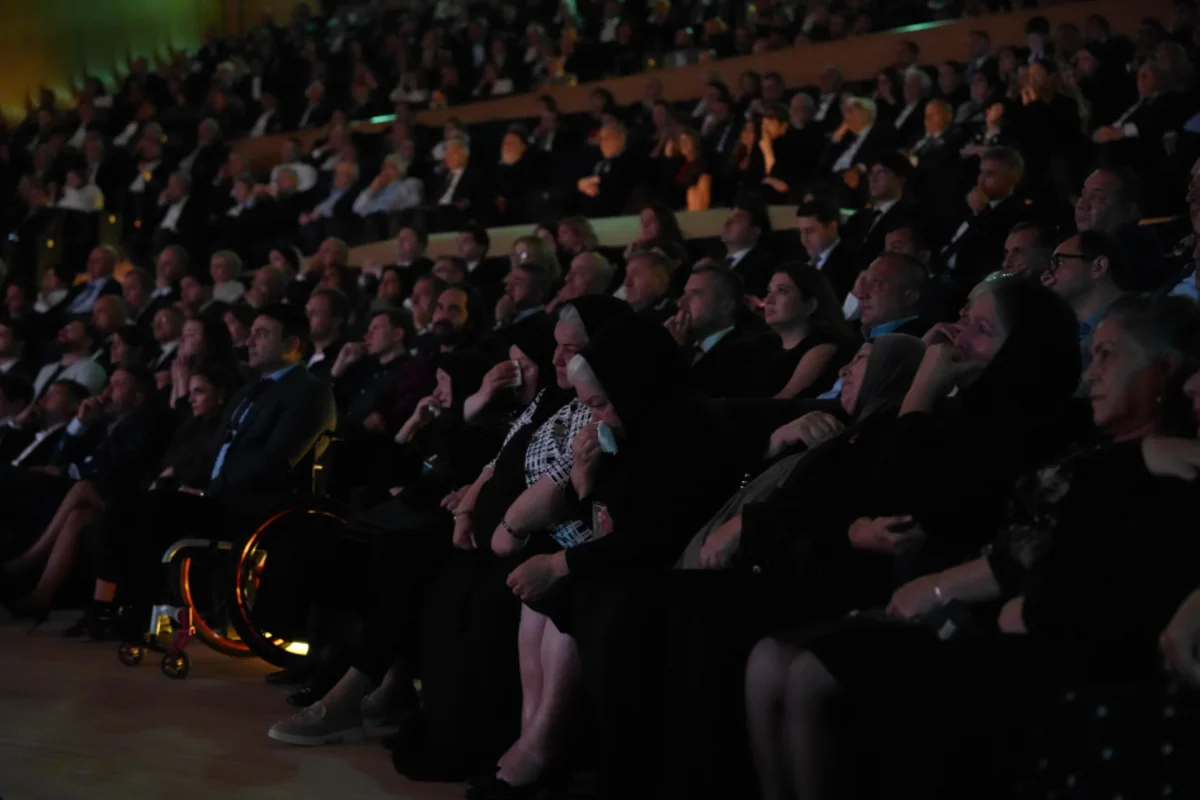
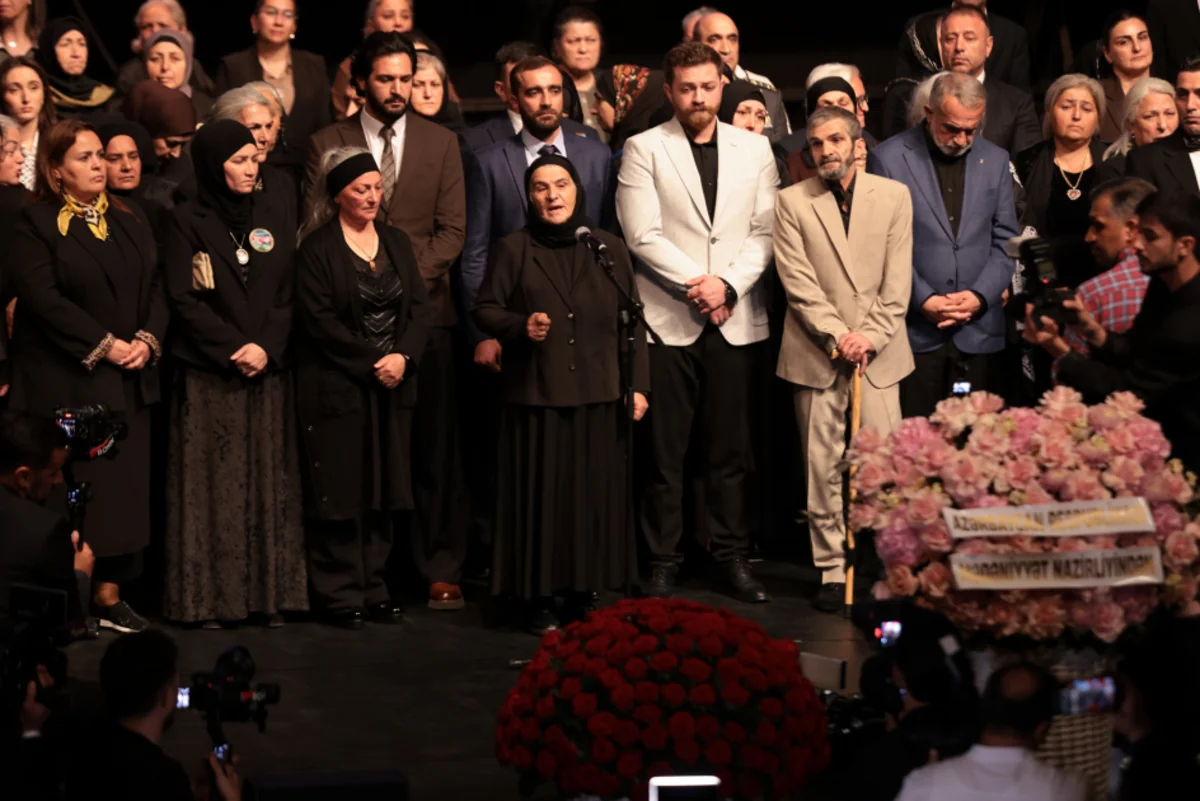
Before the screening, attendees observed a minute of silence in memory of the martyrs.
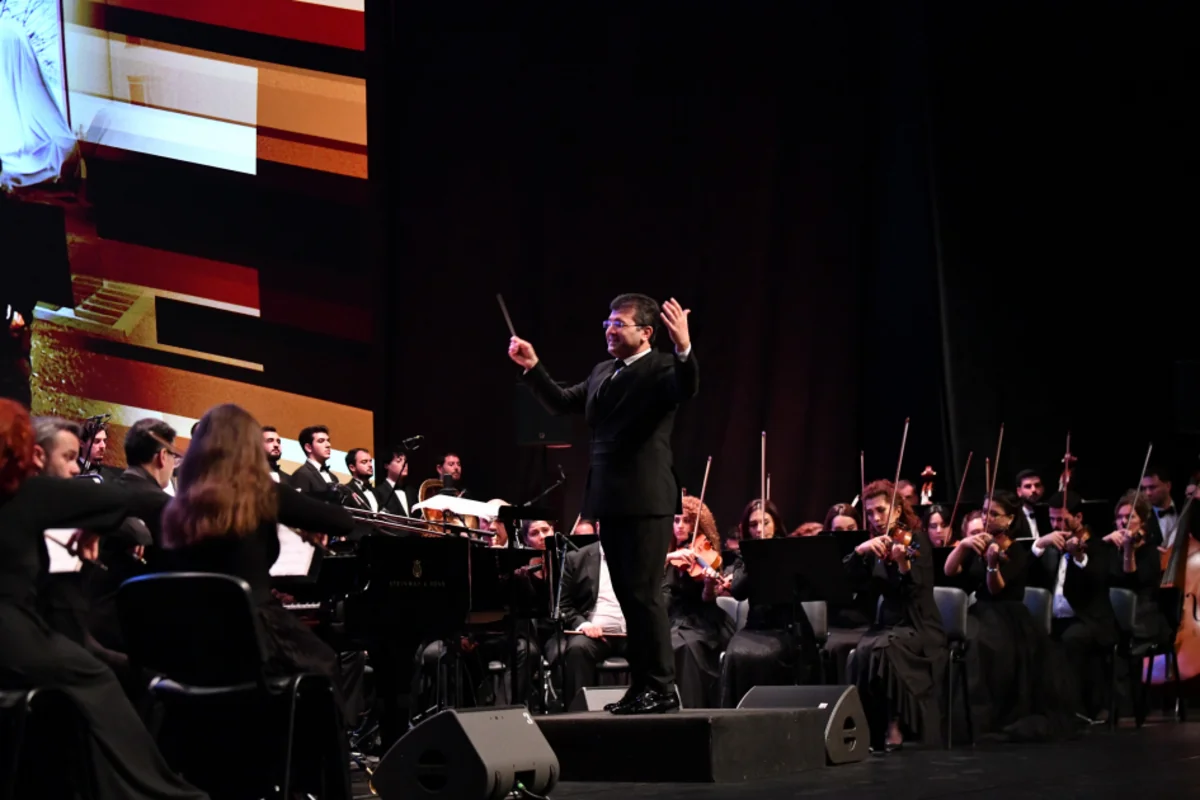
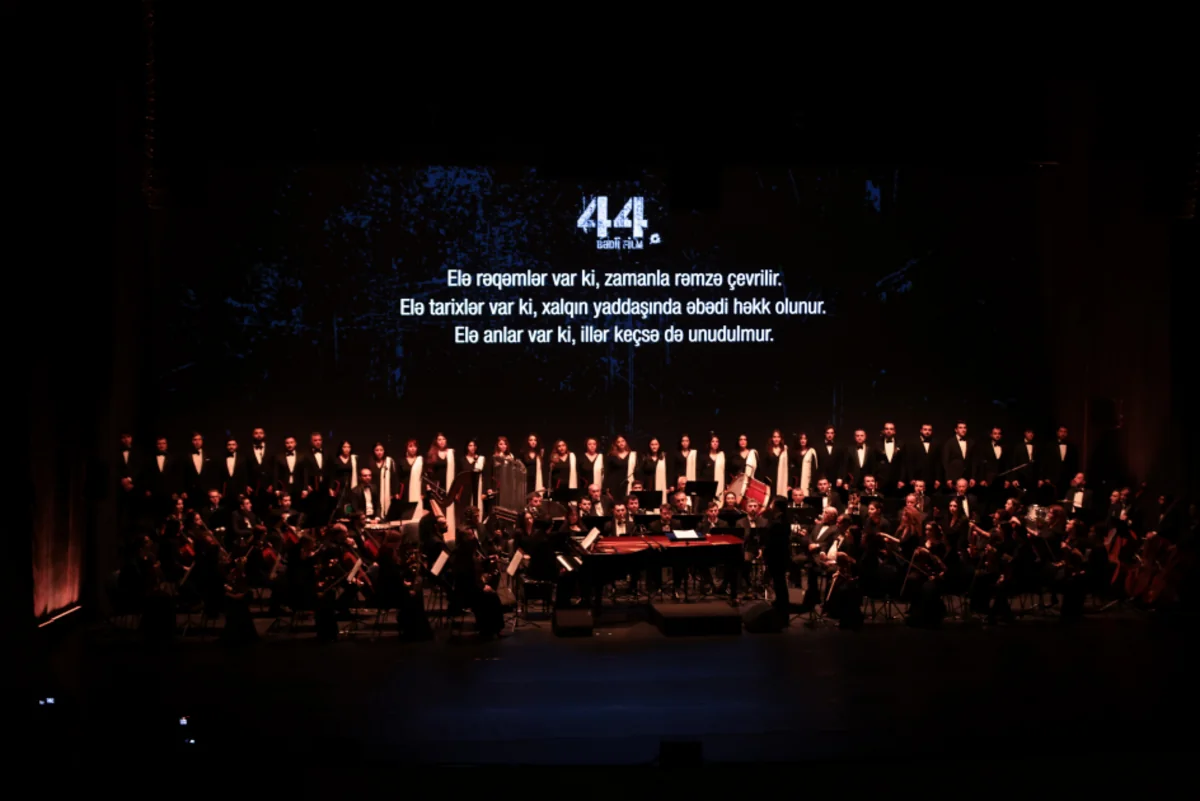
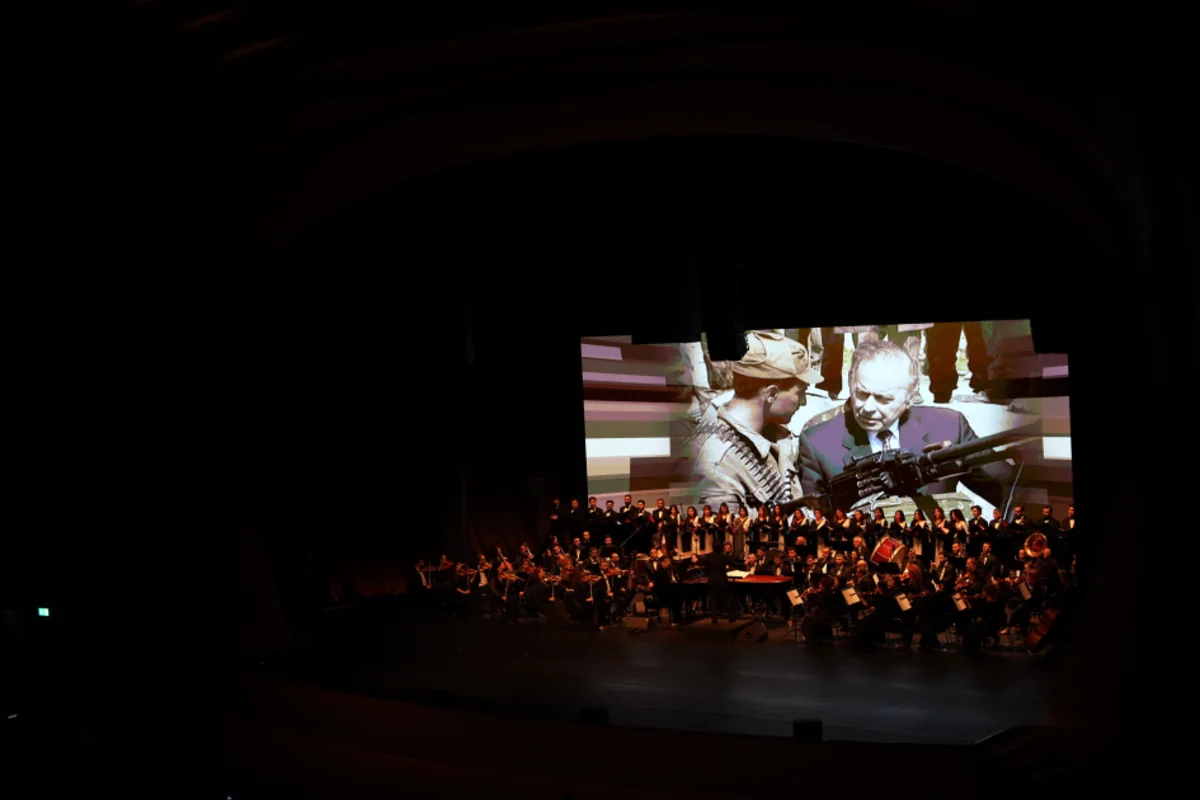
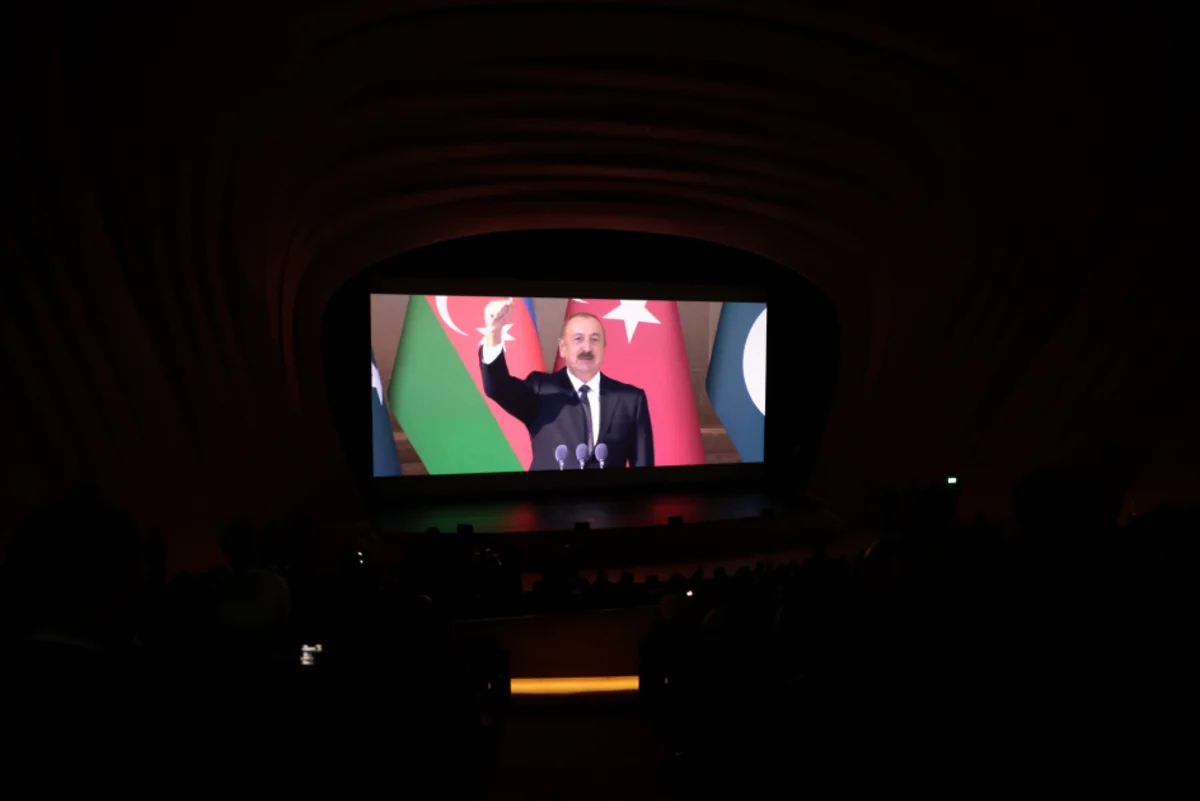
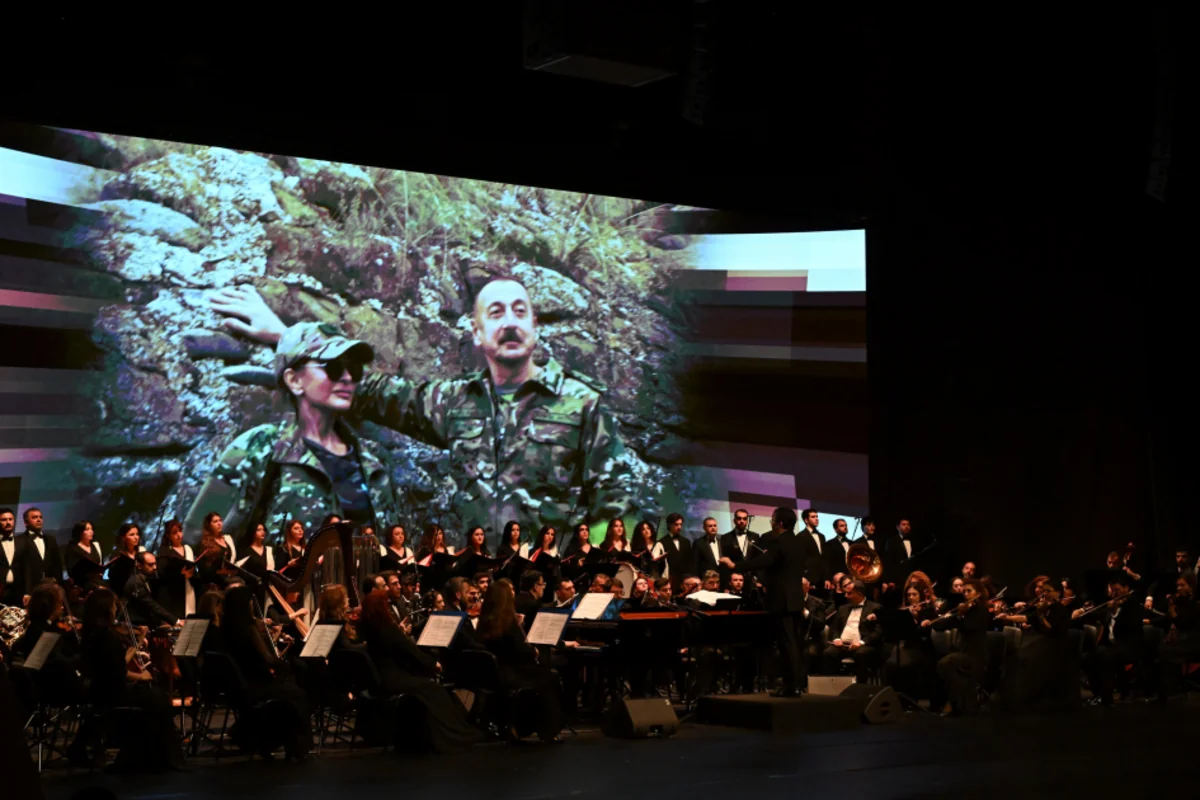
Guests then listened to the soundtrack of “44,” performed by the Symphony Orchestra of the Azerbaijan State Academic Opera and Ballet Theater and the Azerbaijan State Choir Chapel. The moving music accompanied documentary footage on screen depicting the Azerbaijani people’s path to Victory. The footage covered the struggle to restore Azerbaijan’s territorial integrity, the policy pursued by National Leader Heydar Aliyev to liberate the country’s lands, and video materials showing the continuation of that policy by President of the Republic of Azerbaijan and Supreme Commander-in-Chief Ilham Aliyev.
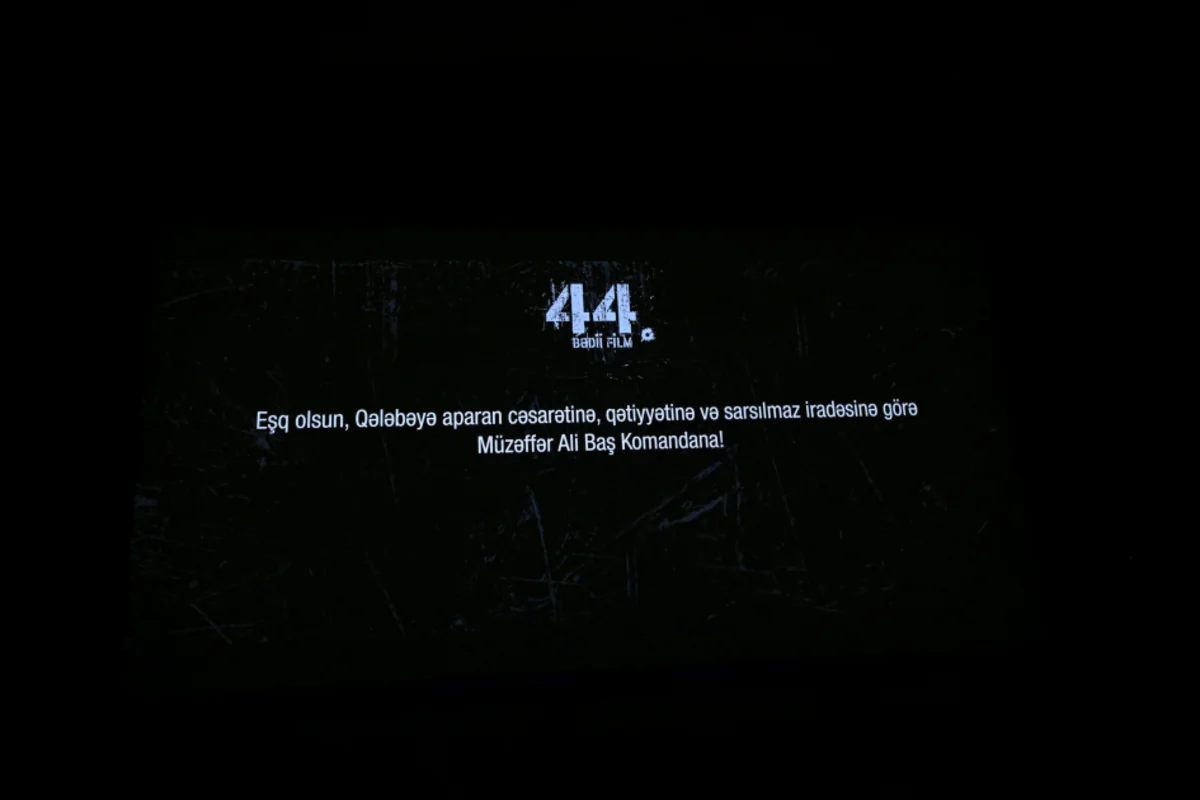
After a video presenting statistics about the production of “44,” the film was screened.
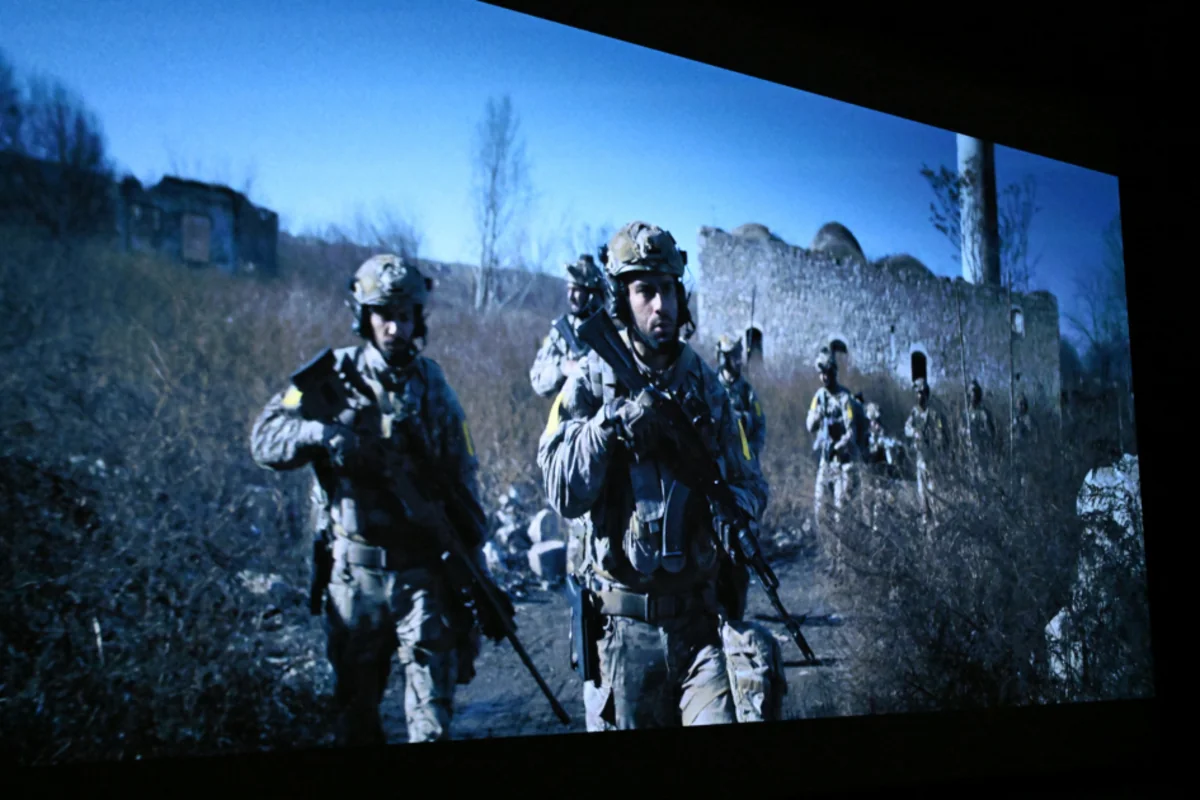
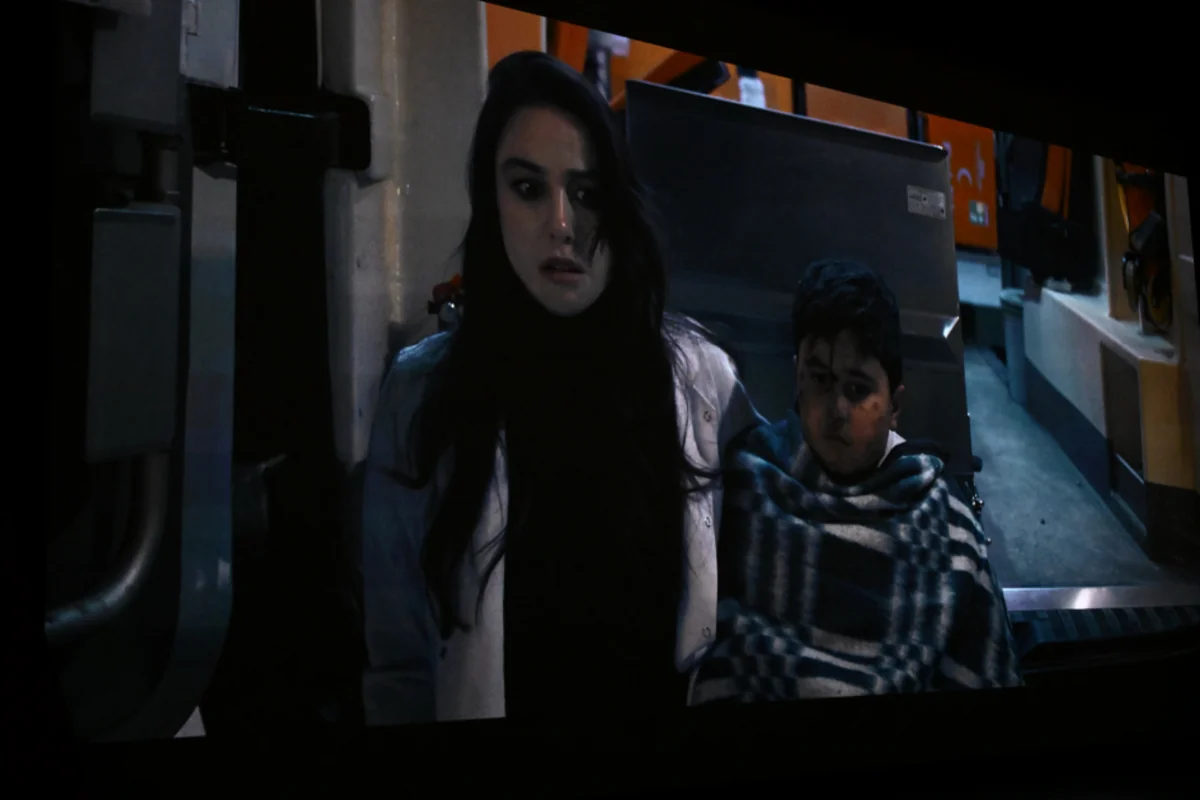
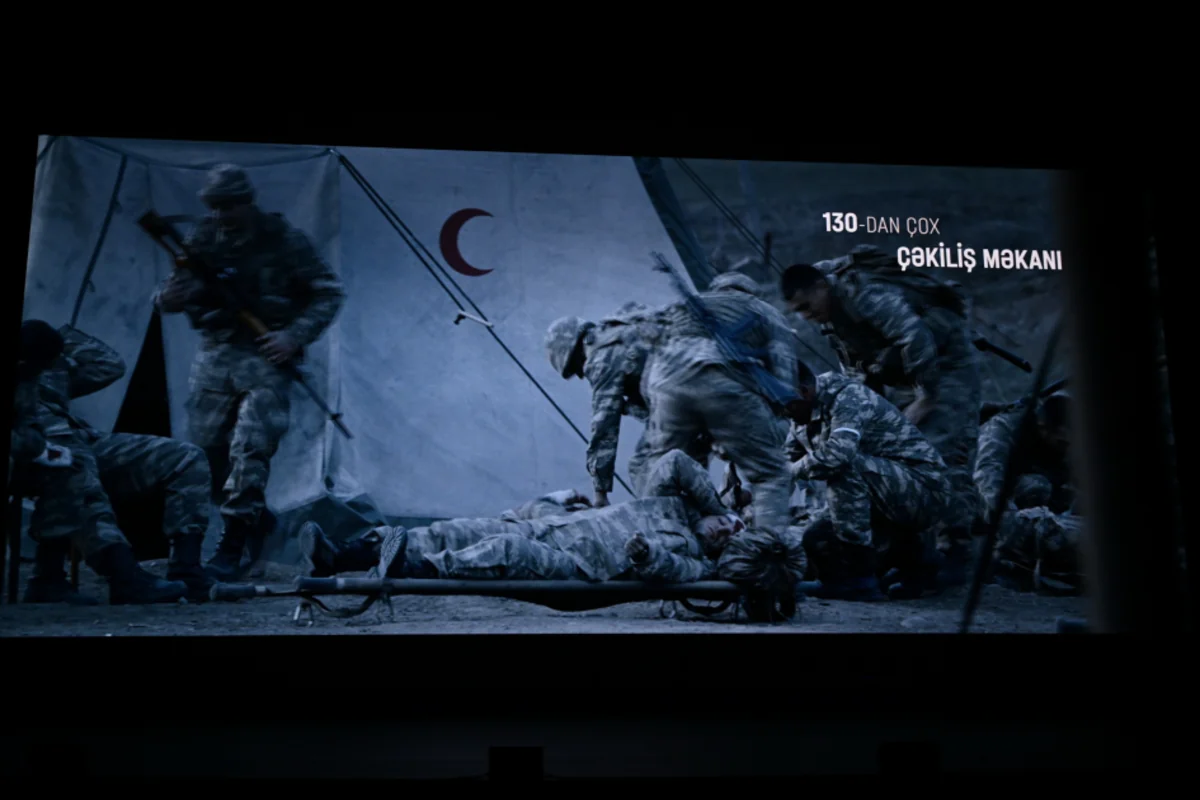
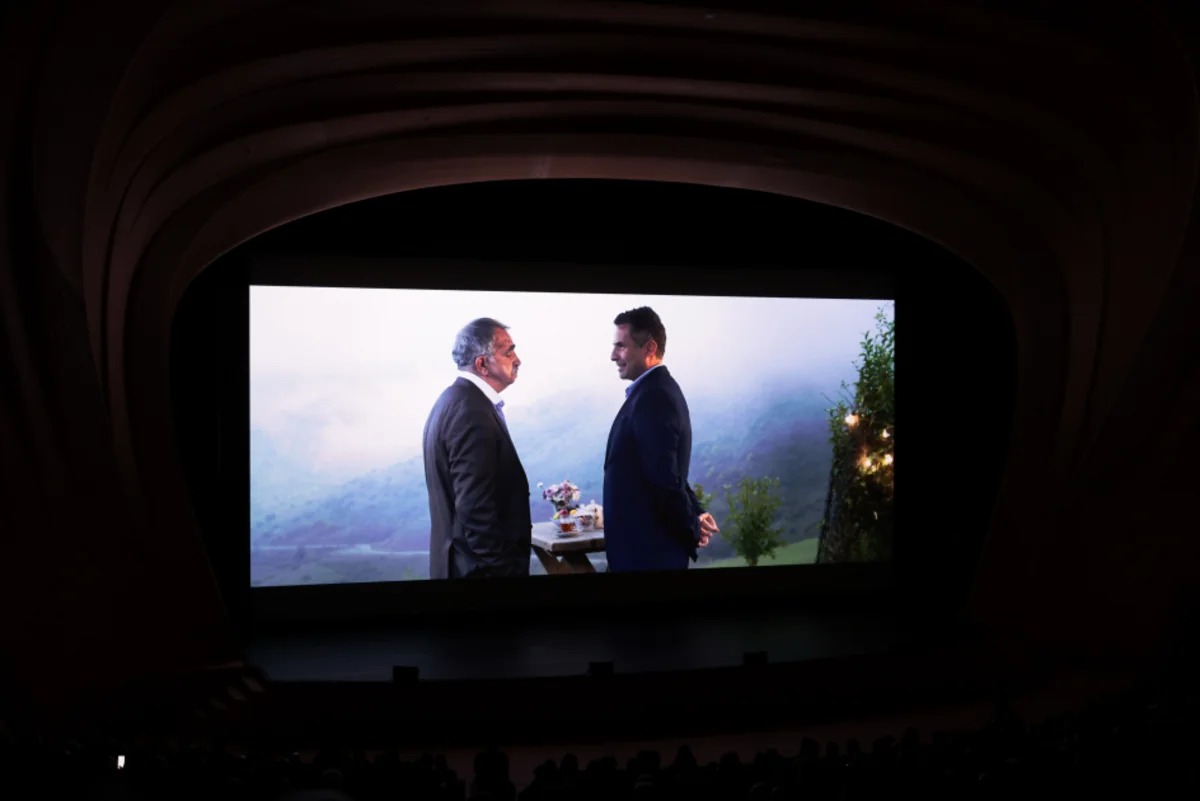
The film is a drama of heroism and love told through the eyes of a cadet. Its events embody the spirit, resolve and sacrifice of a generation that rose to defend its homeland, represented by special forces personnel. At the center of the story are Rashad Khalilov, an officer of the Special Forces; Zeynab Ozdemir, a Turkish orthopedic surgeon working in Azerbaijan; and Colonel Ramazan Karimov, commander of a special operations group. Alongside the stories of love and personal trials, the film depicts intense military operations. “44” is more than a film about war. It tells the story of the Azerbaijani people, whose hearts beat with love for their homeland, who never lose hope and who fight selflessly to the end for the liberation of their lands. The film is an artistic chronicle of the historic Victory achieved through the iron fist of the Victorious Supreme Commander-in-Chief, the unity of the people and the heroism of its brave sons.
Produced with the support of the Ministry of Culture of the Republic of Azerbaijan, the Azerbaijan Cinema Agency and the Baku Media Center, “44” is among Azerbaijan’s largest cinematic projects in recent years in terms of production scale, the number of specialists involved, filming locations, technical resources used and the level of international cooperation.
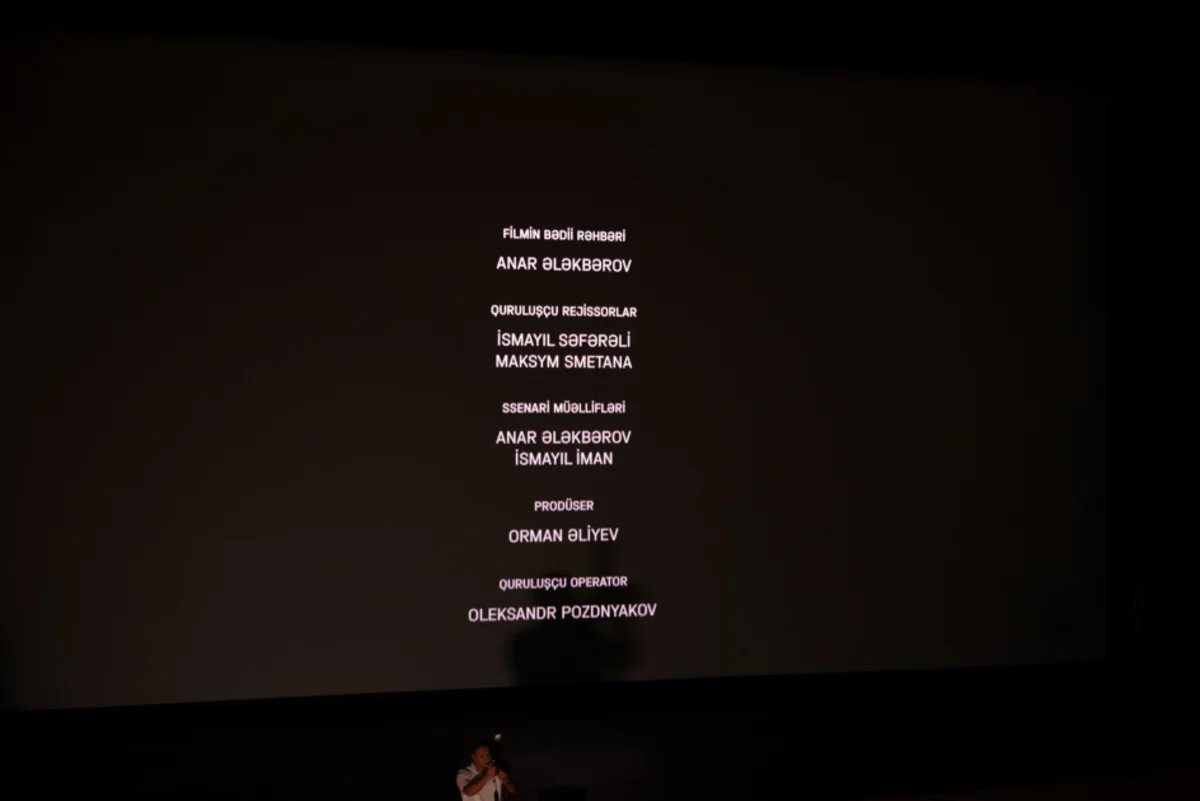
Anar Alakbarov is the film’s artistic director. Ismayil Safarali and Maksim Smetana are the directors; Anar Alakbarov and Ismayil Iman wrote the screenplay; Orman Aliyev is the producer; Oleksandr Pozdnyakov is the cinematographer; Elshad Rahimov is the editor; Ruslan Aghababayev composed the music; and Teymur Karimov is the sound director.
The film took five years to complete, from screenplay development through post-production. Writing the literary and shooting scripts took two years, preparations for filming took one year, filming lasted 14 months, and post-production took one year. The permanent creative, acting and administrative team consisted of 455 people. Including military personnel, extras, actors in episodic roles and other specialists, the project involved several thousand people. A total of 198 specialists across various fields were invited to take part. Filming involved 2,500 military personnel, 42 Special Forces fighters, 32 actors in leading roles, 1,143 actors in episodic roles and nearly 2,000 extras. The cast also included participants in the Patriotic War.
Alongside Azerbaijani actors, the film features well-known Turkish actress Özge Gürel. Before filming, the cast completed military and tactical training at a Special Forces training base. All branches and types of forces of the Azerbaijani Army took part in the film.
The film was shot in Baku, Absheron, Aghdam, Jabrayil, Fuzuli, Goranboy, Ganja, Khojaly, Khojavand, Khizi, Lerik and Shusha. In total, filming covered more than 130 locations.
More than 150 pieces of military equipment, aircraft, vehicles, weapons and specialized gear were used in production. The filming involved tanks, infantry fighting vehicles, multiple rocket launchers, artillery systems, combat helicopters, unmanned aerial vehicles, engineering equipment and armored vehicles, as well as small arms, machine guns, sniper rifles, grenade launchers, anti-tank missile systems and mortars. To realistically stage large-scale battle scenes, the production used 300,000 training and live rounds of various types, hundreds of training munitions, and substantial quantities of pyrotechnics, smoke effects, explosives and specialized stunt equipment.
Editing 112 hours of footage took one year, resulting in a film with a runtime of two hours and 38 minutes.
International specialists were also involved at various stages of the project. Experts from 13 countries — the United States, Germany, Austria, Belarus, the United Kingdom, Georgia, Iran, Kazakhstan, Poland, Russia, Türkiye, Ukraine and Estonia — handled stunt work and choreography, pyrotechnic effects, on-set sound recording, camera support, makeup, music recording, sound mixing and design, computer graphics, color grading and final image processing, as well as supplying technical equipment for the premiere screening. The film’s computer graphics were created in cooperation with Ukrainian specialists at Estonia’s “UMP” studio, which specializes in 3D graphics, computer animation and visual effects. No artificial intelligence products were used.
The film’s post-production, color grading, digital image processing and mastering were completed at Poland’s “FixaFilm,” a studio specializing in these services and certified for Dolby Vision.
Particular attention was paid to accessibility during production. Using modern technology, the team prepared an audio-described version of the film for viewers with visual impairments.
For the premiere, a modern specialized projection screen was purchased from “Lang AG,” a German-Austrian joint company, while a state-of-the-art cinema projector supporting DCP-format screenings was rented from Germany’s “BIG cinema.” This technology was used in Azerbaijan for the first time to screen a feature film of this scale in high quality. Modern systems providing high-quality sound were also used during the screening.
To mark the premiere, the team prepared a publication featuring photographs and information about the filming process, archival materials and the creative team’s work, as well as a limited number of commemorative gift sets.
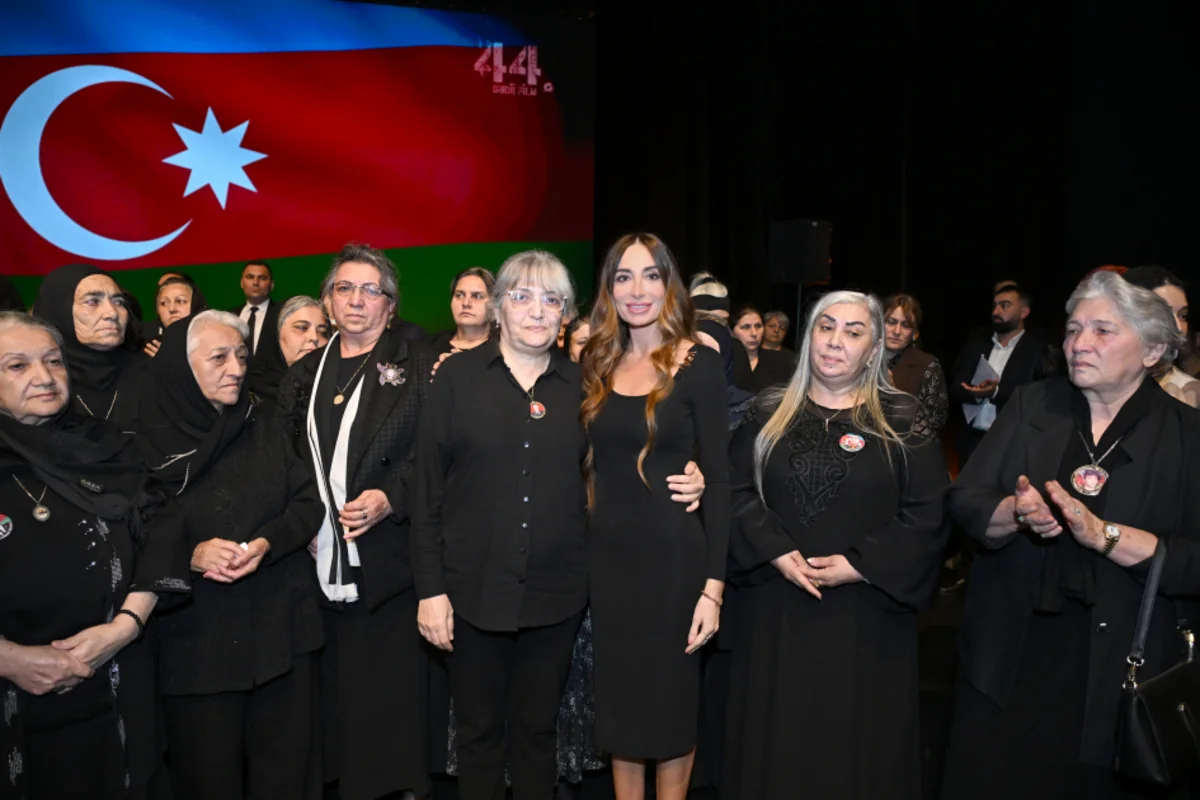
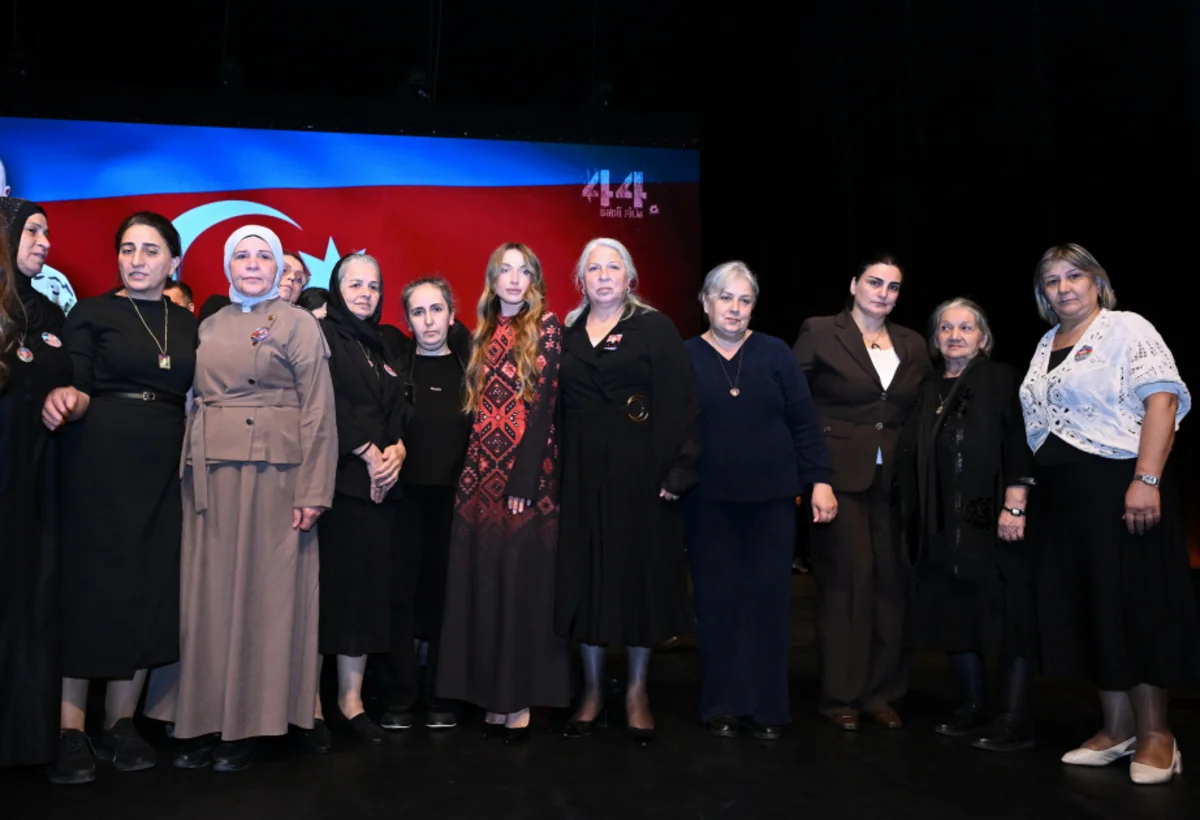
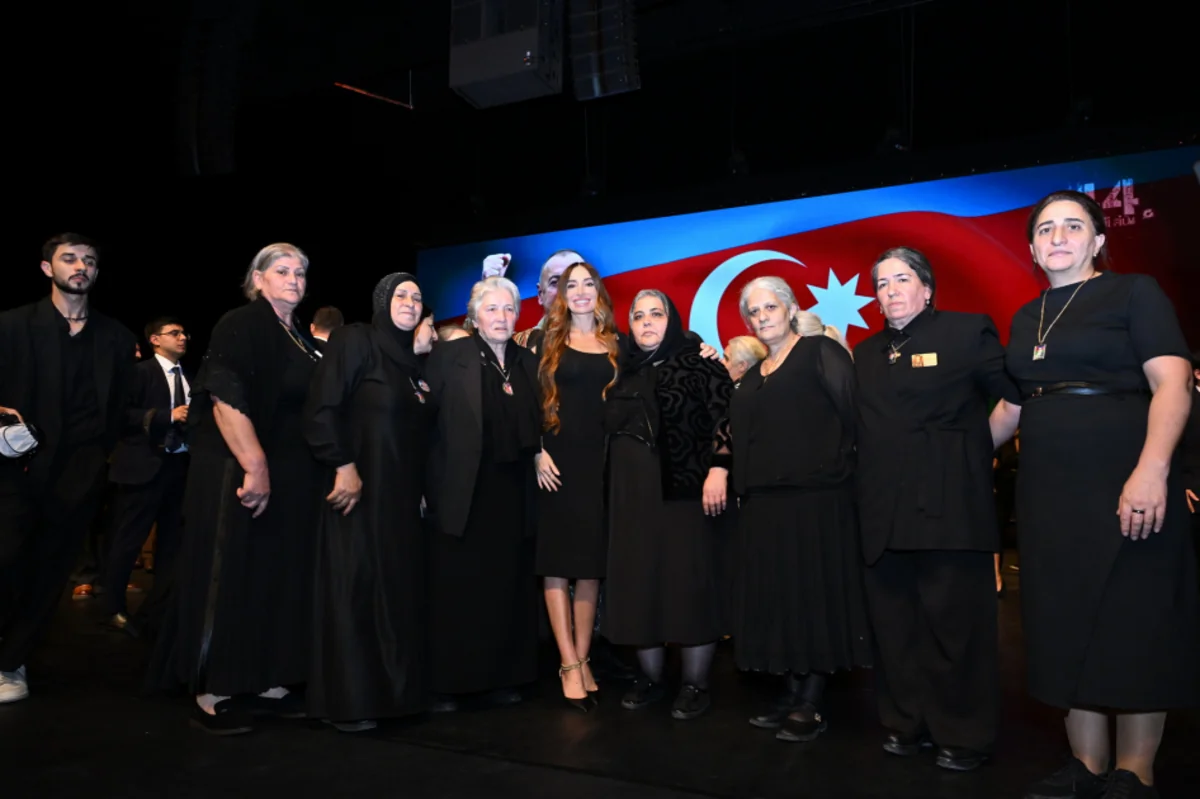
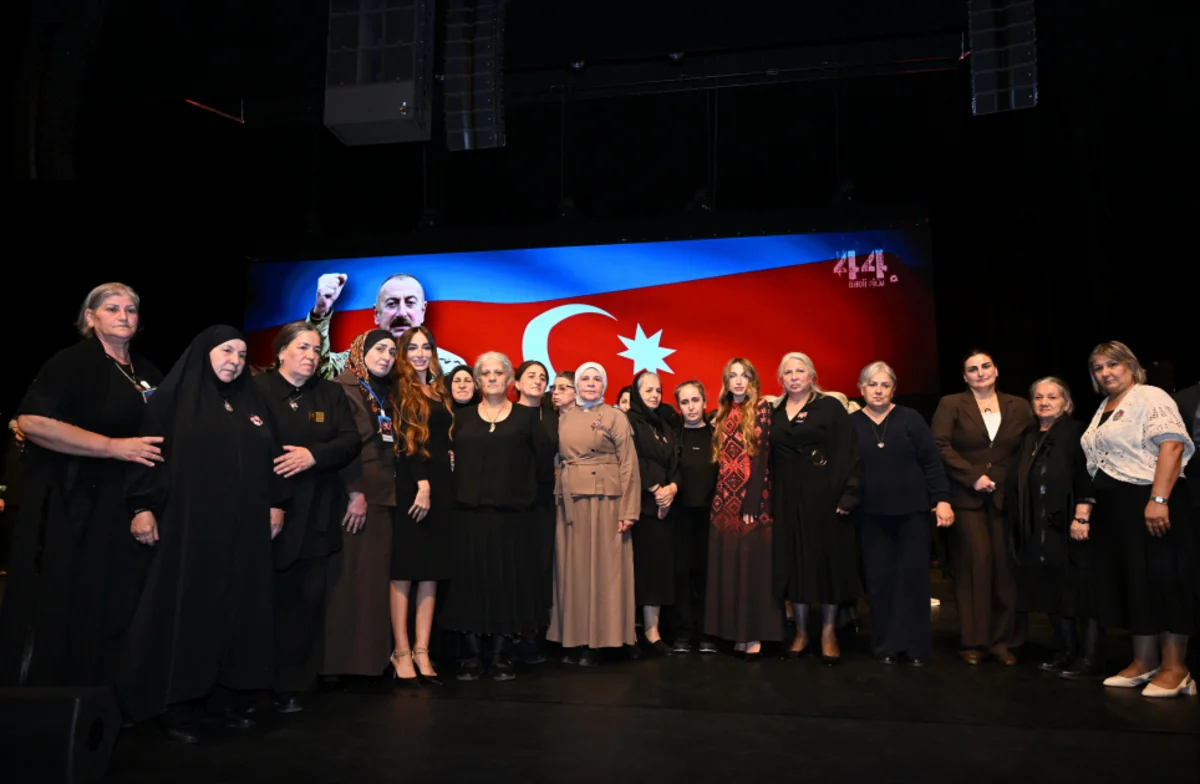
After the presentation, the families of martyrs, participants in the Second Garabagh War, and the creative and technical teams were invited onto the stage to speak.
Plans include screenings abroad and participation in film festivals to promote “44” internationally.
The film will be screened in cinemas across Azerbaijan starting October 15.