OMM Newsroom

According to AnewZ, the UN World Food Programme (WFP) has suspended monthly food assistance to 500,000 people in the Gaza Strip amid severe funding shortages. About two-thirds of the population faces a food security crisis or worse.
On October 19, the WFP said it had reduced the number of people receiving monthly food assistance from 1.6 million to 1.1 million. About 1.4 million Palestinians are struggling to obtain enough food, while nearly 200,000 are experiencing emergency levels of food insecurity.
Food rations halved
Alongside cutting the number of recipients, the WFP has halved food rations and reduced cash assistance for 75,000 families.
The number of hot meals provided each day to people unable to cook has fallen from 250,000 to 150,000. Some families living in hard-to-reach areas now receive just one hot meal every other day.
The WFP said the cuts come at a critical time, as Gaza prepares for its fourth winter since the conflict began.
WFP seeks $450 million in aid
Speaking to Reuters in Gaza, Karl Skau, the WFP’s deputy executive director, described the humanitarian situation as dire, despite a ceasefire agreement reached a year ago.
“It’s a year since this ceasefire agreement. Life here is still very hard. There is no proper shelter ... no basic services, no security,” Skau said.
He warned that many displaced Palestinians remain in temporary shelters with limited access to basic services, and that winter would make their situation even more difficult.
“These cuts are happening as we face our fourth winter. I have spent winters here, and they are really very harsh,” Skau added.
The WFP said it urgently needs $450 million over the next six months to continue essential relief operations in Gaza and the West Bank.
Skau called on international donors to increase their support, warning that progress in food assistance could be lost without urgent funding.
“We are telling the world: now is not the time to turn away. It is time to help sustain this support, protect the progress made and drive early recovery,” he said.
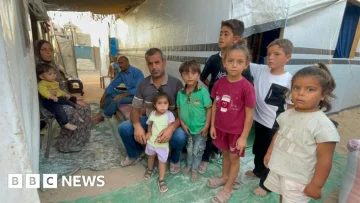
The image of Palestinian children waiting to collect food from a WFP-funded kitchen was taken on October 18, 2026, in Deir al-Balah, in the central Gaza Strip.
Ceasefire agreement implementation lags
The funding crisis comes as progress on implementing a US-mediated ceasefire agreement reached last year remains slow. The agreement envisages Gaza’s future reconstruction, the disarmament of Hamas and the withdrawal of Israeli forces from the territory.
Israeli forces control more than 60% of the Gaza Strip and carry out airstrikes almost daily. According to aid organizations, most areas where more than two million Palestinians live remain under Hamas control; many residents are staying in temporary accommodation amid insufficient aid supplies.
The Hamas-run Gaza government’s media office called the WFP’s decision “catastrophic” and warned that the cuts could accelerate the onset of famine. It urged international donors to increase financial support for humanitarian organizations to prevent conditions from deteriorating further.
Palestinians facing displacement and food shortages are worried that the aid cuts will bring new hardships.
“We are already living in difficult conditions and a hard life, and now you want to make it even harder? For three years, you have left us hungry amid war, destruction, a blockade and relentless bloodshed. What do you want from us? Enough, enough, we are tired,” said Sabrin Kuhail, who lives in a site housing displaced people in the Nuseirat refugee camp in central Gaza.
The aid cuts add to pressure on humanitarian organizations, which are already struggling to deliver food and other essentials in Gaza because of mass displacement, damaged infrastructure and ongoing security challenges.