Afət Ziyadqızı

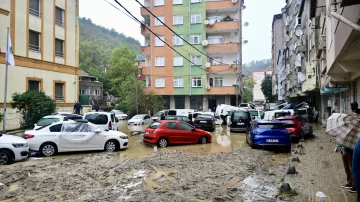
Istanbul Governor Davut Gül gave an official briefing on the severe impact of torrential rain across the metropolis at a news conference held at the Disaster and Emergency Management Authority (AFAD) headquarters. He said Istanbul recorded 261 kilograms of rainfall per square meter, a record in the Turkish State Meteorological Service’s observations dating back to 1942.
Operative Information Center-OMM reports that two people died in the disaster. Three people who remain under treatment at medical facilities are in stable condition and are not in life-threatening danger.
A total of 46,597 personnel from AFAD, the Istanbul Metropolitan Municipality, the 1st Army Command, the police, the gendarmerie, the Coast Guard and the Turkish Red Crescent have been mobilized in the disaster zone. During operations, 2,722 residents were evacuated to safe areas by boat and specialized vehicles. People left without homes have been accommodated in hotels and social facilities.
The adverse weather has also seriously affected aviation and transport. At Istanbul Airport, 51 flights were diverted to other airports and 19 were canceled. Sixteen secondary roads across the city remain closed to traffic.
By order of the governor, classes at all public and private secondary education institutions in Istanbul have been suspended for another day. Comprehensive inspections are under way in school buildings to check for electrical leakage and assess damage. Classes are expected to resume on Monday once the threats have been addressed.
Administrative leave has also been extended for public employees who are pregnant, have disabilities or require special care. The ban on motorcycles using the roads remains in force.
Governor Davut Gül said the soil was fully saturated and rain was expected to continue in the coming days, urging residents to stay indoors unless necessary. He said damage assessment commissions would complete their work by Monday and that the procedure for compensation would be announced. İstanbul, one of Türkiye’s most populous cities, has extensive road and air transport networks that can be disrupted by severe weather. Authorities have mobilized emergency services to support evacuations and restore access to affected areas.