 OMM Redaksiyası

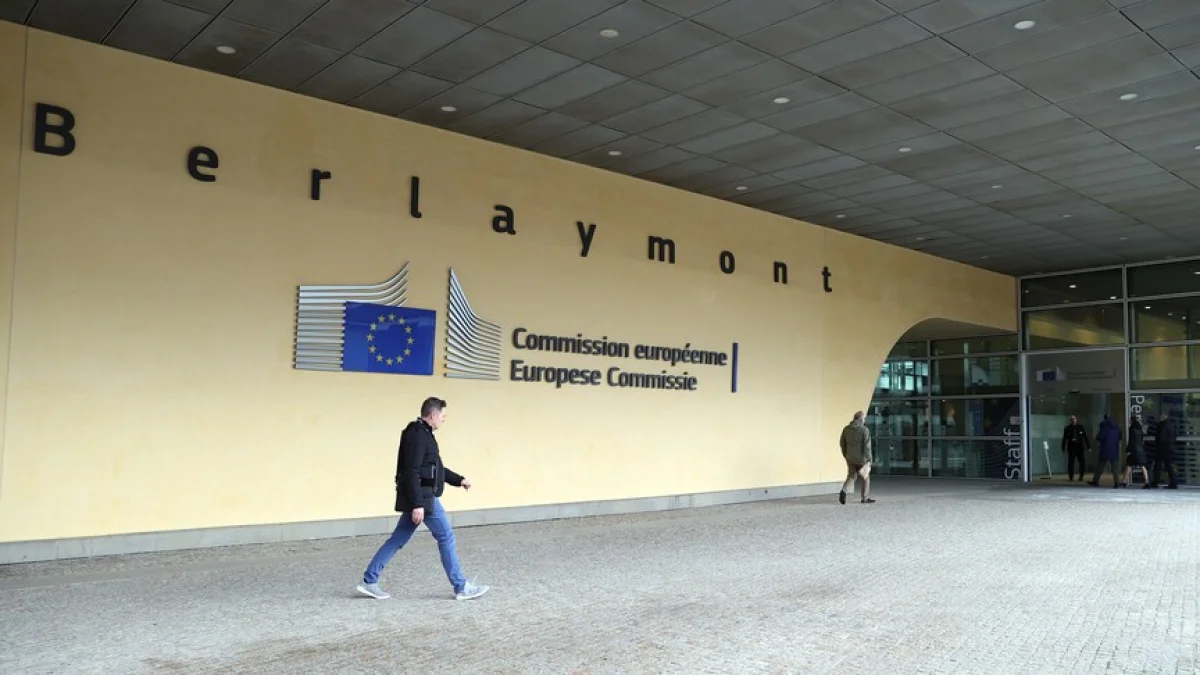
The European Commission on Tuesday proposed a new framework for future EU enlargement that would let candidate countries take part in selected EU policies before becoming full members. It also proposed safeguards that could apply to new member states for up to 15 years after accession.
The European Commission said the measures would allow the bloc to respond if a country seriously backtracked on commitments made during accession negotiations, particularly on the rule of law, democracy or fundamental rights.
Commissioner for Enlargement Marta Kos said the aim was to ensure that countries joining the EU continued to meet the standards required for membership.
“We do not want a two-tier membership,” Kos told a press conference in Brussels, saying existing and new member states should have equal rights.
She described the proposed safeguards as an “insurance policy” that could be activated in the event of serious breaches. Possible measures include restricting financial support or, in the most serious cases, suspending a new member’s voting rights in the EU Council.
The proposed period of safeguards could last up to 15 years. Specific transitional arrangements would be negotiated with each candidate country and set out in the relevant accession treaty or regulations, the Commission said.
Candidate countries could join selected policies gradually
The Commission also proposed a more ambitious approach to bringing candidate countries into EU policies before full membership. Kos described gradual integration as an “accelerator for enlargement and a bridge” between the EU’s goal of stabilising Europe and its merit-based accession process.
Countries making sufficient progress on reforms and demonstrating strategic alignment with the EU could be allowed to participate in selected policies. The Commission plans to explore closer integration in energy, transport, artificial intelligence, security and defence.
“Gradual integration is not a substitute for full membership,” Kos said, adding that participation would remain “conditional, merit-based and reversible.”
She named Montenegro, Albania, Moldova and Ukraine as the four most advanced candidates for membership and said the Commission intended to publish indicative roadmaps for them.
Commission calls for changes to EU decision-making
The package also proposes changes to prepare EU decision-making for a larger membership. The Commission said it would continue to advocate using so-called passerelle clauses to replace unanimity with qualified majority voting in areas including sanctions, tax fraud and certain fiscal measures in energy policy.
It also proposed qualified majority voting for opening negotiating clusters and other interim decisions in accession talks.
The proposals will now inform discussions among EU member states, the European Parliament and the EU Council on institutional and policy changes needed for future enlargement.