OMM Newsroom

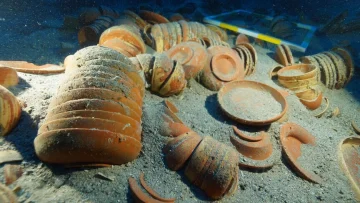
Shipwreck remains discovered off Türkiye’s southern coast near the uninhabited Kekova Island could belong to the oldest known wreck in the world. Archaeology professor Hakan Öniz said the assessment is based on amphorae found at the site.
The two-handled pottery vessels, used in antiquity, are thought to date to the Early Bronze Age, around 4,400–4,700 years ago. Öniz said their shape matches examples made in the Levant, in the eastern Mediterranean.
“We were astonished when we realized this was the oldest example,” Öniz said.
Analysis of clay samples indicates that the vessels came from the Jordan Valley. Their style and decoration point to workshops along the coasts of present-day Gaza, Israel and Lebanon.
According to Öniz, similar Levantine amphorae have previously been found in Egypt, near the pyramids. The vessels recovered near Kekova closely resemble those examples.
Comparable vessels have also been found in Troy, in what is now Çanakkale province, and on the island of Crete. Öniz said this suggests the ship may have been heading to one of those destinations. The amphorae were likely used to carry wine or olive oil.
Footage released by Türkiye’s Ministry of Culture and Tourism shows archaeologists working underwater, with the amphorae still on the seabed. A lionfish can also be seen swimming beside one of the vessels.
“We were trying to understand what the captain and sailors felt at the time of the accident,” Öniz said.
A diver during underwater archaeological excavations near Kekova Island in Antalya province, October 14, 2026.