OMM Redaksiyası

The United States and China are seeking limited cooperation on global artificial intelligence governance even as their technological rivalry intensifies, according to a recent report by the Center for Strategic and International Studies (CSIS), cited by Anadolu Agency.
The two countries are exploring cooperation on monitoring AI-powered cyberattacks, defining advanced “frontier” models and preventing state-of-the-art systems from falling into the hands of non-state actors.
Competing approaches to global AI governance
According to the report published on Sept. 21, two competing approaches to global AI governance are emerging from Washington and Beijing, while a third is being advanced by the United Nations.
The US-led Silica Initiative, which focuses on AI and semiconductor supply chains, had 24 partner countries in June. Meanwhile, about 29 countries joined the Chinese-led World Artificial Intelligence Cooperation Organization (WAICO) as founding members.
Pax Silica comprises mainly high-income economies and US security partners in Europe, the Indo-Pacific, the Middle East and Latin America. WAICO members are largely from low- and middle-income countries. Kazakhstan is the only country participating in both initiatives.
The main areas for potential US-China AI cooperation include tracking AI-enabled cyberattacks, China’s access to advanced US models, Washington’s restrictions on open-source Chinese models and safeguards against non-state actors obtaining frontier systems.
AI dialogue continues alongside chip competition
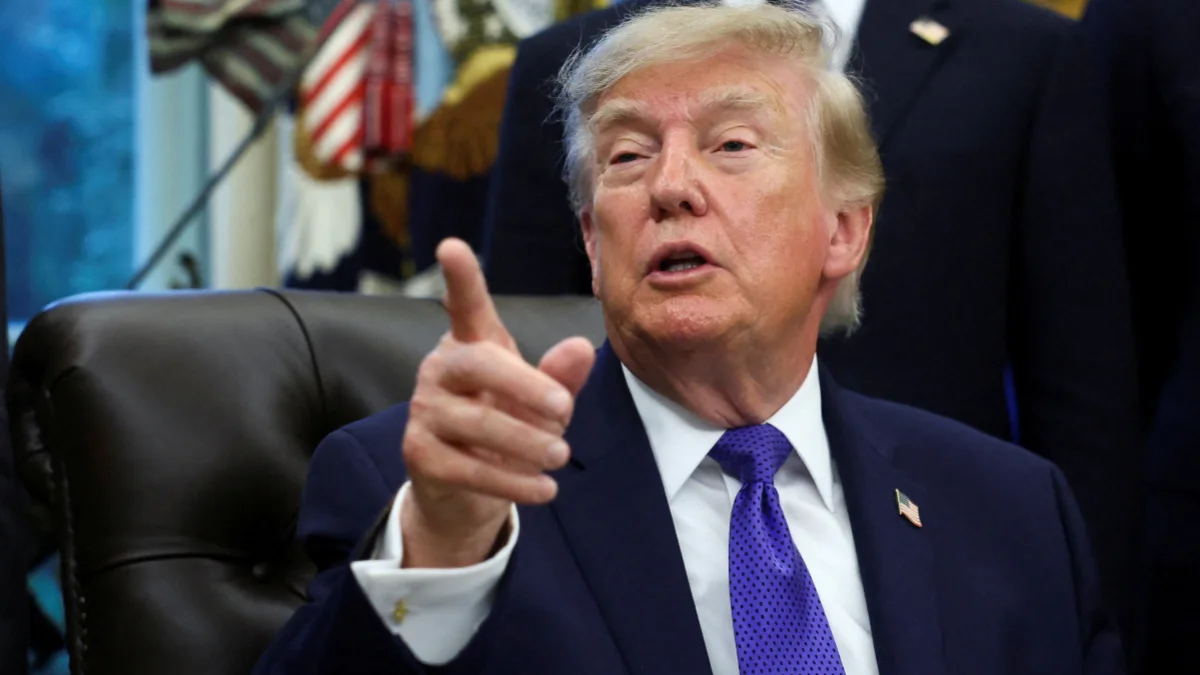
During Chinese President Xi Jinping’s visit to Washington last week, discussions with US President Donald Trump addressed the development of AI in a human-centred and controllable manner, as well as associated risks.
The CSIS report said future talks could seek common definitions, including criteria for determining which systems qualify as frontier models.
However, access to high-performance chips remains a central element of the technology rivalry. US export controls limit Chinese AI laboratories’ access to advanced chips and computing resources, while Beijing is pursuing the development of its own semiconductor and AI capabilities.
The report noted that no established mechanism currently allows the two sides to verify whether AI models comply with security requirements, creating an obstacle to possible regulations.
‘Controlled techno bloc formation’
Arzu Al, a political economy professor at Marmara University, told Anadolu Agency that the Xi-Trump meeting should be viewed as an effort to manage the costs of competition. She said the core dispute between the two countries was no longer confined to trade deficits or tariffs.
“AI, advanced semiconductors, data infrastructure, energy capacity and critical minerals became integral parts of economic power, national security and foreign policy capabilities,” Al said.
She said Xi had stressed that AI should remain under human control and that its risks and benefits should be addressed jointly, while Trump backed continued dialogue and cooperation in the field.
According to Al, this did not signal the end of technological competition. Instead, it showed that rivalry was intensifying in some areas while controlled cooperation remained possible in others.
Al described the emerging relationship not as a classic Cold War-style division into blocs, but as a “controlled techno bloc formation”. She said neither side wanted to fully sever economic ties or allow strategic interdependence to constrain its potential.
“What is decisive in the technopolitical order is not so much the interdependence but rather the extent to which the interdependence is asymmetrical and whether it can be weaponized to pressure one side,” she said.
Al added that the discussion of Taiwan during the meeting demonstrated that fundamental US-China security disagreements remained unresolved.
“Maintaining serious competition in security and technology while cooperating on AI at the same time is not a contradiction – it is precisely the nature of the current relationship between the two countries,” she said.
She said competition and cooperation would coexist in the new era, while efforts to expand technological capacity and secure access to critical inputs would remain central to US-China relations.