OMM Redaksiyası

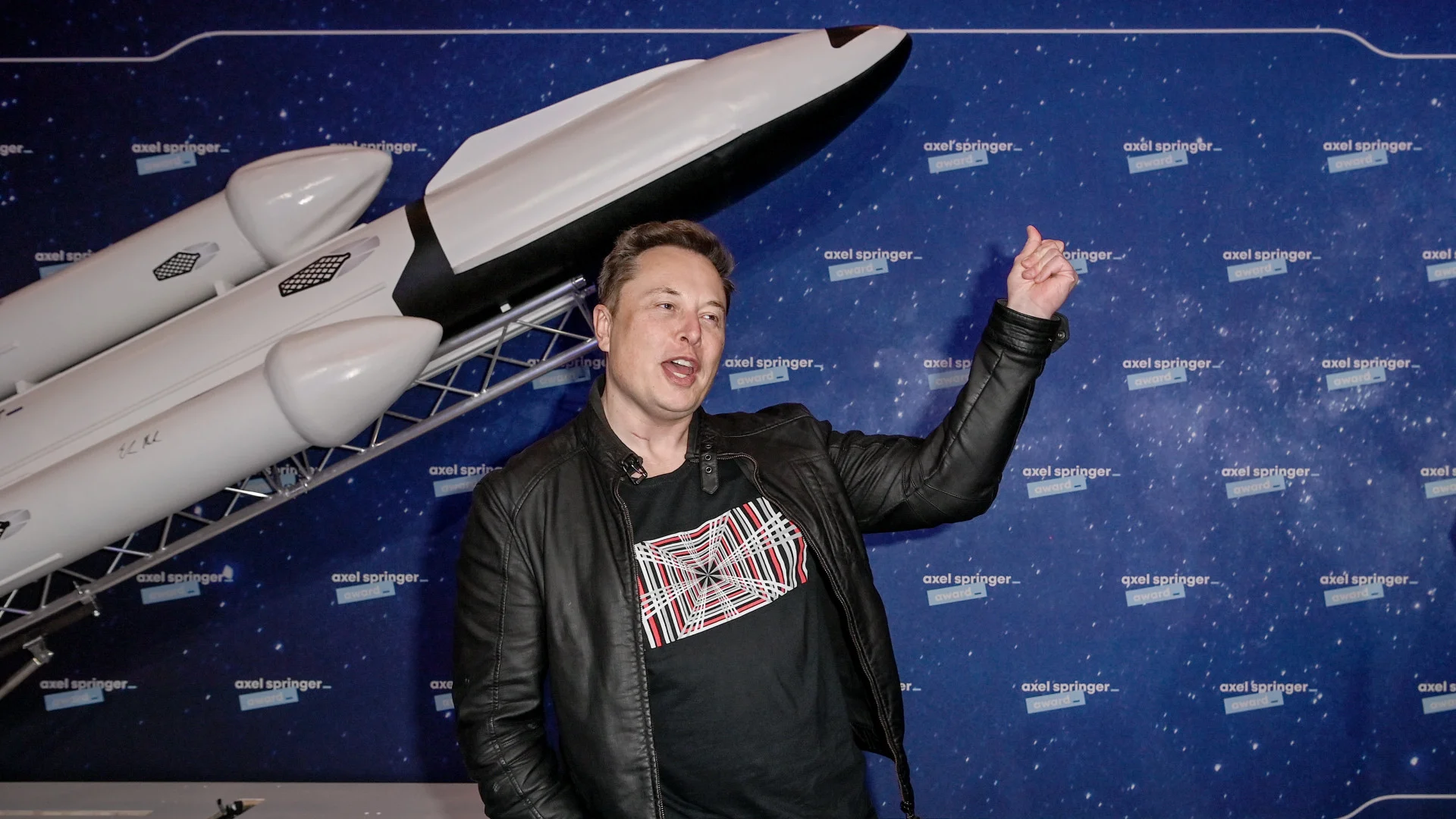
Artificial intelligence systems require large amounts of electricity. As technology companies struggle to find enough power to meet rising demand, Elon Musk has proposed building data centers not on Earth but in orbit, where sunlight is nearly continuous.
The idea has moved from discussion to applications submitted to regulatory authorities. However, most experts doubt that orbital centers can be built on the timeline Musk has suggested or operate at a competitive cost.
How could data centers in orbit work?
Musk said in January, while appearing alongside BlackRock CEO Larry Fink at the World Economic Forum in Davos, that energy—not chips—has become the main constraint on artificial intelligence. According to the forum, he said AI centers powered by solar energy in orbit could become economically viable within a few years. pv magazine reported that he put the timeline at two to three years.
A few days later, SpaceX applied to U.S. regulators to launch up to one million satellites. According to the BBC, the application presented orbital data centers as the cheapest and most energy-efficient way to meet growing demand for AI computing. Reuters reported that the company was seeking permission to deploy solar-powered satellites for this purpose. The news agency later described the merger of SpaceX and Musk’s AI company, xAI, as an investment in data centers in space.
According to Reuters, which cited a project description prepared by SpaceX engineer Ian Dahl, Musk said in June that AI satellites would rely largely on existing technology.
Orbital advantages and economic doubts
Musk’s argument is that solar panels in the right orbit would remain almost constantly in sunlight, without night, cloud cover or some of the obstacles created by Earth’s atmosphere. He has said a solar panel in space could produce about five times as much energy as one on Earth. At an event in Washington on Sept. 29, Musk said terrestrial solar panels typically deliver between one-fifth and one-eighth of their rated capacity, while ground-based systems also require large batteries. He described space as “always sunny.”
Cooling is another potential advantage. Chips generate heat, and cooling data centers on Earth can be costly. Musk has noted that the background temperature of space is about three kelvins, or minus 270 degrees Celsius, and argued that removing heat through radiation would be very cheap.
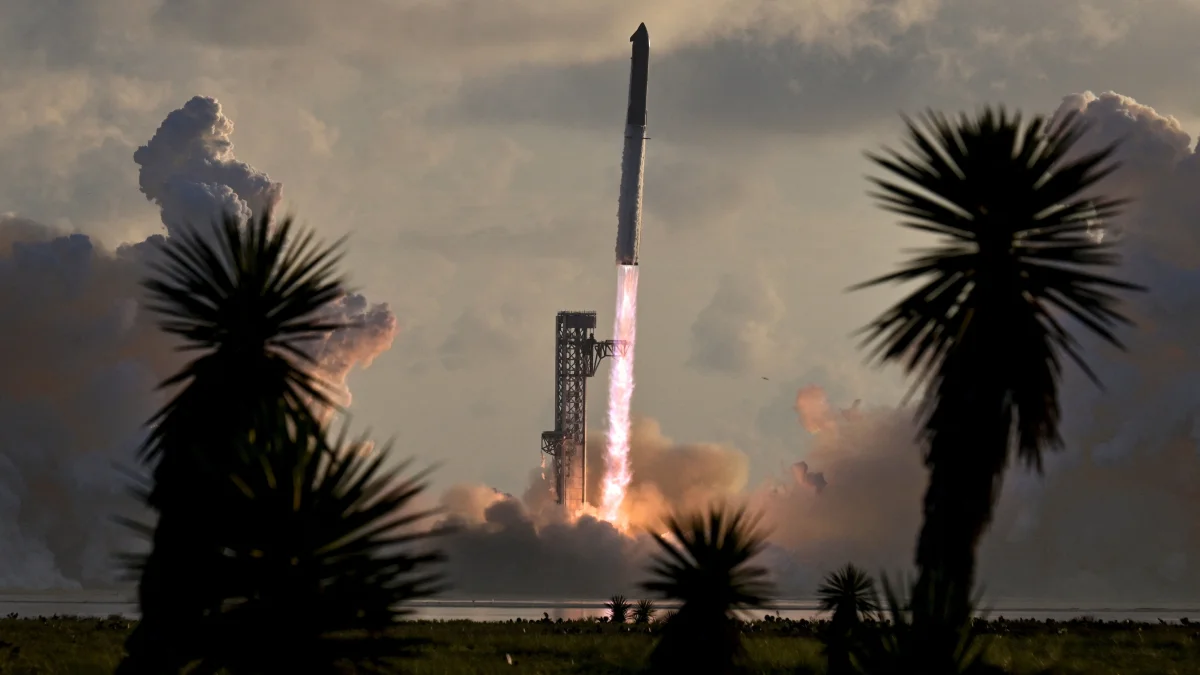
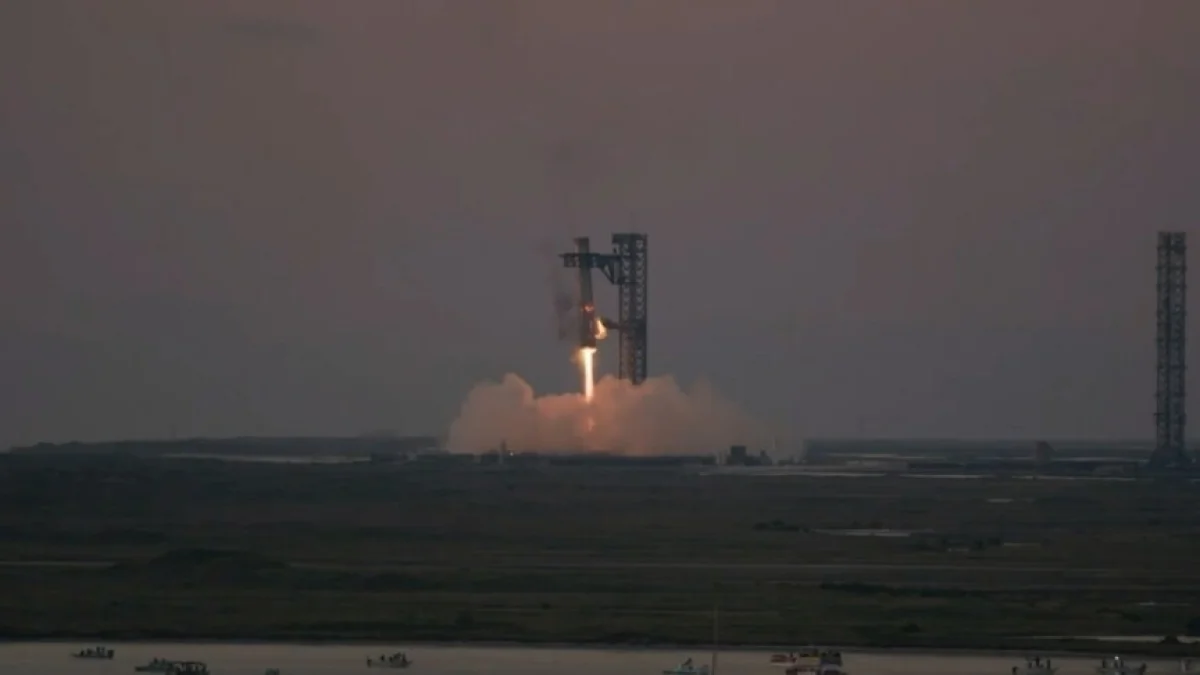
The cost of launching equipment into orbit is another major factor. Musk has said full reusability of SpaceX’s Starship rocket could cut the cost of reaching orbit by 100 times. At the same Washington event, he said he expected Starship to fly at least once a week starting next year. Musk also said he wanted SpaceX and Tesla to reach annual solar-power production of 200 gigawatts, with a long-term goal of “hundreds of terawatts” a year.
A 2024 feasibility study by NASA’s Office of Technology, Policy and Strategy examined two 2-gigawatt projects that would collect energy in orbit and transmit it to Earth. The study said their cost per kilowatt-hour could be 12 to 80 times higher than that of terrestrial renewable energy sources, making them uncompetitive even if access to space were free. Cheaper launches, solar cells with 50% efficiency and electric-propulsion transport could together cut costs by about 95%.
Later estimates also suggest that orbital systems would be expensive. According to an analysis summarized by Latitude Media in September, Bank of America estimated the cost of a 1-gigawatt orbital data center at about $170 billion—roughly three times the cost of a comparable facility on Earth. Boston Consulting Group has estimated that launch costs would need to fall from about $1,500 per kilogram to $100.
Independent research firm SemiAnalysis said in a model published in June that orbital computing currently costs more than four times as much as computing on Earth. The firm expects costs to converge only around 2040, well beyond Musk’s two-to-three-year forecast.
Technical hurdles and next steps
Despite the cold of space, heat remains a key engineering challenge. A vacuum insulates rather than transfers heat, so a spacecraft can remove heat only by radiating it. According to calculations published in IEEE Spectrum, a 1.4-square-meter radiator could be needed to keep a single Nvidia H100 chip operating at 60 degrees Celsius, while a 40-kilowatt server rack could require 80 square meters of radiator—about the size of a pickleball court. A 100-megawatt data center could need at least 2,500 such radiators. An analysis by Mach33 suggests that radiators could account for 10% to 20% of the total mass of larger satellites equipped with sufficient solar panels.
Cosmic rays and charged particles can flip bits in memory and damage chips. An IEEE Spectrum article about a startup working on orbital computing identified this as a major risk for GPUs not designed for space. Faulty equipment can be replaced on Earth, but doing so in orbit is usually difficult or impossible. Reuters reported in April that analysts had compared the project with Microsoft’s subsea data center initiative, which the company later discontinued; that equipment could not be repaired or upgraded.
Assuming an annual failure rate of about 9% over five years, Forethought estimated that an orbital data center’s computing capacity could fall to about 38% below its initial level. The estimate is based on Meta data. The organization cautioned, however, that the actual failure rate in orbit is unknown and could be higher.
A network of up to one million satellites could significantly increase congestion in orbit. A modeling study reported by Science in August found that planned large satellite networks could approach the threshold for the Kessler syndrome. In this scenario, space debris multiplies uncontrollably and can make satellite networks unsustainable. In its report on the theory proposed by NASA astrophysicist Donald Kessler in 1978, Science cited SpaceX’s plan for a one-million-satellite data center as a potential major source of debris.
Latency could also limit applications. According to IEEE Spectrum, only some workloads can tolerate delays of tens of milliseconds. Orbital computing may therefore be better suited to AI training and batch processing than to real-time services.
Musk’s approach differs from proposals to transmit energy collected in space to Earth using microwaves or lasers. Under his plan, electricity would be used where it is generated—in orbit—while only the results of processing would be sent to Earth through optical links. Analysts cited by Latitude Media consider this a more practical approach for the AI era, since transmitting data is easier than transmitting gigawatts of power.
The European Space Agency’s Solaris program is examining other approaches to space-based solar power. These include a radio-frequency project being developed with Thales Alenia Space and Italy’s Enel, as well as a mirror concept by Arthur D. Little and France’s Engie that would direct sunlight toward existing solar power plants.
A 2025 study published in the journal Joule and linked to ESA research offers some support for the mirror concept. It found that, even if the system cost six to nine times more than terrestrial solar power, it could replace 80% of wind and solar capacity in Europe’s electricity grid by 2050 and cut demand for batteries by 70% by providing power when ground-based sources cannot generate electricity.
Experts broadly agree that sunlight is abundant in orbit and that heat can be removed through radiation. The debate is over whether these advantages can outweigh the high costs—and when that might happen.
Starship could be decisive. If SpaceX can operate the rocket regularly and reduce launch costs to the levels analysts consider necessary, the economics could change. Otherwise, orbital data centers may remain an expensive technology with limited applications. For the near future, most of AI’s energy demand is expected to be met on Earth.