 OMM Redaksiyası

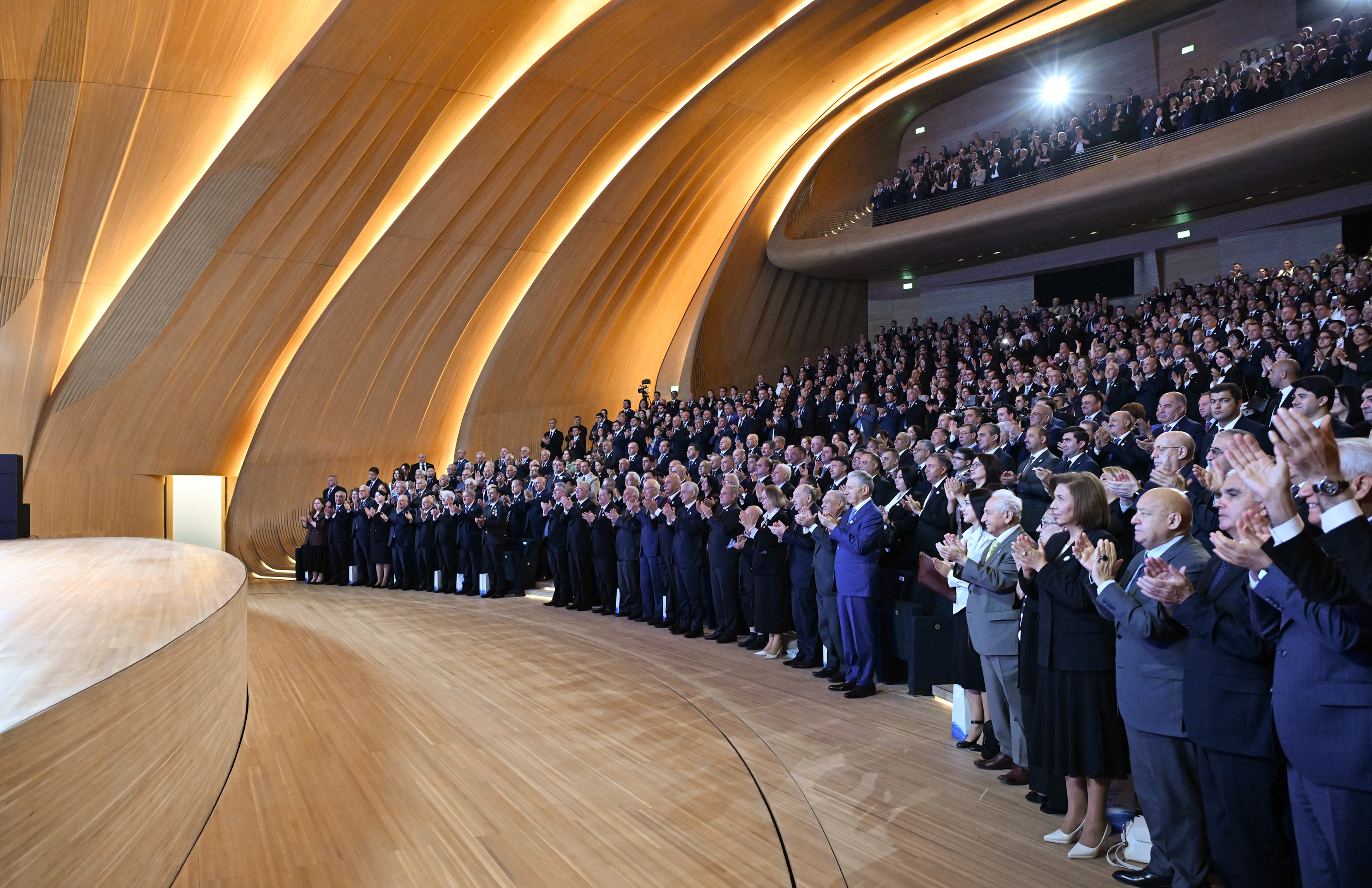
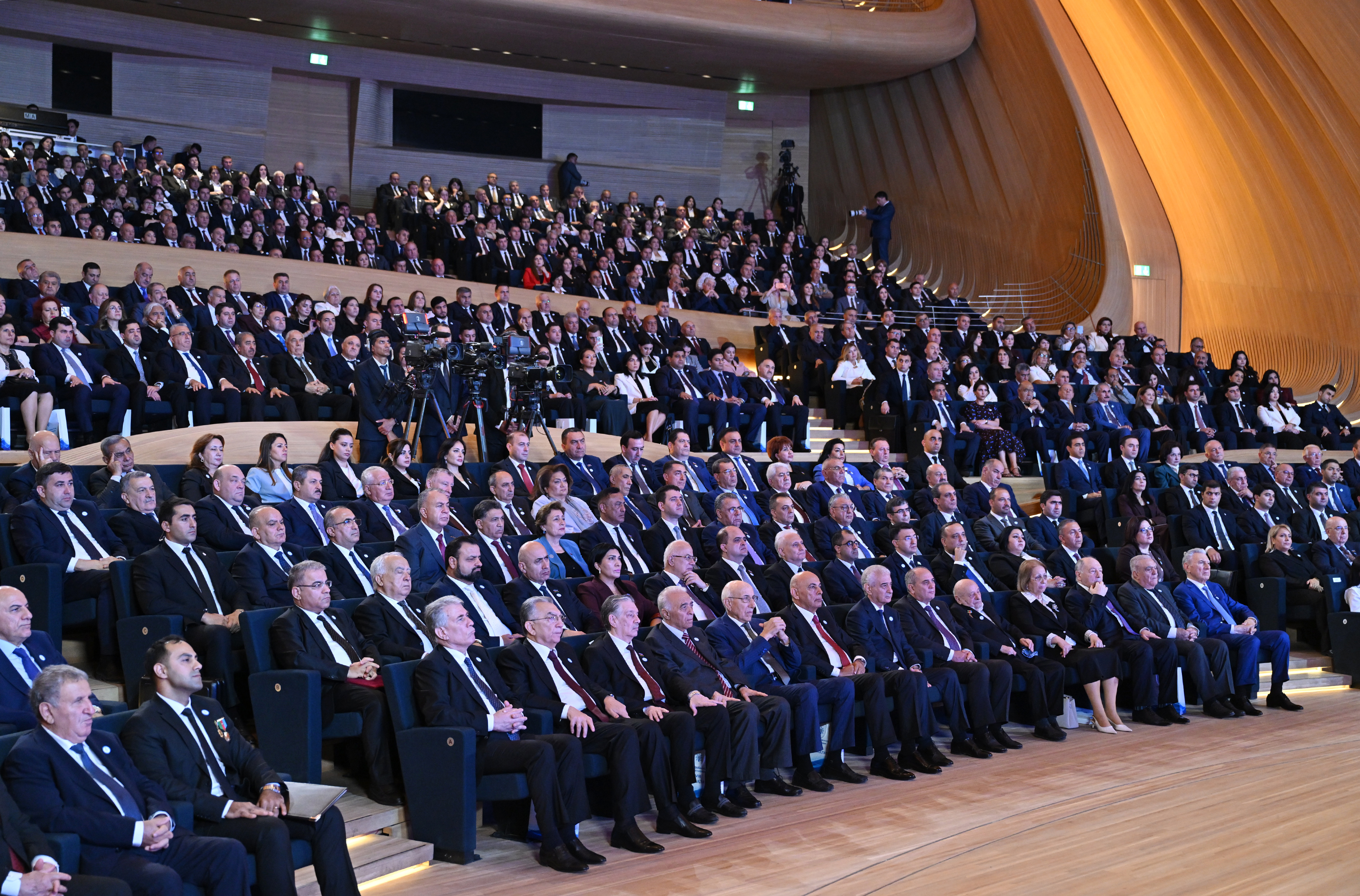
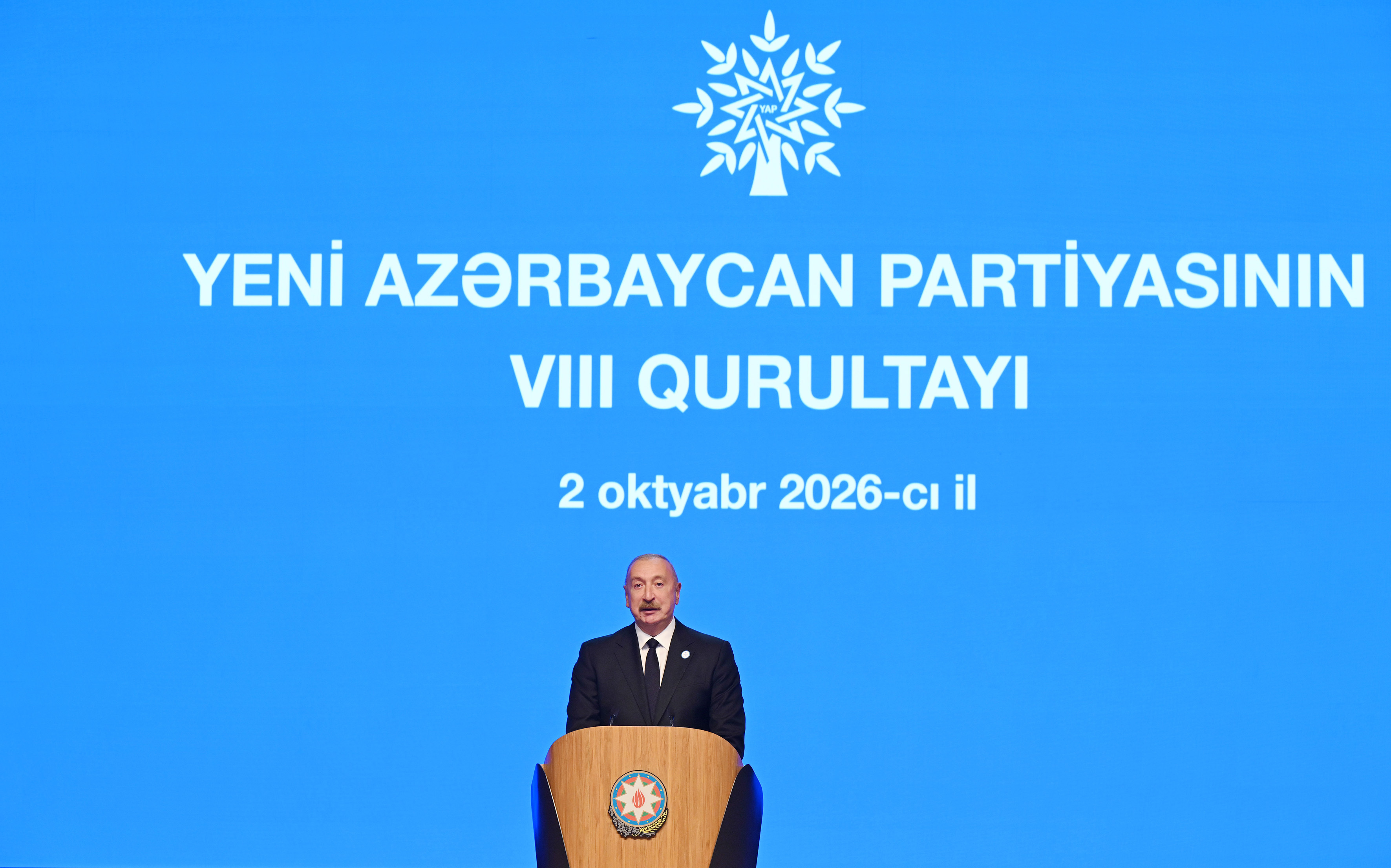
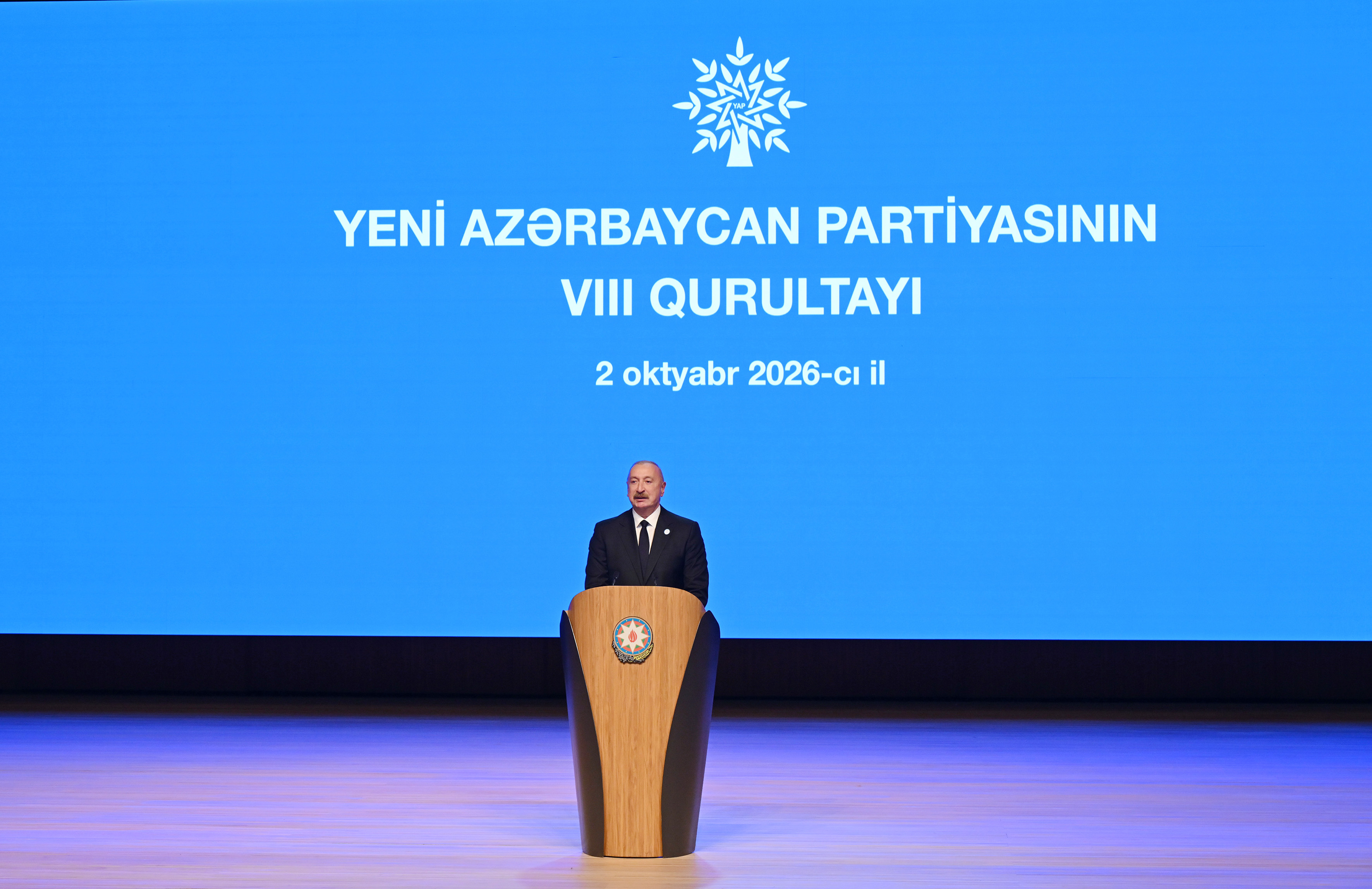
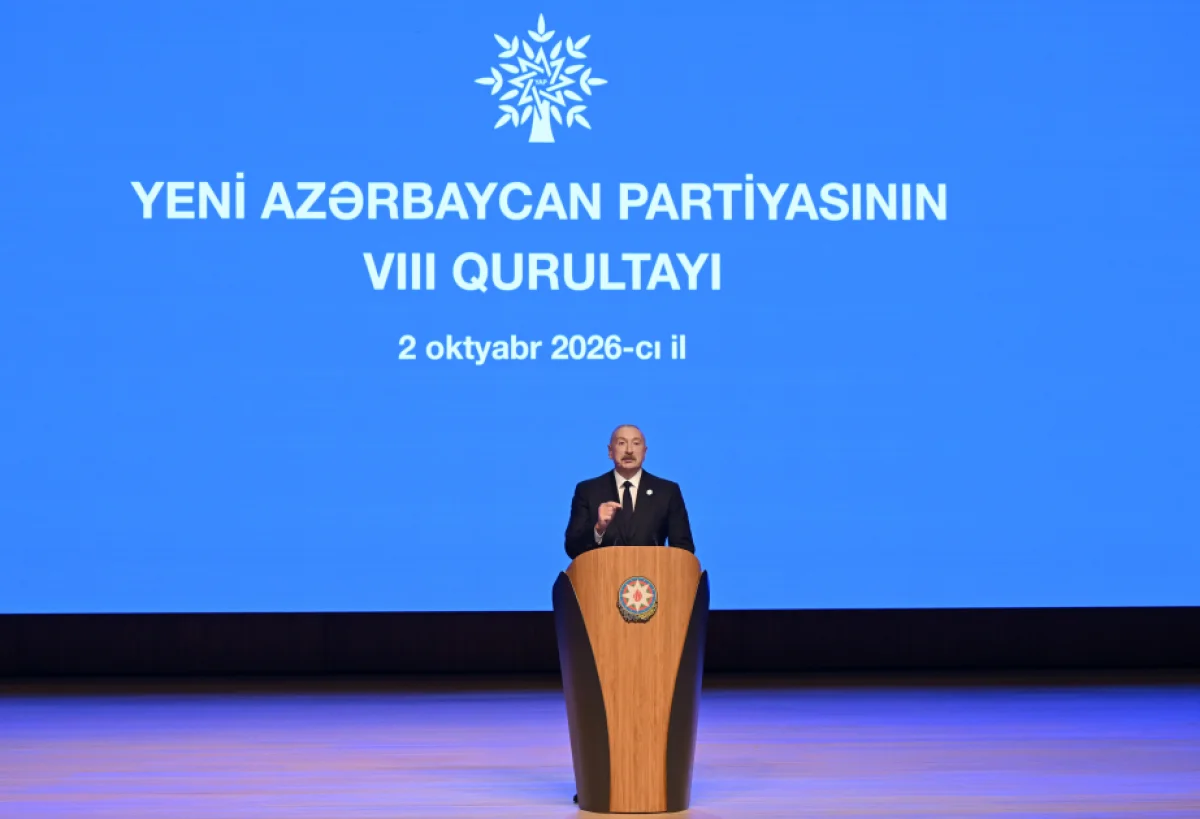
On October 2, the 8th Congress of the New Azerbaijan Party (YAP) was held at the Heydar Aliyev Center in Baku.
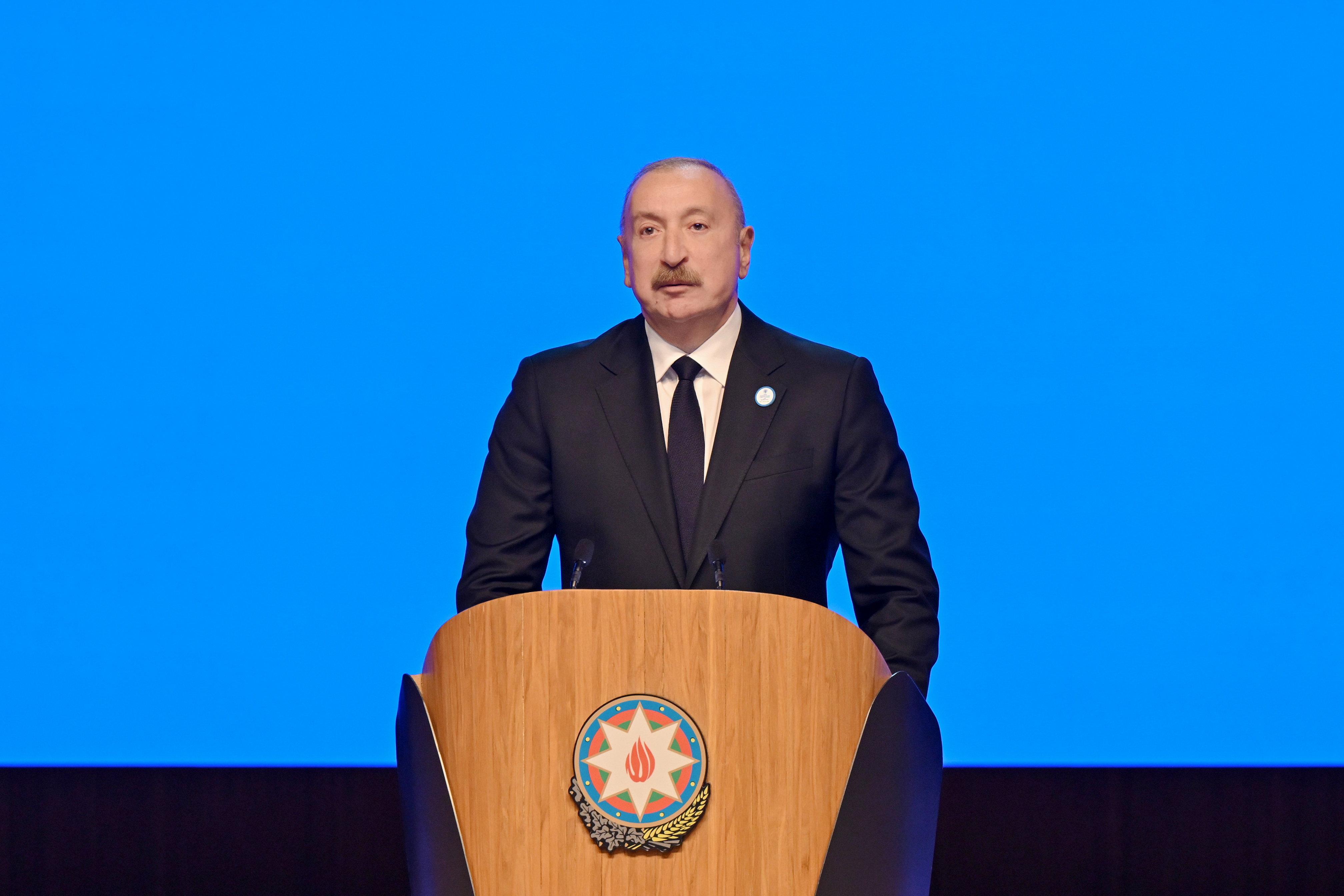
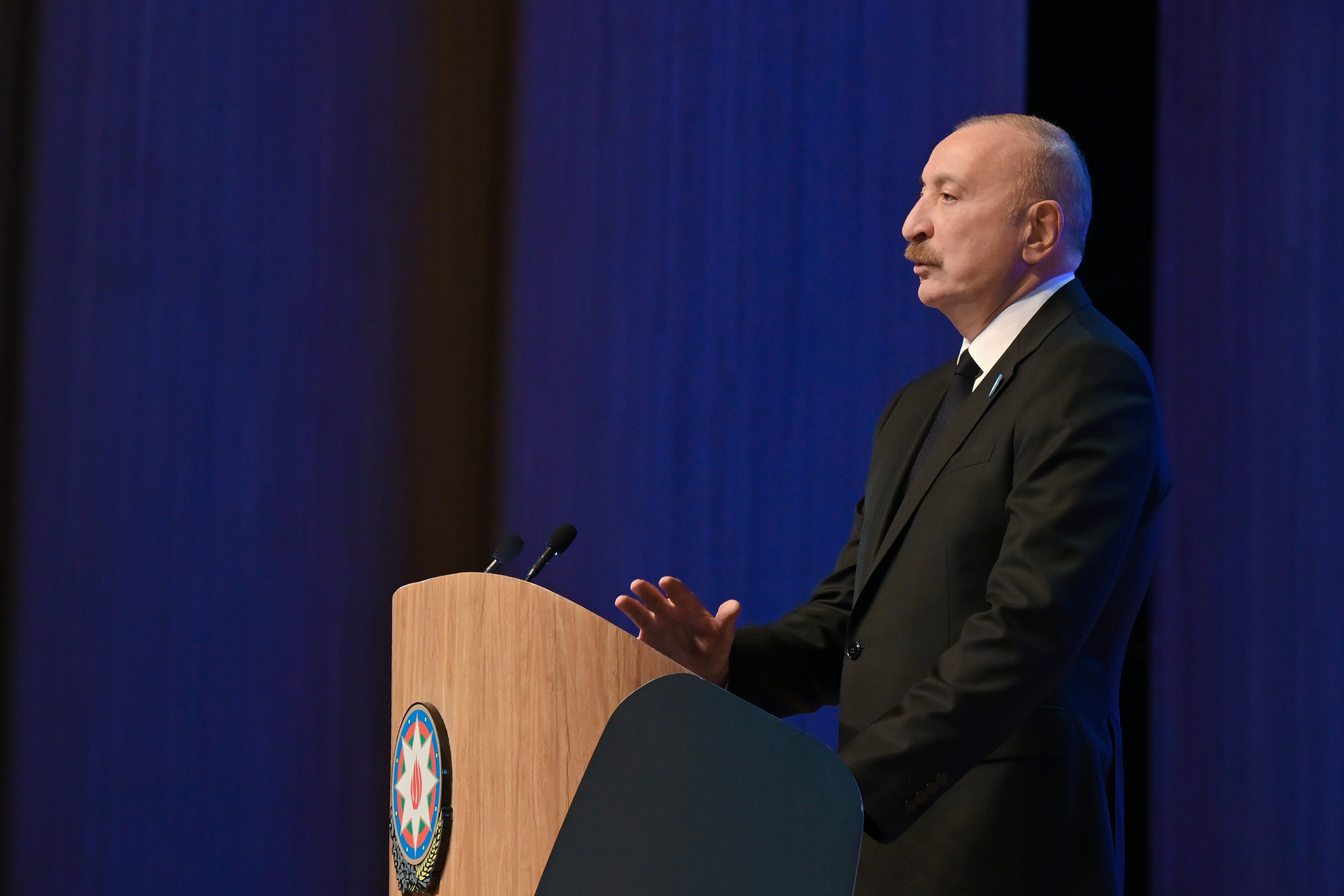
“Operative Information Center-OMM” reports that President of the Republic of Azerbaijan and New Azerbaijan Party Chairman Ilham Aliyev delivered a speech at the event.
— Esteemed congress participants,
The congress of the New Azerbaijan Party is an important event in the public and political life of our country. I can say that our party’s activities, the decisions it has adopted and its political course are of great importance not only for our country but also for the region. The New Azerbaijan Party is the largest political force not only in Azerbaijan but also in the South Caucasus. Although it was established as an opposition party, our party has been in power for more than 30 years. Our party activists have played a major role and made a significant contribution to our country’s successful and honorable path in recent years.
Our congress is taking place in a new public, political and geopolitical environment. This is the first time our congress has been held since Azerbaijan fully restored its territorial integrity and sovereignty. Our 7th Congress also took place in a new environment for that time, because only a few months had passed since our glorious Victory, and the whole world was talking about it. Azerbaijan, on its own, ended the occupation and created new realities in the region. From that point—from our Victory in the Second Garabagh War—to this day, these realities have been accepted by the whole world. Yet this did not come easily. We faced very serious resistance over those years. We faced campaigns directed against Azerbaijan and filled with lies and slander. Some countries seriously discussed imposing sanctions against us. But our resolve, our unwavering actions and political steps—and, above all, the Azerbaijani people’s united position—thwarted all these ill intentions. The Second Garabagh War is a glorious chapter in our history. November 8 will be our eternal holiday. September 20 is equally significant, because on September 20, 2023, Azerbaijan put an end to separatism and occupation and restored its territorial integrity and sovereignty.
May God rest the souls of all our martyrs. Their dear memory will live in our hearts forever.
These two military victories are of great significance not only for our people and state but for the whole world. First of all, a new precedent has been set, and we achieved these victories in the face of resistance from major powers. It is no secret that the main purpose of the Minsk Group, established in 1992, was to freeze the conflict, not to help restore Azerbaijan’s territorial integrity. From the first day of the Second Garabagh War, we faced intense pressure and threats for 44 days, both publicly and behind closed doors. But no one could turn us from our path.
The Azerbaijani people united as one and demanded their rights, and the Azerbaijani government fulfilled this honorable mission. Azerbaijan paved the way for serious geopolitical change. Those who once said, “Garabagh is Armenia, and that’s final,” now say, “Garabagh is Azerbaijan!” They say this under compulsion. Armenia’s recognition of Azerbaijan’s territorial integrity is simply not an expression of goodwill and cannot be regarded as such. Nor can all the blame be placed on Armenia’s previous leadership. Armenia’s former leaders—all of them—are war criminals and must face justice. The current Armenian government made territorial claims against us, tried to insult the Azerbaijani people and offended their dignity with inappropriate and uncivilized statements. We must never forget any of this. Whenever some foreign circles try to portray Armenia’s current leadership as a dove of peace, we remind them of this history. We recall the events of 2018–2020 so that history is not distorted and false narratives do not erase the real record.
After our glorious Victory, our efforts were directed toward the full restoration of our territorial integrity. We did not pause for a single day; we did not rest for even one day as we carried out this honorable mission. As a result, between the Second Garabagh War and the anti-terrorist operation, we worked on several fronts. We acted politically to prevent countries that were pro-Armenian from pursuing their dirty deeds against us, conducting a major international awareness campaign in international organizations. We also acted on the ground. We significantly improved our strategic positions in the Garabagh region, and several successful military operations were carried out. These operations were very brief, as they needed to be. The necessary steps were taken to pave the way for September 20 and achieve our aims with minimal losses. Processes along the conditional Azerbaijan-Armenia border also created the basis for Armenia to fully recognize Azerbaijan’s territorial integrity. As a result, in October 2022, Armenia officially recognized Azerbaijan’s territorial integrity and thereby perhaps unwittingly acknowledged that the Armenian armed formations then deployed in Garabagh were occupying forces. This further strengthened the legal basis for taking full control of the region, neutralizing illegal armed formations and disarming them. That basis had always existed. The whole world recognized Garabagh as an integral part of Azerbaijan. But we all know that people may say one thing while doing another behind closed doors. We faced this hypocrisy for 30 years, but the fist of the Azerbaijani soldier put an end to it.
The beginning of our victories dates back to the founding congress of the New Azerbaijan Party. At that time, courageous and progressive people in our society, people who cared about the fate of the Azerbaijani state, rallied around National Leader Heydar Aliyev. The founding congress of the New Azerbaijan Party, held in Nakhchivan in November 1992, effectively paved the way for our victories. This was a demand of society, because Azerbaijan had already become ungovernable. We had suffered great losses after the restoration of independence, and even before it. The loss of territory, along with the troubling developments in our country, was effectively turning Azerbaijan into a failed state. Successive so-called leaders were effectively paralyzed and unable to fulfill their duties. As a result, our lands began to be occupied one by one. Azerbaijan had first lost full control of the former Nagorno-Karabakh Autonomous Region. Shusha and Lachin districts were occupied in May 1992, and a month later the Azerbaijan Popular Front–Musavat tandem came to power. This was a direct consequence of their actions. They resorted to this provocation to seize power and overthrow the government of the time, effectively handing the land over to Armenia. After that, our losses grew even greater.
The occupation of Kalbajar in April 1993 created a broad geographic link between Armenia and the former Nagorno-Karabakh Autonomous Region. As a result, greater numbers of personnel, weapons, ammunition and equipment were brought from Armenia. In effect, our defeat in the First Garabagh War took place at that time.
In fact, when one looks at the period after Heydar Aliyev—I mean the 1980s—everyone can clearly see that the Azerbaijani leaders who came after him failed to understand their responsibilities and showed weakness, cowardice and desertion. It is enough to say that, after Heydar Aliyev, three of the four people who led Azerbaijan in both the Soviet and independence eras fled Baku. They abandoned the country and people, who were at war or already facing Armenian aggression. Two fled to Moscow and one to Kalaki. The fourth had been removed from office by the Soviet leadership before the Armenia-Azerbaijan conflict began, and perhaps that is why he remained in Baku. This is a shameful chapter. I believe we can never erase it. We know it, and the younger generation must know it too: who governed Azerbaijan and what disasters our people faced. That is why the establishment of the New Azerbaijan Party was, I repeat, a demand of the people. Heydar Aliyev’s return to power was also a demand of the people. They knew very well that less than two weeks after Heydar Aliyev was removed from the Politburo and Soviet leadership, Armenian nationalists raised the issue of annexing Garabagh to Armenia in November 1987. The Soviet leadership and Gorbachev, the butcher of Baku, supported this proposal. In effect, the Soviet leadership had made its decision. The treacherous leaders in power in Azerbaijan, and the entire treacherous leadership, were merely instruments in their hands. Imagine: if Heydar Aliyev had been in Azerbaijan at the time, he would never have allowed these things to happen to the Azerbaijani people. He would never have allowed separatist trends to take hold in Garabagh. Knowing all this, the Azerbaijani people saw their path to salvation only in Heydar Aliyev and, as always, showed wisdom: in October 1993, National Leader Heydar Aliyev was elected President of the Republic of Azerbaijan. By then, however, we had already suffered great losses—our territory had been lost, and the economy had completely collapsed. A country rich in oil and gas was experiencing shortages of gas and electricity. Inflation exceeded 1,000 percent, and the treasury was empty. As Armenia occupied our lands, the Azerbaijan Popular Front–Musavat tandem also started a civil war and shed the blood of our brothers. They then fled in fear, each going in a different direction, and deserted their posts. In these circumstances, the Azerbaijani people entrusted their fate to their leader.
The period that followed was also very difficult and full of trials. But a decisive, courageous and brilliant figure like Heydar Aliyev was able to withstand them all, and his role was decisive in protecting Azerbaijan’s territorial integrity and saving the country from disintegration. Separatism, the threat of disintegration, two attempted coups and economic hardship were all realities at the time.
We had a population of eight million, one million of whom were refugees and internally displaced people, homeless and living in tents. This was a humanitarian disaster, and we were left on our own. No one helped us. No one helped us during the war in the 1990s, and no one helped us after it. We overcame these hardships on our own, and today we stand firmly on our feet. The will of the Azerbaijani people, their faith in National Leader Heydar Aliyev and his political course led to all these successful steps.
That is why the beginning of our victories was the founding congress of the New Azerbaijan Party and the period that followed. Yes, between 1993 and 2003, Azerbaijan effectively emerged from international isolation. At the time, sanctions were imposed on us even as we were subjected to occupation, largely as a result of the incompetent actions of the Azerbaijan Popular Front–Musavat government, including in foreign policy. The amendment to Section 907 was adopted at that time and has still not been fully lifted. We were effectively portrayed to the world as the aggressor. That inept Azerbaijan Popular Front–Musavat government did not lift a finger to change this. We had to break out of international isolation, state our position and prove that we were right. It took a long time, but eventually we succeeded. International organizations began adopting decisions and resolutions that reflected Azerbaijan’s position and the realities on the ground, one after another—including the UN General Assembly, the Organization of Islamic Cooperation and the OSCE. Even the European Parliament, which is hostile to us today, did so under compulsion. This marked our emergence from international isolation. Foreign investment was needed to improve the economy, because the treasury was empty. No country can develop without investment. National Leader Heydar Aliyev achieved this as well.
The ceasefire had only recently been declared. A few months later, the Contract of the Century was signed, and a large flow of investment began. Throughout this period, the foundations of statehood were also laid. Azerbaijan’s overall development strategy was defined, and it continues to guide us today. National Leader Heydar Aliyev’s political course remains unchanged.
Of course, as the years pass, tactical and even strategic objectives may change to some extent, but the main course remains unchanged: independence, statehood, economic independence, strong military capabilities and the ability to make maximum use of our own resources. I believe these points are enough to describe it concisely.
This policy has been pursued since 2003, is continuing today and will continue in the future. I do not want to say much about it; everything is there for all to see. Today, Azerbaijan is a country that commands great respect internationally. Many prominent experts and analysts already place Azerbaijan among the middle powers. There are many criteria for this. We have fully secured our economic independence. Today, we are a highly valued member of the international community, and we control our own destiny.
Every task we set ourselves over these years has been accomplished. First and foremost, we restored our territorial integrity and sovereignty. When I was first elected President in 2003, I declared that this would be our main task. We moved forward every day and every hour to achieve this honorable mission, and we succeeded. After our glorious victories, we also sealed peace with Armenia at the world’s most prestigious venue, the White House.
I would like to share some thoughts on the tasks ahead. I regularly make statements about the work to be done, including in interviews and speeches. I believe this is necessary even today, as the situation in the world is changing so rapidly. First of all, one of our main tasks is to strengthen our military capabilities. One might ask: we have achieved a glorious Victory, and Armenia was forced to sign a capitulation act. There is no conflict or war between Azerbaijan and Armenia today, and the borders are calm. The peace agreement has been initialed, and contacts are already taking place. Azerbaijan has even begun trade with Armenia. Why is this necessary? I think the answer is quite clear. It is always necessary for every country. Our people have experienced this tragedy. Our people have experienced Armenian ingratitude. The older generation surely remembers their sweet words, the toasts they raised to our health, how fluently they spoke Azerbaijani and even how they prayed.
But what happened in the end? They saw that we were weakening a little and had stumbled, and they stabbed us in the back. This was not the first time in their history. They did the same thing elsewhere a century earlier. We must never forget this; we must remain vigilant and always be 10 times stronger than them, every day. That is how things are today, and that is how they will be tomorrow. This is the first factor.
The second factor is the processes unfolding in the world, the growing number of wars and their widening scope. Areas around us are ablaze and boiling. Wars are not ending; new conflicts are emerging—in the North, in the South and in the Middle East. Wars and clashes continue all around us, and there is no international mechanism to stop them—and probably will not be. International law has completely broken down, and the number of those who respect it is falling sharply. We must therefore be ready every day to respond to any military provocation. We must acquire, and are acquiring, enough strength to ensure that no one even considers provoking Azerbaijan. This is our first task, and it is no coincidence that military and security matters remain a priority in the state budget now under discussion, including next year’s budget, which allocates close to 9 billion manats for these purposes. Of course, we have other needs, first and foremost the reconstruction of Garabagh and East Zangezur and improving people’s social conditions. We are doing that too, and all of this is included in the budget under discussion. But if we cannot protect ourselves, any other project will be entirely insignificant.
Security measures are essential. Yes, the Azerbaijani people live in safety and peace today. This can be considered a great asset in the world we live in. A look at the world map today shows that very few peoples and countries enjoy as much stability, peace and security as the Azerbaijani people. This is our reality. That is why security measures must remain on the agenda at all times. There are no risks inside the country—physical, ideological or otherwise. All risks are taking shape beyond our borders. As Azerbaijan grows stronger and pursues a more active and openly independent policy, pressure against us will increase, especially as we return 10 arrows for every arrow aimed at us. We do not leave a single blow against us unanswered. For one blow, we may return two, five or 10, so that everyone stays in their place, does not interfere in our affairs, intrude on our way of life or tell us what to do. Everyone should go and look after their own people and state. Today, Azerbaijan has become an example for many countries. Serious measures are being taken and will continue to be taken against risks, both physical and ideological.
Ideological security is as important as physical security, because ideological subversion is directed inside the country. We protect our borders, and that is one of our responsibilities. We have secured and protected our state borders using modern technologies. But ideological risks know no borders, particularly in today’s world of the internet, cyberattacks and artificial intelligence. We must therefore protect ourselves from ideological subversion. How? First and foremost, through education. The more educated, knowledgeable and literate our people are, the less likely they will be to fall for lies, rumors and ideological subversion filled with poison. Second, patriotism. I am sure that all of us—every patriotic Azerbaijani and citizen of Azerbaijan—take pride in our state. We have achieved an unprecedented Victory in the world. And, I repeat, we did it alone.
Wars are being fought in different places today. Everyone has a big uncle behind them, as they say. Some have several. But we were alone. All those big uncles were against us. The co-chairs of the Minsk Group were against us. They are leading countries in the world today. Just look at whom we fought. They stood behind Armenia, and they still do, each in their own way. We are proud of our Victory, our courage and resolve, our people and our state. This too is a serious barrier against ideological subversion. Of course, our ideological space must be free of foreign elements and influences. This is also part of our foreign policy strategy. We conduct our foreign policy—and must continue to do so—in a way that prevents anyone from interfering in our affairs. We do not need anyone’s help or patronage. When we needed help, no one helped us. When we had one million refugees, no one extended a hand. Whatever we acquired, we paid for—including all our weapons, at world prices, down to the last bullet. I say this to you with full responsibility, as Supreme Commander-in-Chief and the person who led all these efforts. You know how much Azerbaijan has armed itself since 2003, building domestic production and buying from abroad. Not once did anyone give us even a one-manat or one-dollar discount. Sometimes weapons were even sold to us at several times the world price. We had no choice but to accept this. This is a very serious issue.
Our ideological work, including the work of party activists, must ensure that the realities of Azerbaijan, the work being done in our country and the very positive atmosphere here remain part of public discussion. The scale of construction underway in Azerbaijan is extraordinary; I do not know what other country is undertaking comparable work. I do not mean only Garabagh and East Zangezur, although development there is also unprecedented, but every region. The time has come to organize ideological work properly, abandon clichés and move away from events that are merely formal. We need new, modern ideological work. Our advantage is that, unlike some countries, we do not need to invent myths. In some countries, certain leaders try to claim past achievements as their own or distort history to exaggerate their role. We do not need that. We need the truth to reach every citizen, especially at a time when information sources are so diverse, including in the Azerbaijani language. This also requires attention. Why is an Azerbaijani-language resource set up in some country? To help us? No, to carry out subversive activities against us, confuse our people and poison the minds of young people. That is the purpose. When you see a resource created somewhere in Azerbaijani, know that this is its aim. We do not have to look far to find examples: right next door, Azerbaijani-language platforms broadcast subversive content against us around the clock. There are also Azerbaijani-language resources in Western countries. Why? To undermine this unity, bring Azerbaijan under their control, turn us away from our path of independence and then govern us. That is the aim. This area is as important as physical security, and who should be at its center? Of course, members of the New Azerbaijan Party.
As I have said, our foreign policy steps are widely appreciated around the world, and our influence is growing. We are joining many new formats. It would be difficult to find another country as active as Azerbaijan in building diverse international relations and engaging with many countries—indeed, with all poles—while defending its interests. There may be one, but in any case this is a rare experience. The events of the past month alone are enough to show that senior representatives of countries hostile to one another meet in Azerbaijan on the sidelines of international events. Meetings and events are also held in Azerbaijan to reduce certain international risks. Why is Azerbaijan chosen? First, because people trust us and know that Azerbaijan is a reliable partner. Second, many countries now belong to, or want to join, different camps. We do not join any camp and never will; we do not need to. It is not easy for a country with a relatively small territory and population to stand independently on the world stage and earn respect. There are many reasons for this, and I do not want to discuss them at length. Going forward, our foreign policy must not only be defensive but also active and proactive. Our country’s role in international organizations is also undeniable. Everyone now remembers that, after the UN, we chaired the second-largest organization for four years, having been elected by unanimous decision. A very significant event took place last November: Azerbaijan was accepted as a full member of the Central Asia Consultative Meetings. We are not located in Central Asia but in the South Caucasus. Yet this unprecedented development shows how close Azerbaijan is to these countries and how important our political, economic, transport, energy and other projects are.
Here is another example: an organization called D-8 has been operating for 30 years. It had eight members, including the largest Muslim-majority countries by population. Not a single new member had been admitted in those 30 years. Azerbaijan alone, as they say, achieved this honorable goal, and we are now a member of D-8. We have very close ties with the Organization of Islamic Cooperation. A summit is due to be held in Azerbaijan next year. It will not be an ordinary summit, because, unfortunately, Muslim countries are at war with one another today. This deeply concerns and disappoints us; it should never have happened. Everyone knows how much effort we are making to strengthen Islamic solidarity and how we play a unifying role in this regard. Our history, our present, our political steps and our capabilities make this possible.
We have strategic partnership declarations and agreements with many European Union member states. Azerbaijan has such arrangements with 10 member states. I can say that two historic developments have taken place recently: we established strategic partnership relations with China and the United States. A declaration on comprehensive strategic partnership was signed with China, and a Strategic Charter was signed with the United States. These are the world’s two superpowers; there is no third. It is also true that these countries discuss issues between them and are engaged in a certain degree of competition. If they were to establish rules on the basis of a shared understanding, that could be very important for the whole world. Azerbaijan is a strategic partner of both superpowers. Our population and territory are not particularly large, so what is this about? It is about the trust they place in us, their attitude toward us and their confidence in our word. Everyone in the world now knows that our word is as valuable as our signature. We stand by what we say. We have never played a double game or shown duplicity or hypocrisy toward any country. We have faced such treatment many times, and still do. But we can never be like them. We are people who respect ourselves; we live with dignity and conduct our policy with dignity. Our example shows everyone that this is possible: to defeat an enemy on your own, dictate your terms and compel it to sign a capitulation act, despite its having caused you suffering for 30 years, and then stop at the right time and achieve peace so that no more blood is shed. We do not need perpetual war; it was never our choice. We stopped at the right time during the Second Garabagh War and again in September 2023. There were various options, but foresight, strategic thinking and consideration of the fundamental interests of our people guided this policy. There is no place for emotion in politics. Had we given in to emotion, a third Victory Arch would probably be standing in the center of Yerevan today.
I would like to say a few words about economic and social issues. Instructions have already been given: the minimum wage, pensions and social benefits will be increased next year.
We regularly pursue this policy so that the well-being of the Azerbaijani people improves year after year. Of course, this requires economic growth. It is true that growth in gross domestic product is not measured in particularly large figures, but our overall economic potential is strong enough. Azerbaijan has held the International Investment Forum only twice—in September this year and last year. The investment contracts signed at the two forums total more than $20 billion. No economy can grow without investment. Government investment alone will not be enough. We need foreign investment in both the oil and gas sector and the non-oil and gas sector.
This reflects confidence in Azerbaijan’s economy. Leading investment institutions from around the world attended the Second Investment Forum held at the end of September. They manage assets worth more than $30 trillion. It is not difficult to imagine the level of these institutions: senior executives from these companies and investment funds came to Azerbaijan, are working with us and want to continue doing so.
For many years, we steadily reduced our external debt. I once set a target of bringing it to 10 percent of GDP. Today, our external debt is 5.6 percent of GDP, one of the lowest figures in the world. In developed countries, the figure is 100, 110 or 120 percent. Speaking at the investment forum, I said that we could reduce our debt to zero within 24 hours if we wanted to. What does that mean? It means we will not leave debt to future generations. We will step up the implementation of investment projects to accelerate economic development further.
Economic and financial stability are therefore major factors behind our success today. Despite high spending on military affairs, army building, border protection and the reconstruction of Garabagh, we are increasing our foreign exchange reserves every year. They have now reached $90 billion—about 20 times our external debt. If anyone can find another country like that, let me know so I can learn about it too.
The new geopolitical and economic reality is that many countries can no longer obtain energy resources as they did before. Once again, Azerbaijan is among the few countries in the world that produces and exports all types of energy resources: crude oil, petroleum products, natural gas, electricity, petrochemical products and fertilizers. Energy is also the primary source for producing these goods.
The crisis affecting petroleum products today will unfortunately probably deepen. It has two sources: one to our north and the other in the Gulf region to the south. Some traditional suppliers are already being forced to halt exports to meet domestic demand.
I can also say that we receive requests from many countries asking us to export the petroleum products we produce to them. We have taken all the necessary steps in good time. Our current capacity—referring only to petroleum products—is 30 million tons. Seven million tons are processed at the oil refinery in Azerbaijan, while 23 million tons are processed abroad. We did this in time: we built one refinery from scratch and bought two others. Few countries today have 30 million tons of petroleum product capacity spread across three locations rather than one. Given that, as I have said, the wars around us unfortunately continue—we very much wish they would stop, but they have not—demand for our products and gas will increase further.
Even the activists who have been tiring the whole world with the “green agenda” now understand that no economy can develop without oil, gas and fuel. You will remember the many unfounded accusations leveled against us during and before COP29, claiming that a climate conference should not be held in an oil-producing country. Well, Canada produces 10 times more oil than we do. It can be held there, but not here? This was once again a biased approach. But I want to say that serious discussions are now taking place even among those who promoted the “green transition” argument. Fine, let them not buy our gas, oil or petroleum products. How will their economies develop? As a country rich in energy resources, Azerbaijan is becoming a very important geopolitical and security factor. Energy security is the national security of every country, and our role will continue to grow.
Some of the contracts signed at the investment forums will increase gas and oil production. Our largest oil field, Azeri-Chirag-Gunashli, has been in operation for more than 30 years, and its production is naturally declining. New contracts, including oil fields we have acquired abroad, will therefore allow us not only to stabilize production but also to increase it. A gas contract signed last month will provide us with an additional 5 billion cubic meters of gas—through a single contract.
This is a long-term strategy, and our country’s importance will continue to grow. If we add the transport sector—I do not want to say much about it—I can simply note that the volume of transit cargo expected to pass through Azerbaijan this year will reach 16 million tons. That is a major increase. At one time, we hoped for 3 million to 4 million tons. We created infrastructure, established contacts and took the necessary administrative steps, making these corridors—the Middle Corridor and the North-South Corridor—highly attractive. But we are only halfway there. I have set a target of increasing transit cargo through Azerbaijan to 30 million tons in the medium term. This will bring in additional revenue, create thousands of jobs and further enhance our country’s importance.
One of our main tasks, of course, is the reconstruction of Garabagh and East Zangezur. According to the latest information provided to me yesterday, 96,000 people live, work and study in Garabagh and East Zangezur. To date, we have allocated 28 billion manats for the development of these regions. Most of the funding has gone to infrastructure projects, many of which have been completed. Formerly displaced residents have already returned to 48 settlements, and the Great Return will accelerate further in the coming years.
There are, of course, many more tasks than the ones I have mentioned. I do not want to take up too much of your time. Today I outlined the main areas of strategic importance and wanted to share these thoughts with you. I am confident that the activists and all members of the New Azerbaijan Party will actively take part in fulfilling these historic tasks.
I wish our party new victories.
Thank you.