OMM Redaksiyası

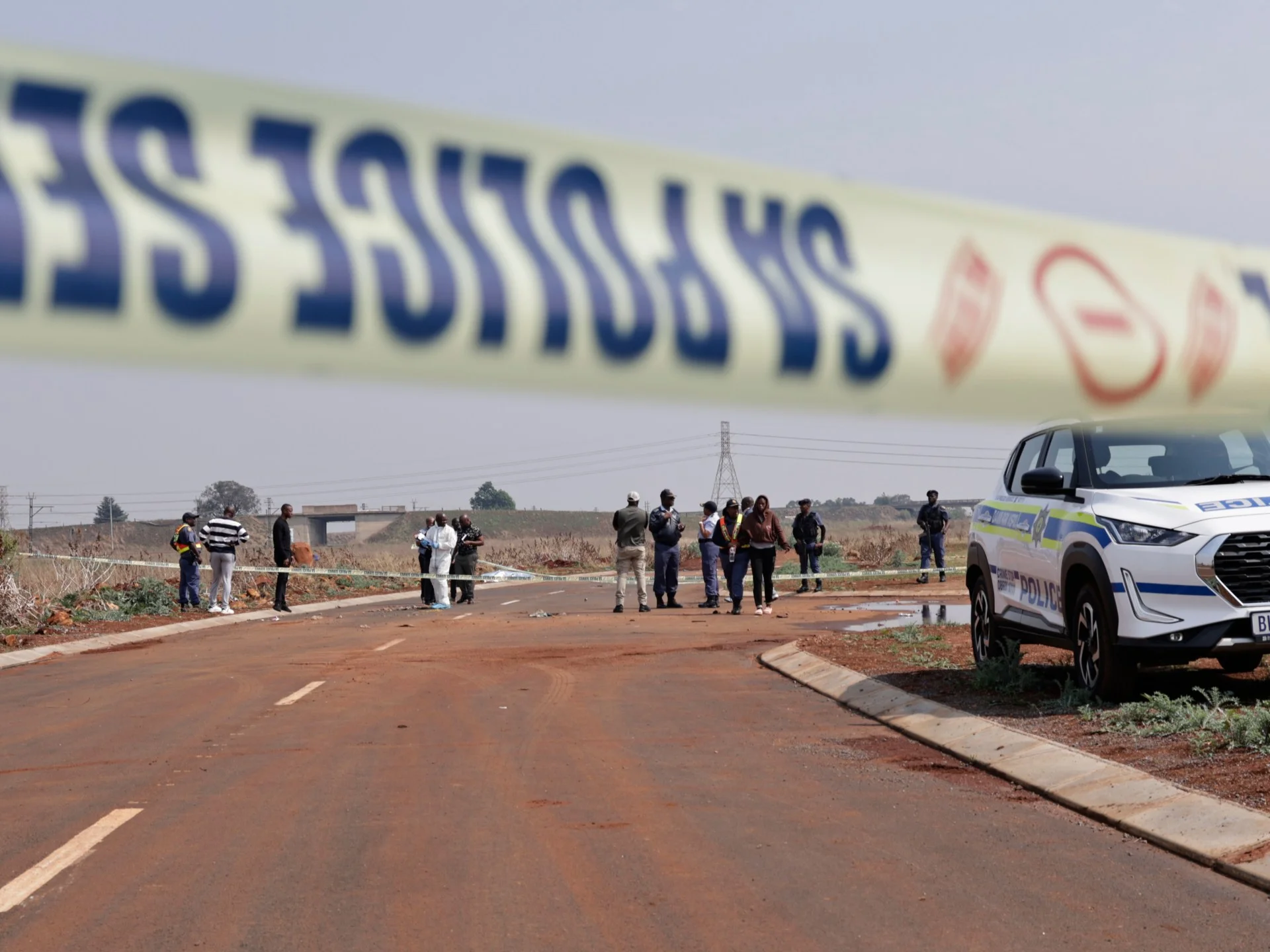
South Africa is confronting a spate of mass shootings that has left at least 46 people dead in less than a week. The attacks have renewed concerns that gun crime could undermine recent progress in reducing the country’s high murder rate, according to CNN.
Experts cited by CNN say organised crime and the widespread availability of illegal firearms are among the factors behind the violence. Julian Rademeyer, an adviser to the Global Initiative Against Transnational Organized Crime (GI-TOC), said the country was awash with guns.
Murder rates are falling, but mass killings are rising
Official police figures show that South Africa’s murder rate fell to 41 per 100,000 people in the 12 months to March 31, 2025, from 44.7 in the previous year. Murders also declined between January and March and April and June compared with the same periods a year earlier.
Acting Police Minister Firoz Cachalia has said targeted police operations and closer cooperation between agencies may be contributing to the decline, while noting that further study is needed. Rademeyer said mass attacks were not new, but appeared to be happening more often.
GI-TOC recorded 45 mass killings between January 1 and September 28, 2025, leaving at least 210 people dead and 79 wounded. The group defines a mass killing as an incident in which at least three people are intentionally killed in a single attack.
The organisation recorded one such killing in January and one in February. The monthly tally reached eight in June, and eight more were recorded in both August and September. Attacks in September alone killed 57 people. GI-TOC said it did not have a reliable comparison with the previous year; Rademeyer said its count of 17 mass killings in 2025 was an undercount, as separate tracking began only this year and data collection has since expanded.
Organised crime and illegal firearms
Five shootings in less than a week included an attack at a tavern in Wedela, west of Johannesburg, where eight gunmen armed with AK-47 rifles and pistols killed 18 people. Hours later, 10 people were killed in Lwandle, near Cape Town.
The shootings are not known to be connected. Investigators are considering possible motives including criminal feuds, retaliation and a business dispute. Police are also investigating whether the Wedela attack was linked to a turf war involving illegal mining or to an earlier shooting at the same tavern.
Rademeyer said mass killings occur across criminal markets, including illegal mining, extortion, gang activity and disputes over minibus-taxi routes. Organised crime accounts for a minority of gun deaths, he said, but is associated with some of the deadliest attacks.
Illegal mining has fuelled violence around Johannesburg for years. Informal miners known locally as “zama zamas” work in abandoned gold mines, while rival groups fight for control. Around Wedela, criminal gangs run mining operations and use armed men to protect their territory, Reuters reported.
President Cyril Ramaphosa said in February that organised crime was the most immediate threat to the country’s democracy, society and economic development. He announced that soldiers would be deployed to assist police in tackling gang violence.
Tracing the supply of guns
GI-TOC has documented weapons moving from neighbouring Namibia into South Africa and reaching gangs and robbers involved in cash-in-transit heists. Stanley Maphosa, executive director of Gun Free South Africa, said illegal firearms can also come from weapons stolen or lost by civilians and the state, as well as from corruption and cross-border trafficking.
Rademeyer cited figures showing that about 63,500 licensed civilian firearms were reported lost or stolen between 2013 and 2023. Police data cited by him showed that since April 2022, 2,346 police firearms had been stolen and another 177 lost, along with 194,920 rounds of ammunition.
Former police colonel Christiaan Prinsloo was convicted in 2016 after stealing more than 2,000 firearms from police stores and selling them, including to gangs. Local media reports said 888 of those weapons were later forensically linked to 1,066 murders in the Western Cape.
Government anti-illegal-mining operation Vala Umgodi has led to thousands of arrests and the seizure of hundreds of firearms. Rademeyer said, however, that arrests of low-level participants would have limited effect if those financing and supplying criminal networks were not also targeted.
He said police should focus on buyers and refiners of illicit gold, financiers and gun suppliers, while tracing recovered firearms, clearing the ballistics backlog and investigating non-fatal shootings. The head of ballistics at the police Forensic Science Laboratory told a commission of inquiry last year that the unit had a backlog of 41,846 cases and more than 29,000 crime-linked firearms in storage.
Maphosa said authorities should focus not only on recovering illegal guns but also on preventing them from reaching criminal networks. He said success should be measured by how many people are prevented from being shot.