OMM Newsroom

Weather conditions across most regions of Azerbaijan have shifted, with intermittent precipitation recorded in various areas.
The Operative Information Center-OMM reports that the National Hydrometeorological Service released the latest weather data as of 10:00 AM on February 25.
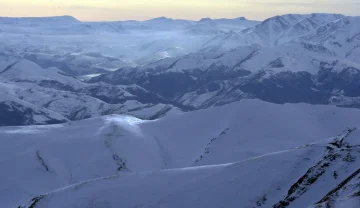
According to the current data, snow has fallen in mountainous territories, including Kalbajar, Dashkasan, Gadabay, Goygol, Kishchay (Sheki), Khizi, Griz, Shahbuz, and Shahdag. The snow depth reached 5 cm in Dashkasan, 4 cm in Gadabay, 3 cm in Kalbajar, 2 cm in Goygol, and 1 cm in Shahbuz.
The amount of precipitation was recorded at 29 mm in Astara, 5 mm in Lankaran, and 4 mm in Baku and the Absheron Peninsula, as well as Gabala and Qakh (Saribash). In Tartar, Oguz, Gobustan, Imishli, and Lerik, 3 mm of rain fell, while Balakan, Zagatala, Shamakhi, Mingachevir, Yevlakh, and Neftchala saw 2 mm.
In other regions of the Republic—including Ganja, Naftalan, Shamkir, Tovuz, Quba, Qusar, Jalilabad, Barda, Goychay, Sabirabad, Bilasuvar, Yardimli, Aghdam, Goranboy, Lachin, Qubadli, and Shusha—the precipitation level stood at 1 mm.
Currently, fog is observed in Dashkasan, Goygol, Fuzuli, Khankendi, Khojaly, Ganja, Naftalan, Shamkir, Balakan, Sheki, Gabala, Shamakhi, Quba, Qusar, Yevlakh, and Lerik. Visibility on roads in these areas has been restricted to 500 meters.
The National Hydrometeorological Service of Azerbaijan regularly monitors atmospheric conditions to provide timely updates for the public and transport sectors. Such sharp changes in weather during the winter months are characteristic of the region's diverse climate zones, often requiring increased caution for drivers navigating mountain passes and fog-prone highways in the interior of Azerbaijan.