OMM Redaksiyası

Russia’s three-day election for the 450-seat State Duma ended on Sunday with voter turnout approaching 57%, according to preliminary data from the Central Election Commission, while vote counting continued.
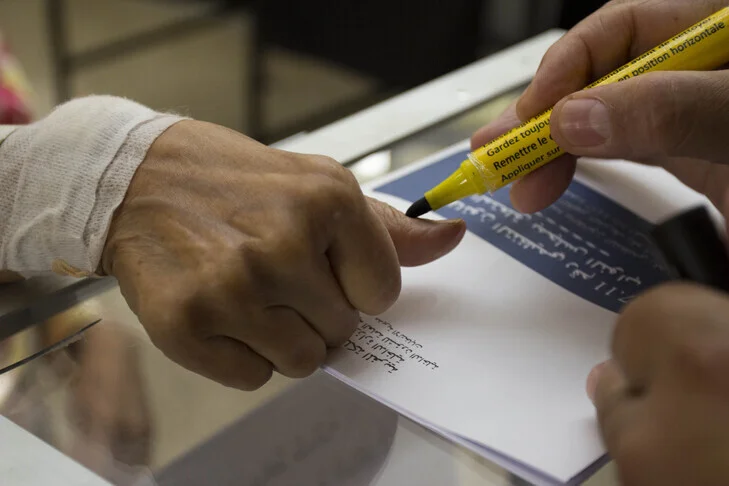
More than 111 million people were eligible to vote in the election, held from Friday to Sunday through a combination of polling stations and remote electronic voting. The turnout exceeded the 51.72% recorded in the 2021 State Duma election.
Results and electoral system
The commission had not released final nationwide results by Sunday evening. Preliminary figures were expected after the last polling stations closed, with the final allocation of seats to be determined after ballots from both components of the electoral system had been counted.
Under Russia’s mixed electoral system, 225 deputies are elected from federal party lists and another 225 from single-member constituencies. Parties must secure at least 5% of the vote to win seats through the party-list component.
Ten parties contested the federal party-list vote. They included the five parliamentary parties — United Russia, the Communist Party, the Liberal Democratic Party, A Just Russia and New People — as well as Rodina, the Communists of Russia, the Greens, the Pensioners’ Party and the Party of Direct Democracy.
The Yabloko party was not included on the federal party-list ballot, although candidates nominated by it continued to contest single-member constituencies.
Election commission reports cyberattacks
Election Commission Chair Ella Pamfilova said the voting infrastructure had been targeted by a large-scale cyberattack during the three-day election.
She said more than 100 million potentially dangerous attempts to influence election-related resources had been detected and blocked. The targets included the commission’s websites, the voting portal and the “Gosuslugi” state services platform.
Pamfilova said the attacks had failed despite what she described as a high level of impact. She added that attempts to exploit vulnerabilities in the voting system had been identified and blocked by security filters.
The commission also reported signs of Ukrainian involvement in attempts to interfere with telecommunications infrastructure. Pamfilova said attacks on the remote electronic voting system had originated mainly from abroad, including Ukraine and the United Kingdom, as well as from other countries and IP addresses disguised as Russian.
She said Russian authorities expected further attempts to interfere with the election and were prepared to respond. Pamfilova also alleged that a political party representative had attempted to introduce malware into Moscow’s remote voting system, describing it as an effort to disrupt the election.
Russia reports drone attacks during vote
Alongside the election, Moscow Mayor Sergey Sobyanin said Russia had repelled what he called the largest drone attack on the capital to date. He said more than 1,600 drones had been intercepted on different approaches since Saturday, including about 450 near Moscow.
According to Sobyanin, several drones reached the grounds of the Moscow Oil Refinery and one struck a residential building. He said there had been no fatalities in the incidents he described, adding that the attack appeared to have been planned to disrupt the election.
Russia’s Defence Ministry said Ukrainian forces had attempted a mass attack on Russian territory on Saturday and Sunday using drones and “Flamingo” cruise missiles. The ministry said air defences and military aviation had destroyed 1,951 attack drones and eight long-range cruise missiles over Russian regions within 24 hours.
It said another cruise missile had deviated from its course and fallen in an uninhabited area. The ministry added that all “Flamingo” missiles launched towards the Moscow region had been destroyed before reaching civilian facilities.
The election was Russia’s first parliamentary vote since 2022 and was held amid the ongoing conflict with Ukraine. Voting also took place in Russian-controlled areas of Ukraine, a move rejected by Kyiv and condemned by some Western governments.