 OMM Redaksiyası

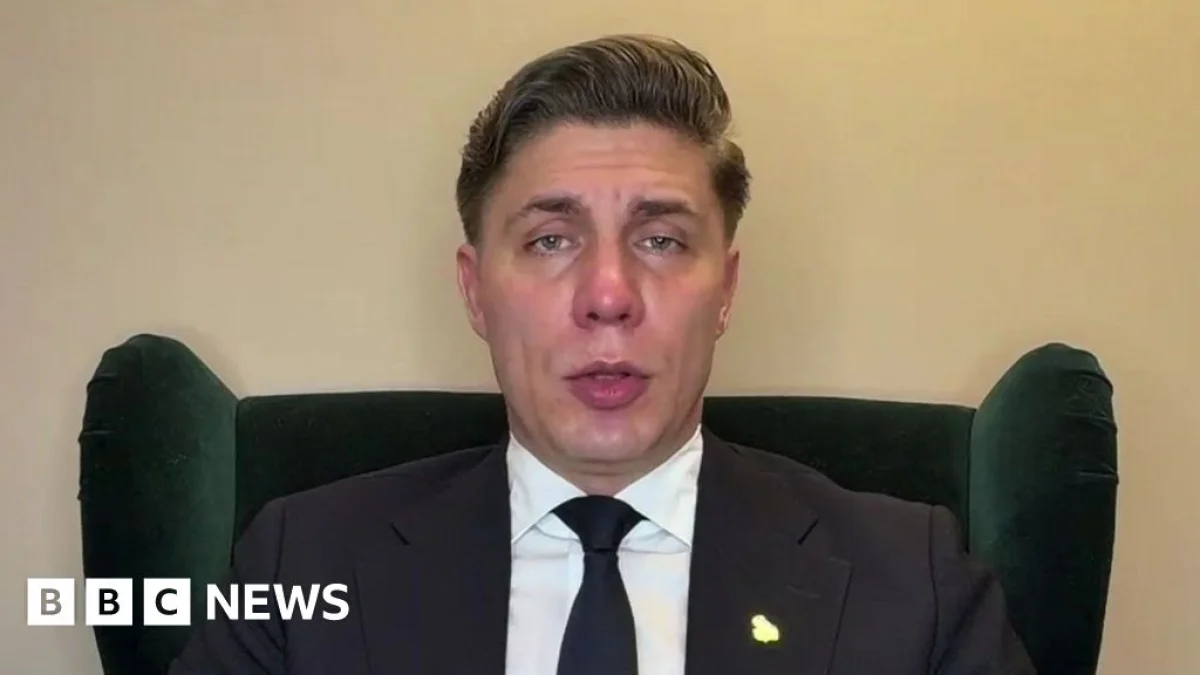
Lithuanian President Gitanas Nauseda said on Tuesday that a two-state solution to the Israeli-Palestinian conflict remains the “only way” to achieve lasting peace in the Middle East, according to his address to the UN General Assembly in New York.
Nauseda said Lithuania supports international efforts to maintain and consolidate the ceasefire in Gaza. He added that a comprehensive plan to end the conflict, including the deployment of a temporary international stabilisation force, sets out the guidelines for the next steps.
He also stressed the importance of fully demilitarising non-state armed groups and ensuring that humanitarian aid reaches people in need safely and without obstruction.
Nauseda says Russia has lost the war
Addressing Russia’s war against Ukraine, the Lithuanian president described Moscow as the “greatest threat” to the international order.
He said the war, which began with Russia’s full-scale invasion in February 2022, had already lasted longer than World War I. According to Nauseda, Russia has suffered 1.5 million military casualties since 2022 while gaining only 0.3% of Ukraine’s territory, at the cost of more than 400,000 soldiers killed and wounded.
“All these enormous efforts, all that blood and tears, basically came to nothing. Ukraine is still standing proudly as an independent state,” he said, adding: “Russia has already lost the war.”
Warning over hybrid attacks and artificial intelligence
Nauseda said Russia’s “imperial ambitions” extended across Europe, Africa and Asia, warning that no country should consider itself immune to the threat.
He cited intensified hybrid attacks, disinformation and sabotage across Europe, as well as what he called numerous violations of airspace by combat drones in recent months.
The Lithuanian president said the risks were being further increased by the use of artificial intelligence. Lithuania, he added, believed that the future of AI should not be determined by “authoritarian control, technological coercion, or the malicious use of data.”