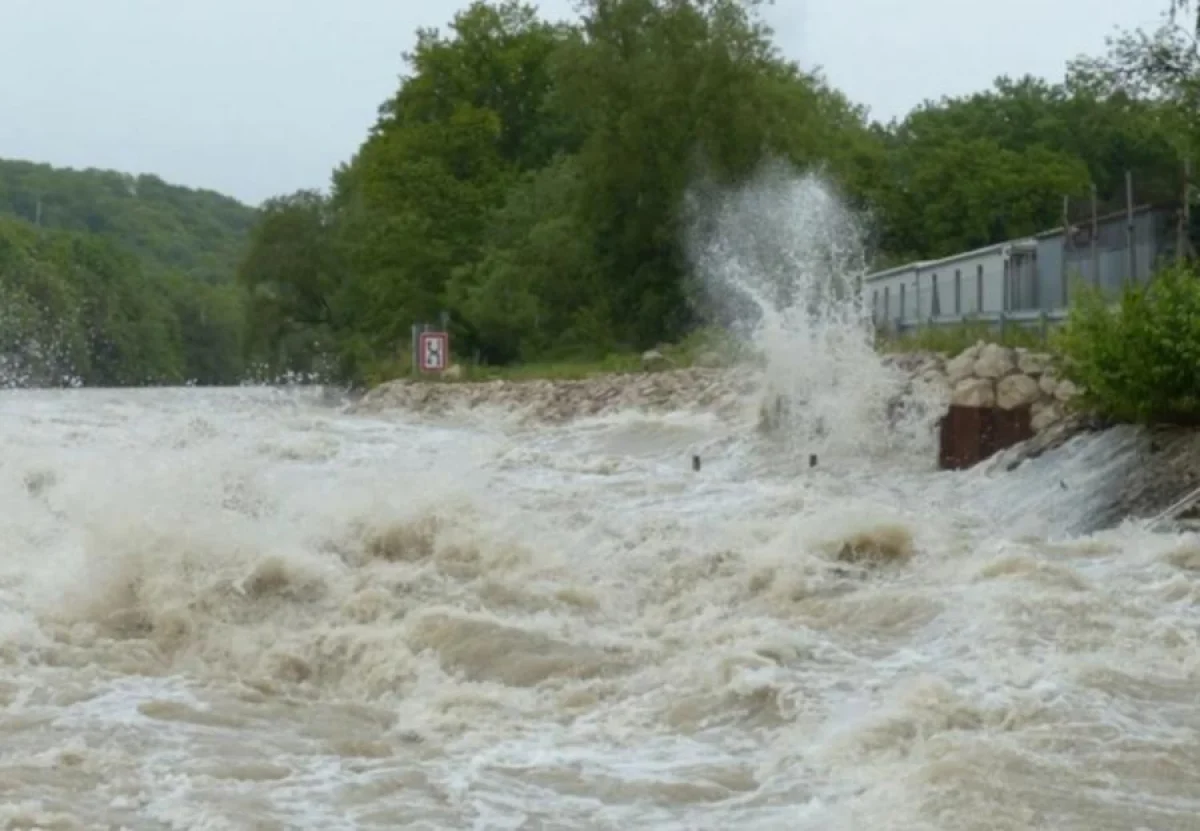
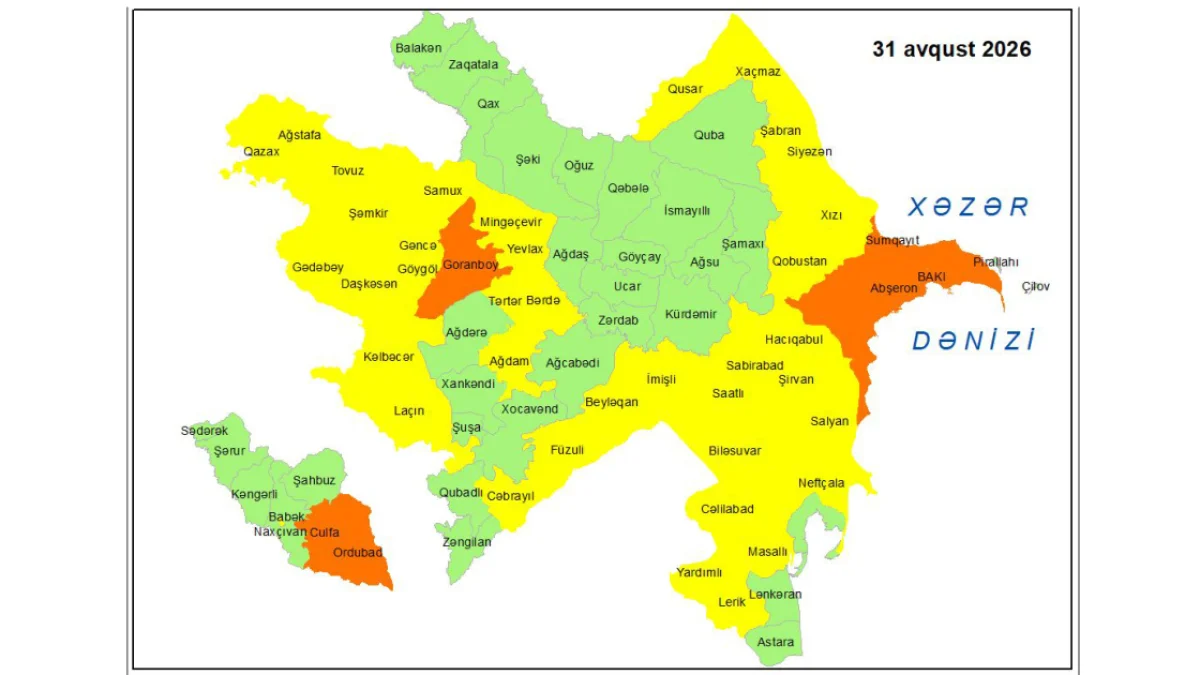
Unstable, rainy weather conditions have persisted across various parts of Azerbaijan, characterized by lightning and intense, torrential rainfall in several regions.
According to the Operative Information Center-OMM, this information was released by the National Hydrometeorology Service as of 10:00 AM on September 1.
The service reported that rainfall in Baku and the Absheron Peninsula reached 18-22 mm, representing 300-524% of the monthly norm. Between 8:35 PM and 9:50 PM, intense downpours accompanied by small-grained hail were observed in suburban areas.
Precipitation levels in the regions were also significant: 51 mm in Shahdag (151% of the monthly norm), 28 mm in Gusar (83% of the monthly norm), 18 mm in Gabala, 14 mm in Khizi, Khaltan, and Shabran, 13 mm in Gryz, 10 mm in Khinalig and Aghstafa, 8 mm in Lerik and Oghuz, 7 mm in Zagatala, Gakh, Shaki, and Balakan, 5 mm in Gobustan, 4 mm in Guba, 3 mm in Lankaran, Astara, and Yardimli, 2 mm in Goychay, Imishli, Sabirabad, Bilasuvar, and Dashkasan, and up to 1 mm in Shamakhi, Khachmaz, Shirvan, Mingachevir, Yevlax, Zardab, Kurdamir, Salyan, Aghdam, Tovuz, Gadabay, Kalbajar, Lachin, Qubadli, and Shusha.
Strong winds were also recorded in several areas. The maximum speed of the north-west wind reached 20 m/s in Neftchala, and 18 m/s in Baku, the Absheron Peninsula, and Shirvan, while reaching 17 m/s in Julfa.
Azerbaijan frequently experiences such weather fluctuations during transitional seasons, which are monitored closely by the National Hydrometeorology Service to ensure public safety and agricultural preparedness. These meteorological events are part of the country's diverse climate, which ranges from subtropical to alpine, necessitating robust forecasting systems to manage potential impacts on infrastructure and daily life.