OMM Redaksiyası

Two giant pandas travelling from China to Atlanta will join a diplomatic tradition that has connected American zoos and Chinese leaders for more than eight decades, according to the source report.
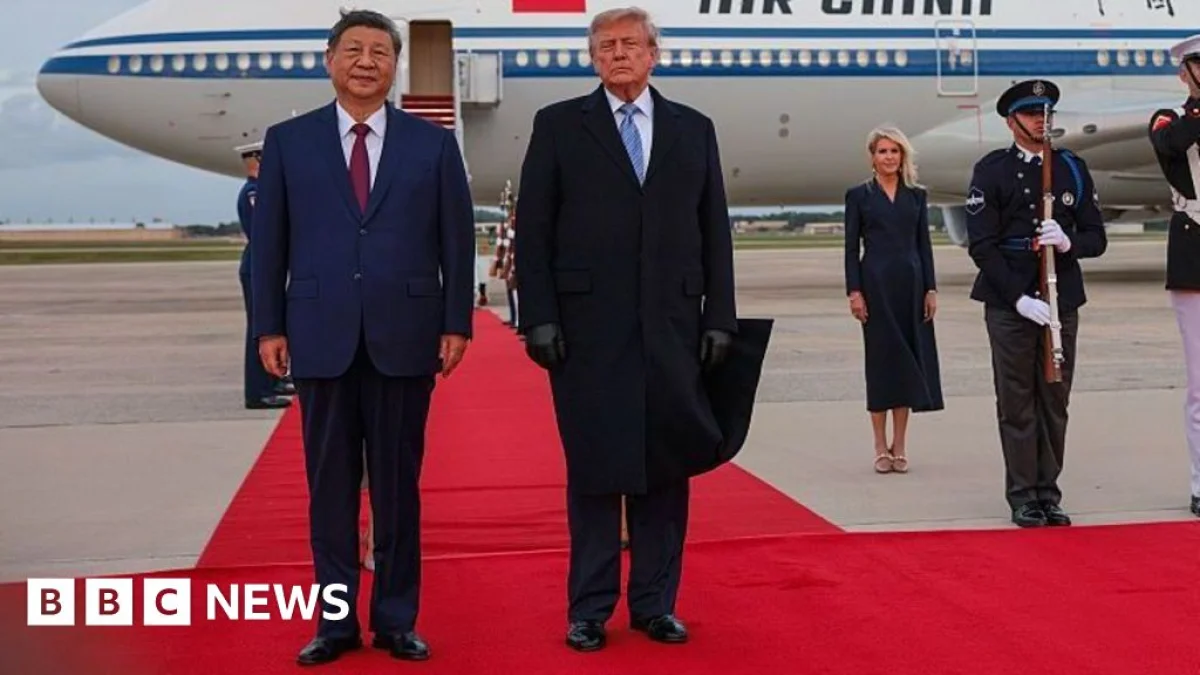
“In a few days, two pandas – Ping Ping and Fu Shuang – will come to their new home in Zoo Atlanta and meet with the American people,” Chinese President Xi Jinping said on Thursday before talks with US President Donald Trump at the White House.
“The giant panda has been an envoy of friendship between the Chinese and Americans,” Xi added, placing the familiar symbol of cooperation alongside discussions on trade, geopolitics and technology competition.
Zoo Atlanta announced the agreement in April, identifying Ping Ping as male and Fu Shuang as female. Both were born at the Chengdu Research Base of Giant Panda Breeding in China.
How panda diplomacy began
China’s use of pandas as diplomatic gifts predates the establishment of the People’s Republic in 1949. Some accounts trace the practice to the seventh century, when Empress Wu Zetian reportedly sent pandas to Japan during the Tang dynasty.
The tradition re-emerged in the 20th century. In 1941, two young pandas, Pan-dee and Pan-dah, arrived at New York’s Bronx Zoo as gifts from Madame Chiang Kai-shek, China’s first lady, who was thanking Americans for assistance to China during its war with Japan, according to the Wildlife Conservation Society’s archives.
The animals were initially believed to be a breeding pair, but both were later found to be female. In subsequent decades, the People’s Republic sent pandas to friendly countries, including the Soviet Union and North Korea.
Because wild giant pandas are found only in China, access to the animals provided Beijing with a distinctive gesture of goodwill. Their popularity also helped zoos attract visitors and generate public interest in China.
The 1972 breakthrough
The most famous episode in US-China panda diplomacy followed President Richard Nixon’s visit to China in February 1972. The trip helped end more than two decades of estrangement between Washington and Beijing, although formal diplomatic relations were not established until 1979.
During the visit, Nixon’s wife, first lady Pat Nixon, said she liked pandas after seeing them at a zoo in Beijing. Chinese Premier Zhou Enlai responded by offering two pandas to the American people.
Ling-Ling and Hsing-Hsing arrived at the Smithsonian’s National Zoo in Washington and immediately became a sensation. More than 20,000 people visited on their first day, while about 75,000 visitors reportedly formed a line a quarter of a mile long the following Sunday.
The United States reciprocated with two musk oxen, Milton and Matilda. The animals initially struggled, with Time magazine reporting that they suffered “culture shock”, including runny noses and hair loss, although they eventually recovered.
From gifts to conservation agreements
China moved away from giving pandas outright in the 1980s and began using loans instead. Overseas placements gradually came to be governed by long-term conservation and research agreements.
Such agreements typically last about 10 years and may involve annual payments of around $1 million per pair. Under modern loan arrangements, the pandas and their offspring remain Chinese property.
The shift strengthened the conservation focus of panda diplomacy. Zoos contribute funding and expertise to breeding programmes, scientific research and habitat protection.
The US Fish and Wildlife Service listed the species as endangered in 1984. In 1998, it adopted a conservation-focused panda permit policy requiring imports to directly benefit the conservation of wild pandas rather than short-term commercial exhibition.
US zoos have successfully raised 17 giant panda cubs – six in San Diego, four in Washington and seven in Atlanta – according to Chinese state media.
The International Union for Conservation of Nature reclassified giant pandas from endangered to vulnerable in 2016. The decision cited a 17% increase in the population over the decade to 2014, when a nationwide census counted 1,864 pandas in the wild in China, according to the World Wildlife Fund.
What panda movements signal
Panda arrivals and departures often attract attention well beyond the zoos involved. As US-China relations deteriorated in recent years, the departure of pandas from American zoos became a visible symbol of tensions.
In November 2023, the Smithsonian’s National Zoo returned its three pandas to China after their loan agreement expired, leaving Zoo Atlanta as the only US zoo housing giant pandas.
Later that month, after meeting then-President Joe Biden in California, Xi said China was prepared to continue panda conservation cooperation with the United States. The gesture came amid efforts to stabilise bilateral relations.
A new pair arrived in San Diego in June 2024, before Atlanta’s four pandas left the United States in October of that year. Another pair arrived in Washington later in the same month.
Four giant pandas are currently in the United States. Atlanta’s incoming pair will bring the total to six, compared with a historical peak of 15 reported by CNN.
Atlanta’s next chapter
Zoo Atlanta’s original panda partnership began in 1999 and lasted 25 years. The pandas produced seven cubs during that period.
The return of Atlanta’s four remaining pandas in October 2024 ended that chapter, but the new agreement announced in April has opened another one.
For Atlanta, Ping Ping and Fu Shuang will restore a major attraction and renew a research partnership. For Beijing, their arrival provides another opportunity to highlight cooperation with the United States through animals that have long drawn American crowds.
The pandas will not resolve disagreements over tariffs or artificial intelligence regulation. But their arrival may serve as a reminder that Washington and Beijing still retain space for cooperation and goodwill.