 OMM Redaksiyası

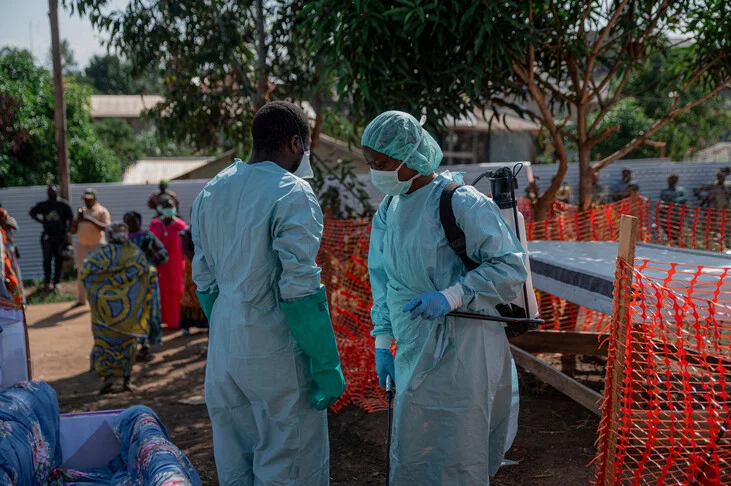
The Ebola outbreak in the Democratic Republic of the Congo has spread to two additional health zones, the World Health Organization (WHO) said, as health workers struggle to reach affected communities and trace contacts.
New cases were detected in Bulu, in South Ubangi province on the border with the Central African Republic, and in Dungu, in Haut-Uele province near South Sudan, according to Al Jazeera and Reuters.
The latest cases bring the number of affected health zones to 63 across seven provinces. As of September 23, the country had recorded 7,890 confirmed cases and 3,799 deaths, WHO data showed.
Conflict hampers Ebola response
WHO Director-General Tedros Adhanom Ghebreyesus said armed conflict and population displacement were making it harder for medical teams to access communities and identify people who may have been exposed.
“It’s very difficult to see Ebola in isolation because even our response to Ebola is affected by the conflict, because there is displacement and there is an access problem to some areas,” Tedros said.
The outbreak is being caused by the Bundibugyo strain, for which there are no approved vaccines. Tedros said the WHO was accelerating clinical trials of vaccines and treatments.
Contact tracing falls short
Health workers are also struggling to identify contacts of confirmed patients. Jean Kaseya, director-general of the Africa Centres for Disease Control and Prevention, said more than 7,000 confirmed cases should correspond to about 420,000 contacts, but only around 30,000 people were currently on the contact list.
“When the outbreak is at community level, we cannot talk about control,” Kaseya said.
Ituri province in northeastern DR Congo remains the epicentre, with 6,032 confirmed cases since the outbreak began in May, including 868 reported during the previous 21 days. North Kivu has recorded 1,480 cases, with 567 reported in the same period.
North Kivu now accounts for about one-third of newly confirmed cases and deaths, according to a WHO report. Nearly 60% of people diagnosed there have died, compared with a national average of 48%.
Patients delaying treatment
Medical staff said some patients were avoiding health facilities because they feared being sent to Ebola treatment centres.
“Patients think that if they arrive at the hospital, they will be immediately sent to the treatment centre to die,” said Dr Michel Paluku Mukuloli, who works at a hospital in Butembo, North Kivu.
Health workers said the delays made it more difficult to detect infections and begin treatment before the disease reached its most dangerous stages. In the early phase, Bundibugyo symptoms can be mild and may be mistaken for illnesses such as malaria or typhoid fever.
North Kivu was the centre of three previous Ebola outbreaks, including the 2018–2020 epidemic, which was the country’s largest and deadliest until this year. Those outbreaks were caused by the Zaire strain, a different type of Ebola virus.