OMM Redaksiyası

The heads of major artificial intelligence companies have urged the United Nations Security Council to establish global oversight of the technology, warning that its rapid development could create risks for humanity. Al Jazeera, citing the Associated Press and Reuters, reported on the meeting.
Anthropic chief executive Dario Amodei told the council that poorly managed AI could become a threat to humanity as a whole. OpenAI chief executive Sam Altman similarly warned that people could lose control of the future of AI.
The meeting was convened by France alongside the UN General Assembly gathering in New York. It came amid growing calls from experts, governments and civil society groups for stronger safeguards to ensure AI development remains under human control.
AI leaders call for international rules
Altman said the most important decisions about AI should not be made solely by laboratories in San Francisco. He argued that the technology’s development should be shaped through democratic processes and by governments accountable to their citizens.
Amodei and Altman were joined in calling for action by the foreign ministers of France and the United Kingdom. They said the international community needed common rules governing the development and use of AI.
Clement Delangue, chief executive of AI company “Hugging Face”, told the council that his company had used AI to defend itself against attacks by AI agents. He said the company had relied on a Chinese AI model because it faced fewer restrictions than comparable US tools.
“We were attacked by AI, but more importantly, we defended ourselves with AI,” Delangue said.
US rejects centralised global control
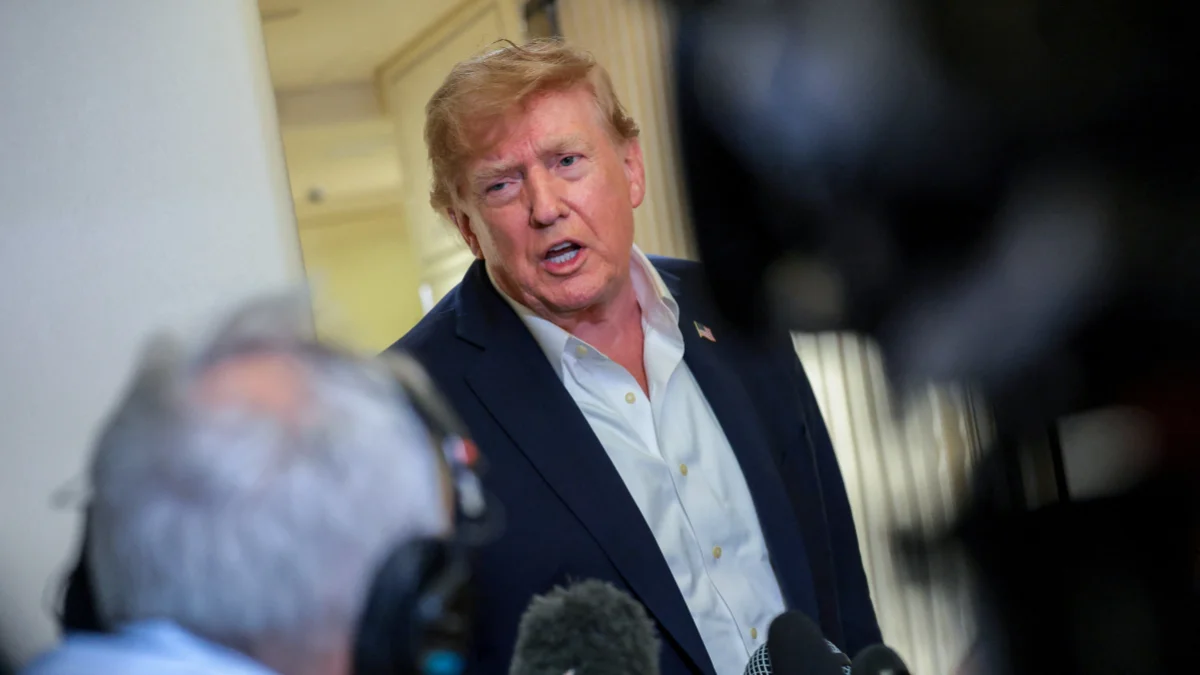
The administration of US President Donald Trump has opposed introducing new international restrictions on the AI industry. Michael Kratsios, representing the United States at the meeting, said Washington rejected efforts by international bodies to impose centralised control and global governance of AI.
The United States and China are competing to develop increasingly powerful AI systems. Experts say that rivalry could make both countries less willing to accept significant new restrictions in the near term.
Chinese President Xi Jinping is expected to discuss whether and how AI should be regulated during a visit to Washington, DC, this week.
UN expands its role in AI governance
Daniel Forti, head of UN affairs at the International Crisis Group, said there was growing recognition among UN member states that international cooperation and common AI rules would be necessary, even as leading countries focused on commercial and strategic opportunities.
The UN has held multilateral discussions for several years on issues including protecting workers from AI-related risks, ensuring access to the technology and monitoring its use in military conflicts. In 2024, the UN General Assembly unanimously adopted its first resolution on AI. The nonbinding resolution called on countries to protect personal data, monitor AI-related risks and safeguard human rights.
Last year, the General Assembly established the Independent International Scientific Panel on AI and the Global Dialogue on AI Governance. The panel provides independent assessments to governments, while the dialogue offers a forum for discussing approaches to AI regulation.
Yoshua Bengio, a Canadian AI expert and co-chair of the scientific panel, told the Security Council that the dangers posed by AI were “real and imminent”. He said the threat did not respect national borders and could not be contained by any single country.