 OMM Redaksiyası

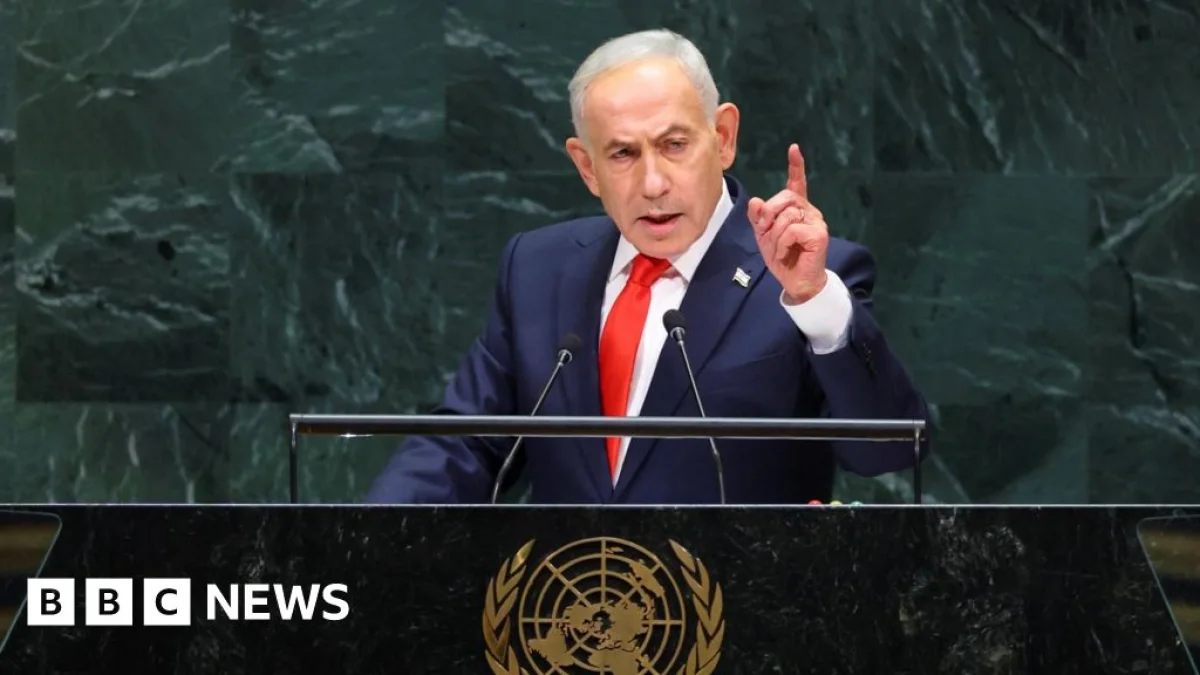
Nepalese Prime Minister Balendra Shah called for climate justice and proposed a new regional mechanism involving Nepal, India and China to tackle rising climate risks across the Himalayas in an address to the United Nations General Assembly in New York on Thursday.
Speaking at the 81st session of the General Assembly, Shah said last month’s catastrophic disaster, in which a tsunami-like flash flood was triggered by the collapse of a high-altitude glacier, showed how climate change was destabilising the Himalayan ecosystem. The disaster highlighted dangers linked to melting permafrost, unstable mountain slopes, ice-rock avalanches, floods and landslides, according to the source.
“We did not create this crisis, yet we are paying a colossal price for it,” Shah said, noting that Nepal accounts for less than 0.1% of global greenhouse gas emissions.
Proposal for regional cooperation
The disaster on Aug. 26 killed more than 1,400 people, while thousands remain missing, according to Nepali authorities. Recent assessments have estimated economic losses and physical damage at billions of dollars.
Shah proposed creating a “Himalaya Climate Resilience Mechanism” led by Nepal, India and China. The initiative would involve sharing satellite data and scientific expertise, monitoring dangerous glacial lakes, improving cross-border early-warning systems and coordinating disaster assistance.
“Let the Himalayas become a laboratory of international cooperation rather than a frontier of fragmented information,” he said.
Call for more climate financing
The Nepalese prime minister also called on wealthier countries to provide more grant-based climate financing, arguing that mechanisms including the Loss and Damage Fund and the Global Environment Facility remain insufficient.
“Climate justice cannot remain a beautiful phrase in United Nations documents,” Shah said.
Nepal has increasingly placed climate justice at the centre of its international diplomacy since the disaster, which destroyed homes, roads, schools and hydropower infrastructure across several districts.
Shah said the international response should be guided by six principles: “relief, rehabilitation, reconstruction” as well as “responsibility, reparation and resilience.”