 OMM Redaksiyası

Morocco’s political parties are stepping up campaign activities in markets, neighbourhoods and online ahead of the September 23 legislative election, which will determine the country’s next government, according to Al Jazeera.
Twenty-seven parties are contesting 395 seats in the House of Representatives. The election is taking place amid public concern over rising living costs, pressure on public services and youth unemployment, which stands at 37.3% among Moroccans aged 15 to 24.
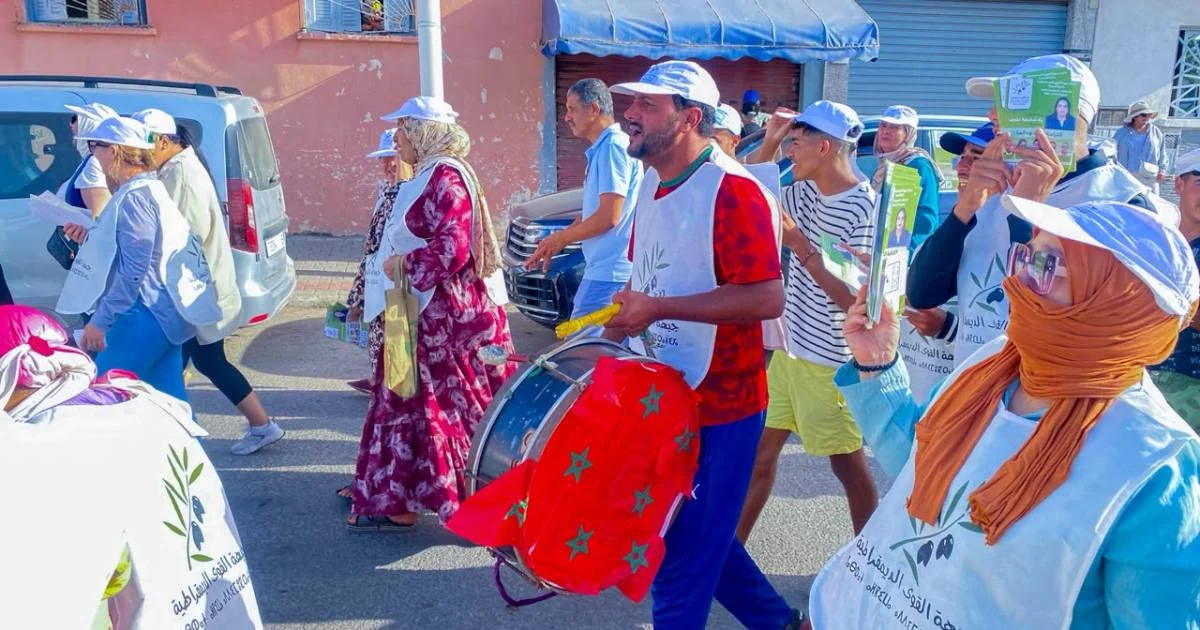
Campaign headquarters and busy markets have become operational centres for the parties, while teams use loudspeakers, music and leaflets to reach Morocco’s 15.8 million registered voters.
Parties focus on local outreach
Al-Wali al-Shtouki, a campaign manager for the Justice and Development Party (PJD) in the Medina-Sidi Youssef Ben Ali district, said his team maps locations where residents naturally gather before assigning campaigners to direct communication and observation duties.
He said small meetings at party offices also provide an opportunity for direct discussions with voters. Campaign teams review feedback and recurring questions after each tour, separating local matters requiring follow-up from issues linked to public policy and parliamentary work.
Jawad al-Shafdi, head of the Moroccan Observatory for Political Participation, said a party’s electoral performance depends not only on its organisational presence but also on the strength of its candidates, local networks and previous electoral results.
“The true criterion is not the number of people who enter the headquarters, but its ability to convert organisational movement into electoral mobilisation, mobilisation into votes, and votes into seats,” he said.
Digital platforms target younger voters
Political groups are combining street-level campaigning with online outreach in an effort to reach wider sections of the electorate.
Fatima al-Tamni, a Left Alliance candidate in Casablanca’s Ain Sebaa-Hay Mohammadi district, said campaigns should focus on listening to voters and presenting solutions on transport, housing, pollution and other concerns.
“We do not want to speak to the citizen from above, nor turn the campaign into a festival of pictures and slogans,” she said, arguing that the process should help establish a relationship based on clarity, accountability and the fulfilment of commitments.
Youssef Ait Sidi Said, a political activist with the Progress and Socialism Party in Chichaoua province, said digital platforms were particularly useful for reaching young people and allowing them to ask questions and express their views.
However, he said online campaigning could not replace direct contact. Field activities enable parties to listen to voters personally, while digital tools broaden reach, encourage interaction and document campaign events.