 Afət Ziyadqızı

The European Commission is introducing a framework service under a new “Kids Act” that would sharply restrict minors’ use of social networks across the European Union and place responsibility directly on technology companies.
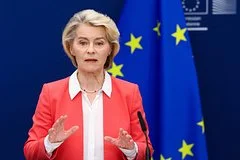
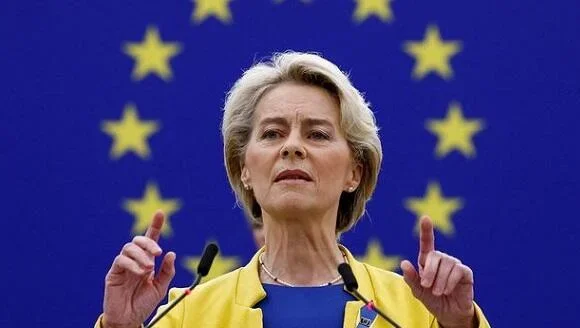
Operative Information Center-OMM reports that European Commission President Ursula von der Leyen made the announcement during her State of the Union address at a plenary session of the European Parliament in Strasbourg.
Under the initiative, children under 13 would be completely prohibited from using social media platforms. For teenagers aged 13 and 14, platforms would be allowed to create “mini accounts” operating only under parental supervision, with limited functionality and daily use capped at one hour. People aged 15 and over would be able to open individual accounts, but platforms would have to technically demonstrate that their services are fully safe for minors from both psychological and security perspectives, in line with the “safety by design” principle.
Under the proposed legal mechanism, the burden of proof would shift to major social media companies. They would have to abandon addictive algorithms and features such as infinite scrolling and autoplay, while also integrating age-verification mechanisms. The proposed EU-wide legislation follows the introduction of varying national restrictions by member states including France, Spain, Denmark and Sweden. It would enter into force after approval by the Council of the EU and the European Parliament.
Von der Leyen also said she would begin discussions with the heads of leading artificial intelligence laboratories to regulate the pace of AI development and manage potential risks. The European Union has increasingly focused on protecting minors online, including through rules requiring digital platforms to assess and reduce systemic risks linked to their services.