 Afət Ziyadqızı

Just days after imposing new restrictions on 56 American companies, Beijing has issued a new statement regarding trade relations with the United States.
Operative Information Center-OMM reports that Chinese Ministry of Commerce spokesperson He Yadong stated his country remains committed to mutually beneficial economic cooperation with Washington and the gradual reduction of customs duties.
According to the information, the parties will continue discussions on the mutual reduction of tariffs within the framework of a newly established trade council. He Yadong noted that economic and trade teams from both countries will hold consultations in the next phase.
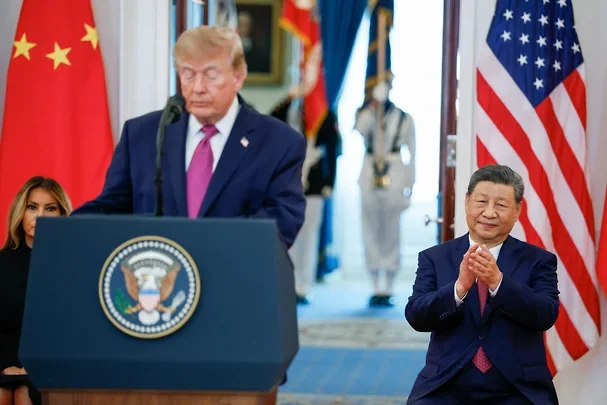
The trade council was formed as a result of the summit between US President Donald Trump and President Xi Jinping held in Beijing last month, with the primary goal of creating a permanent dialogue platform to manage economic relations.
Chinese Ambassador to the US Xie Feng has proposed increasing the limit for duty-free goods within the trade council framework from $30 billion to $300 billion. This initiative demonstrates Beijing's interest in transforming the mechanism into a platform that yields tangible economic results rather than just formal ones.
However, China has also expressed dissatisfaction with certain US actions. Beijing has characterized the US Department of Defense's decision to place major Chinese companies like Alibaba, Baidu, and BYD on a military blacklist, as well as new tariff plans related to forced labor allegations, as "harmful trade acts".
According to reports, the Office of the United States Trade Representative has proposed an additional 12.5 percent tariff on Chinese goods as part of investigations into forced labor claims.
Trade tensions reached a peak in early 2025, resulting in tariffs on Chinese goods in the US rising to 145 percent, and tariffs on American goods in China reaching 125 percent. While a temporary agreement reached in October 2025 reduced these figures to 30 and 10 percent respectively, tensions between the parties remain unresolved.
Experts believe the primary issue currently is the uncertainty between the two sides. While continuing the dialogue, China does not rule out countermeasures against actions it deems "unfair" by Washington.