 OMM Redaksiyası

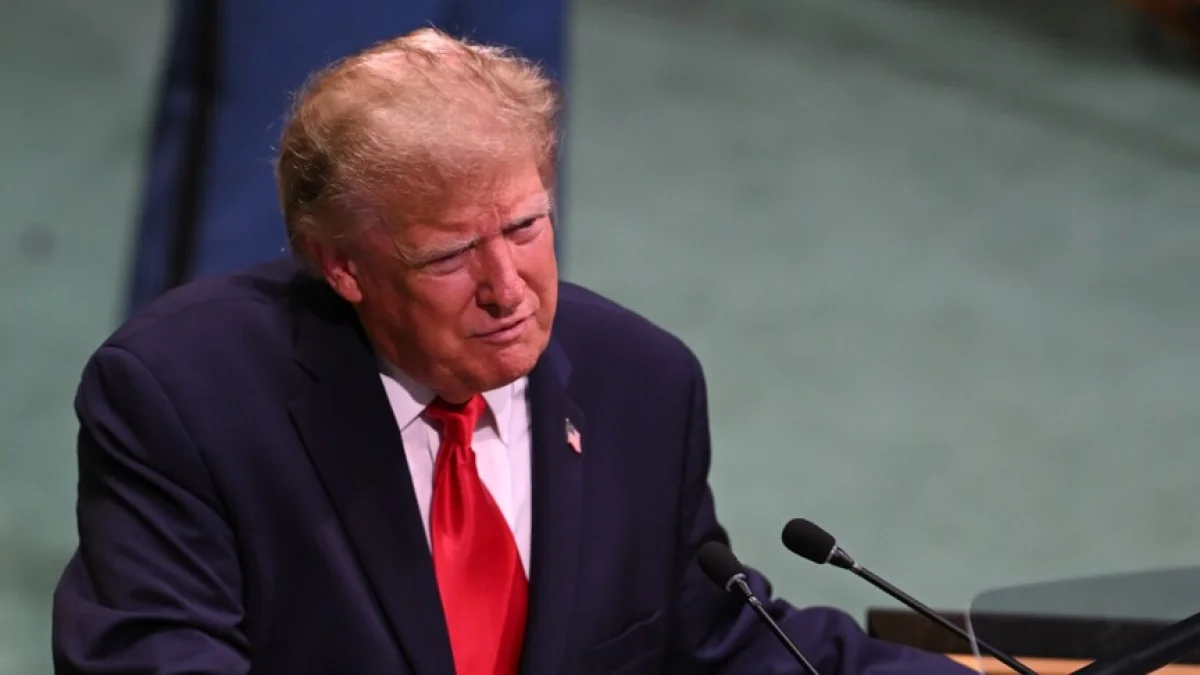
US President Donald Trump has pledged to use “unmatched military might” against drug cartels in the Western Hemisphere as Washington seeks to build a regional alliance against organised crime, according to Al Jazeera and Reuters.
Speaking at a meeting of the US-led Shield of the Americas coalition in New York on the sidelines of the 81st United Nations General Assembly, Trump urged member countries to jointly target 24 criminal organisations that he previously described as the “ISIS of the Western Hemisphere”.
He called on all members of the alliance to designate the groups as “narco-terrorists” and impose what he described as “crushing sanctions” against them.
Coalition backs asset freezes and visa restrictions
The coalition’s 15 governments later issued a joint statement saying they would pursue asset freezes, visa restrictions and criminal charges against members and supporters of the groups.
The list includes Mara Salvatrucha, also known as MS-13, one of Central America’s most powerful criminal gangs, and Tren de Aragua, a Venezuelan gang active in Colombia, Peru and Chile. Both organisations have been designated as terrorist groups by Washington.
It also includes major Mexican cartels, Colombia’s National Liberation Army, Brazil’s Primeiro Comando da Capital and Comando Vermelho, and Peru’s Shining Path.
Al Jazeera correspondent Alessandro Rampietti, reporting from Bogota, said the statement was largely symbolic for now because each country would need to follow its own legal procedures.
“In Colombia, it will require a law to pass in Congress,” Rampietti said, adding that the government had asked lawmakers to begin drafting such legislation.
US seeks stronger regional response
The coalition includes governments closely aligned with Trump, including Argentina, Ecuador and El Salvador. Colombia and Peru joined after presidents viewed as supportive of Trump took office in recent months.
Brazil and Mexico have not joined the alliance.
US Secretary of State Marco Rubio, who attended the meeting, praised what he called “the emergence of strong leaders who are committed to the challenge of taking on transnational terrorism”.
The gathering was the latest attempt by the Trump administration to rally Latin America behind a more aggressive approach to drug trafficking. Since returning to office last year, Trump has designated cartels as foreign terrorist organisations and ordered dozens of strikes on boats in the Caribbean and eastern Pacific that US officials say were carrying narcotics to the United States.
Regional concerns over US policy
The strikes have killed more than 223 people, while United Nations experts have said they violate international law and could amount to crimes against humanity.
The Trump administration’s National Security Strategy, released late last year, outlined plans for a revised Monroe Doctrine, the 19th-century policy asserting US primacy in the Western Hemisphere. Critics have associated the doctrine with decades of US intervention in the region.
Trump has also spoken about retaking the Panama Canal and annexing Greenland and Canada. On Tuesday, he signed an agreement concerning Greenland that stopped short of his demand for the island to become US territory.
The US focus on the hemisphere has prompted concern across the region. In his UN speech, Brazilian President Luiz Inacio Lula da Silva warned Latin American and Caribbean countries against “renewed hegemonic temptations”.
“Brazil is nobody’s back yard,” Lula said.