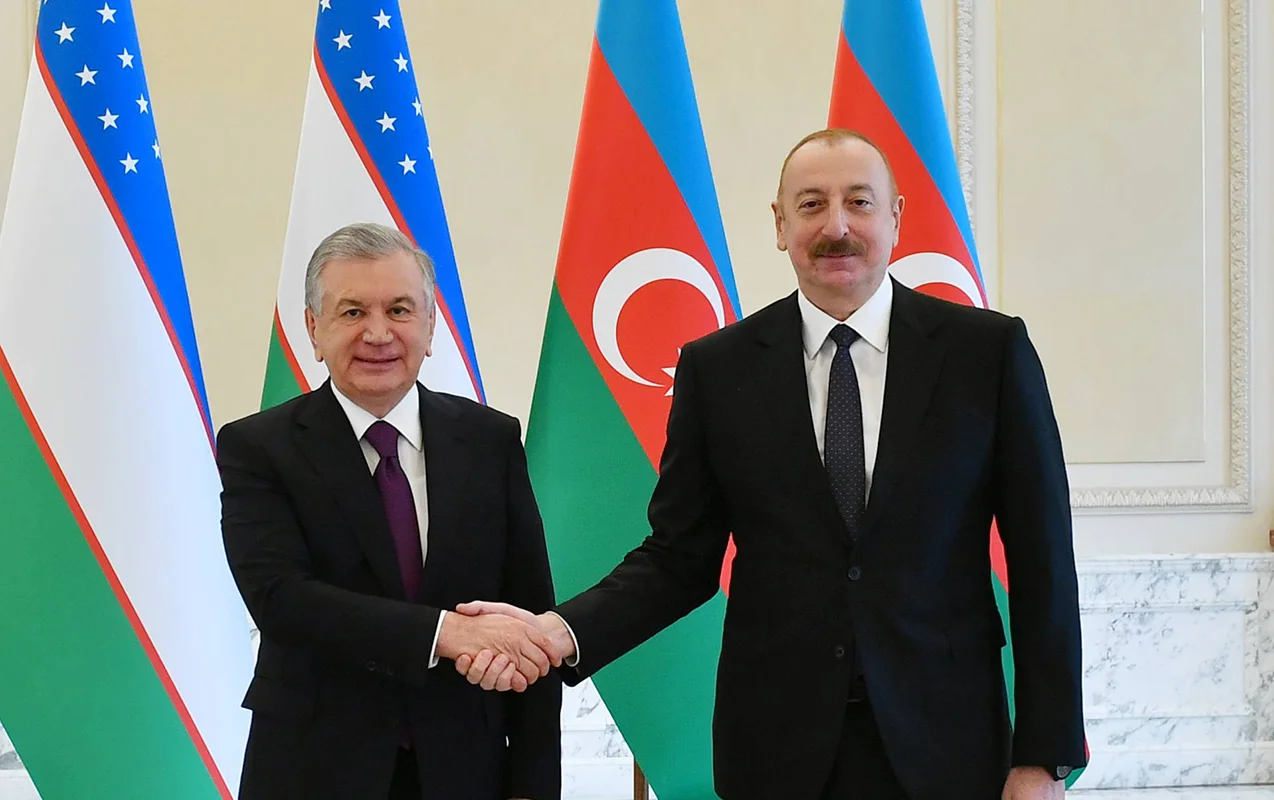
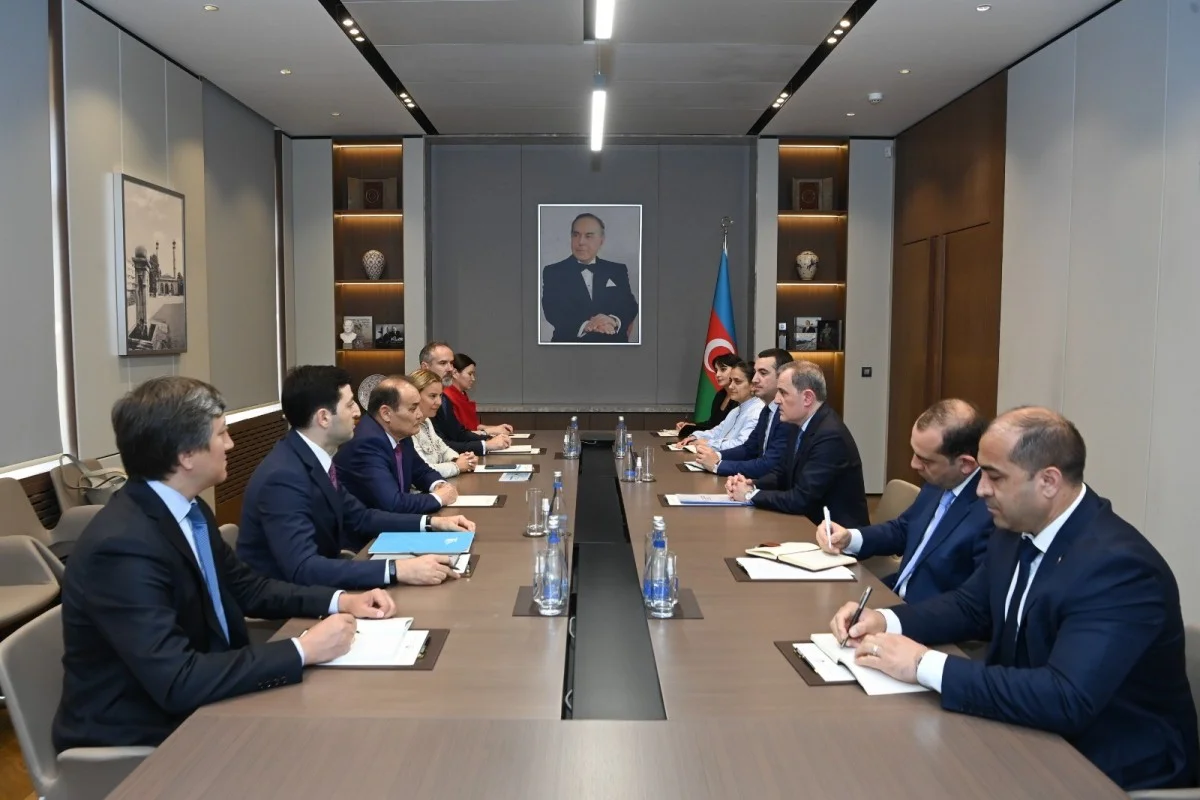
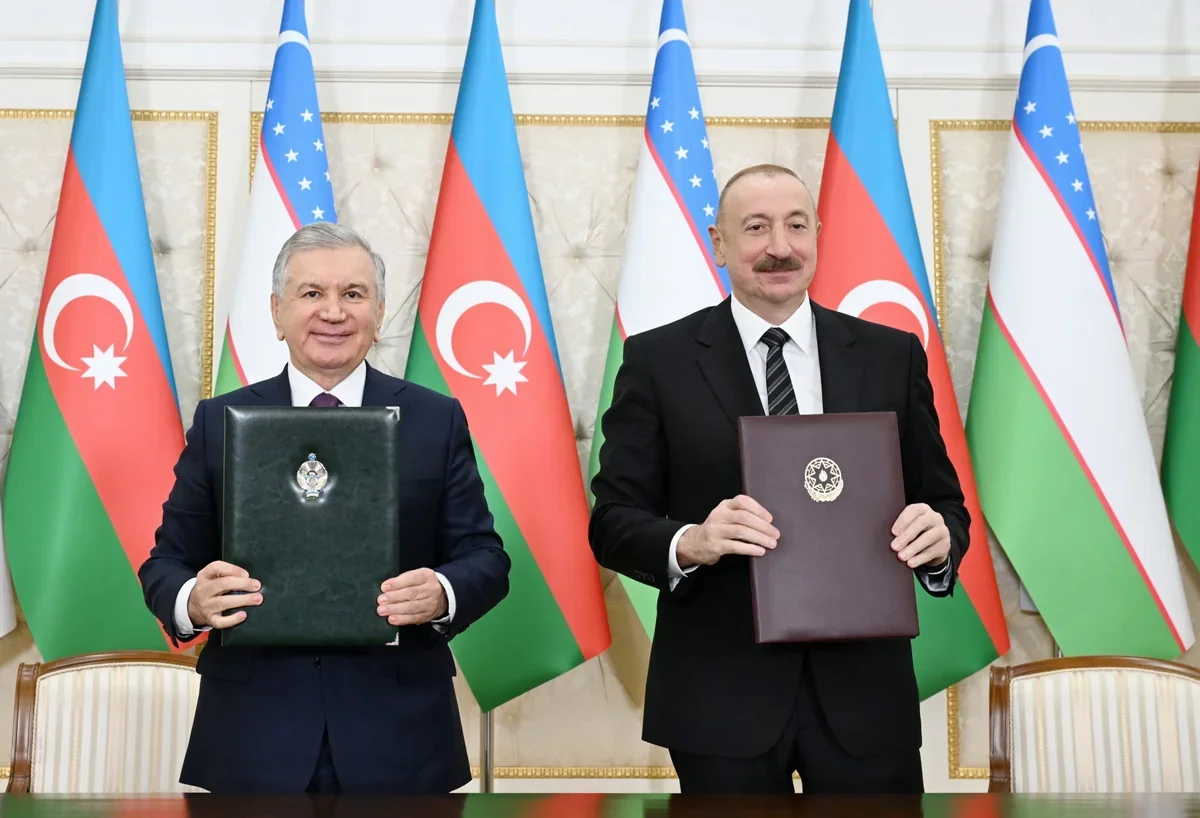
President Ilham Aliyev's official visit to Uzbekistan on August 23, 2026, serves as a new indicator of the strategic level that relations between the two countries have reached in recent years. During the visit, organized for the third meeting of the Azerbaijan-Uzbekistan Supreme Interstate Council—established in 2023—new projects were launched, and significant political messages were delivered. The agreements signed highlight Baku-Tashkent relations not only within the framework of bilateral ties but also in terms of their contribution to the Turkic world, Central Asian geopolitics, and Turkey's regional influence.
Operative Information Center-OMM reports that this analysis was originally published by Anadolu Agency.
The "Eternal Friendship Agreement" signed between the two countries stands out as one of the most significant political documents of this new era. Within the framework of the agreement, the parties have committed to refraining from initiatives that could harm each other's sovereignty, security, and territorial integrity. They also oppose the use of third-country territories in a way that would threaten the security of the other party. Furthermore, the agreement outlines a broad perspective for cooperation covering numerous fields, including education, trade, investment, energy, transport, logistics, information and communication technologies, and space technologies.
This development should be viewed as part of the transformation that Azerbaijan's relations with the Turkic world have undergone in recent years. Following the Garabagh Victory, the political and strategic direction of Baku's relations with the Turkic republics in Central Asia has strengthened significantly. Azerbaijan's signing of an alliance agreement with Kyrgyzstan, reaching an alliance level with Kazakhstan, and securing a defense agreement with Turkmenistan demonstrate that Baku's Central Asian policy has gained a more institutional and long-term character.
Political trust translates into economic partnership
The foundations of the current dynamic in Azerbaijan-Uzbekistan relations were laid in 2022. The signing of an agreement on deepening strategic partnership and the creation of the Supreme Interstate Council in 2023 ensured that political relations were established on an institutional basis. This was further bolstered by an indefinite alliance agreement signed in 2024.
The alliance agreement envisions not only political solidarity but also the coordination of foreign policy, regular consultation mechanisms on security issues, defense and military-technical cooperation, joint training and military exercises, and the enhancement of the joint operational capabilities of the two countries' armed forces. Therefore, the "Eternal Friendship Agreement" signed in 2026 should be viewed not as a standalone document, but as a complementary element of the political and strategic architecture formed over the last four years.
A notable point is that political trust is rapidly reflecting in economic relations. The Azerbaijan-Uzbekistan Investment Fund, created in 2023, is intended to be one of the key tools for economic relations between the two countries. Although the fund's portfolio is 500 million dollars, the total volume of projects announced and signed during the recent visit significantly exceeds this figure, signaling that economic relations have entered a new phase. Azerbaijan's plan to invest 5 billion dollars in Uzbekistan's tourism sector is particularly noteworthy in this regard.
The transfer of Uzbekistan's experience in the automotive sector to Azerbaijan is another important example demonstrating the nature of economic cooperation. The investment of over 80 million dollars in the project in Hajigabul and the construction of a second plant indicate that not only trade but also production and technology transfer are gaining importance between the two countries.
Energy cooperation gains a new strategic dimension
Perhaps the most important area for the future of Azerbaijan-Uzbekistan relations is the energy sector. The activities of the State Oil Company of Azerbaijan (SOCAR) in Uzbekistan are evolving into an integrated model that encompasses production, processing, trade, logistics, and retail, rather than being limited to oil and natural gas exploration.
The geological exploration project carried out by SOCAR in the Ustyurt region, together with "Uzbekneftegaz" and BP, is of significant importance in this regard. In the project, BP holds a 40 percent stake, while SOCAR and "Uzbekneftegaz" each hold 30 percent. Forecasts regarding the potential for significant oil and natural gas reserves in the region increase the project's potential for Uzbekistan's energy security.
However, for Azerbaijan, the strategic goal is not just to enter the Uzbek energy market. In a broader perspective, Baku could strengthen its goal of becoming a transit and energy hub capable of delivering Central Asian energy resources to European markets. At this point, Trans-Caspian energy projects become critical. The interconnection of the energy systems of Azerbaijan, Kazakhstan, and Uzbekistan, and the laying of a high-voltage electric cable under the Caspian Sea, could create new opportunities for transmitting Central Asia's renewable energy potential to European markets.
Cultural dimension supports eternal friendship
Another strong aspect of the relations between the two countries is cultural and historical ties. The common elements of the Azerbaijani and Uzbek peoples in terms of language, history, and culture strengthen the public foundation of political relations. The opening of a school named after Mirzo Ulugbek by the Uzbek side in liberated Fuzuli, the strengthening of the Nizami Ganjavi Pedagogical University in Uzbekistan with new buildings, and steps aimed at supporting the mutual use of national languages demonstrate that cultural diplomacy has become a complementary element of strategic relations.
In the coming period, the main issue will be the implementation of the signed agreements and announced projects. If this transformation is successfully implemented, the Azerbaijan-Uzbekistan partnership could become one of the key pillars of economic and strategic connectivity between Central Asia and Europe, not only for the two countries but for the entire Turkic world.