OMM Newsroom

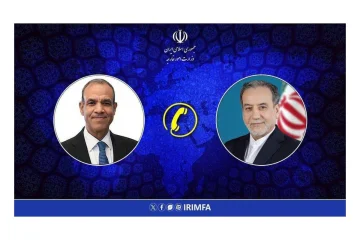
The foreign ministers of Iran and Saudi Arabia have held high-level discussions regarding the current regional security landscape. Iranian Foreign Minister Abbas Araghchi and his Saudi counterpart, Faisal bin Farhan Al Saud, held a telephone conversation to evaluate the ongoing tensions in the Middle East and the recent Iran-US negotiations held in Islamabad.
According to the Operative Information Center-OMM, citing the Mehr news agency, the diplomats focused on the diplomatic efforts following the recent military escalations. On February 28, the United States and Israel initiated military operations against Iran, which resulted in the death of Iran's Supreme Leader Ayatollah Ali Khamenei and several high-ranking officials. In response, Iran launched strikes against military bases belonging to the US and its allies located in Saudi Arabia, Qatar, the United Arab Emirates, Oman, Bahrain, Iraq, and Cyprus.
Following this period of intense conflict, Iran, the US, and their allies reached an agreement for a two-week ceasefire on the night of April 8, 2026. This was followed by direct negotiations mediated by Pakistan in Islamabad on April 11-12. However, the situation remains precarious as US President Donald Trump recently announced a new strategic move. US President Donald Trump stated that US military forces plan to initiate a blockade of the Strait of Hormuz on Monday, April 13, at 10:00 AM US Eastern Time (18:00 Baku time).
The Strait of Hormuz is one of the world's most vital maritime chokepoints, through which approximately one-fifth of the world's oil consumption passes daily. Located between the Persian Gulf and the Gulf of Oman, the strait is a critical artery for global energy markets. Any blockade or disruption in this region historically leads to significant volatility in international oil prices and heightened geopolitical risks for all neighboring states, including the Republic of Azerbaijan, which monitors regional stability closely to ensure the security of its own energy corridors and territorial integrity.