 OMM Redaksiyası

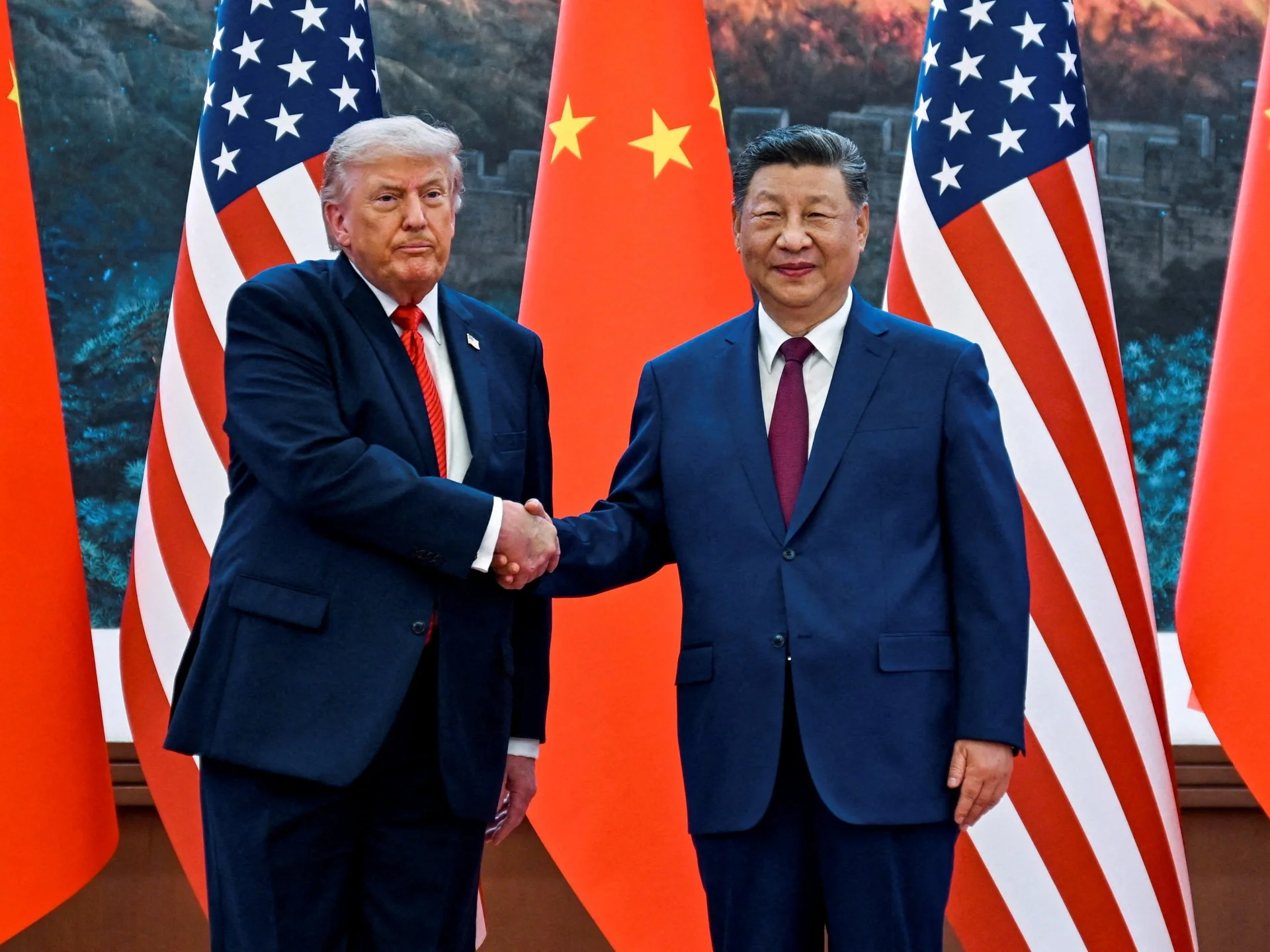
The United States and China are locked in a race for leadership in artificial intelligence, with AI expected to be among the most important issues when US President Donald Trump and Chinese President Xi Jinping meet on Thursday, according to the BBC.
Trump has repeatedly framed China as Washington’s main rival in AI, declaring that “whoever wins AI, wins”. Xi has been less outspoken publicly, but analysts say Beijing also views the technology as a major source of economic and geopolitical power.
China’s Foreign Ministry has warned that “narratives of threat” and confrontation could hinder global AI governance. It has called for international cooperation to ensure that the technology benefits all countries.
Which country is leading the AI race?
The US and China are widely regarded as the world’s leading AI powers, although the answer to which country is ahead depends on how success is measured.
US companies including “Anthropic”, “Google” and “OpenAI” lead in frontier models, the most advanced systems measured by many performance benchmarks. Researchers at Stanford University said that in February 2025, China’s “DeepSeek” briefly matched the leading US model, while by March 2026 “Anthropic” held the top position by a margin of just 2.7%.
The US advantage has been supported by substantial investment in AI companies and the infrastructure needed to train increasingly powerful models. Washington has also imposed restrictions on the export of advanced microchips to Chinese companies, limiting access to components considered essential for cutting-edge AI development.
China’s open-model and robotics advantage
Chinese companies have focused heavily on open-weight models that can be downloaded and adapted, in contrast to many US firms that offer proprietary systems through subscriptions or company platforms.
China’s leading models are now reported to trail US rivals by only a few months. Systems such as “Kimi K3”, developed by “Moonshot AI”, have gained popularity in China and abroad because they offer performance close to frontier models while remaining freely downloadable and adaptable.
Analysts say Beijing is focused less on winning a race to the most advanced model and more on deploying AI throughout the economy. “The US may lead at the frontier, while China could still gain enormous economic and geopolitical leverage by making capable AI cheap, open and ubiquitous,” China analyst Lizzi Lee said.
China also benefits from lower electricity costs, an important advantage because AI systems require large amounts of energy. The country is the world’s biggest robot manufacturer, with more than two million robots operating in its factories, according to the International Federation of Robotics.
China accounted for more than nine-tenths of global humanoid robot shipments in the first half of the year, according to the policy institute “Chatham House”. Analysts say Chinese developers have shown resilience and innovation despite restrictions on advanced US chips. US officials and AI companies, however, have accused some Chinese developers of using distillation techniques to learn from more advanced models.
Different approaches to AI safety
The US and China also differ in their approaches to AI safety. Some technology leaders have warned that AI could pose an existential threat to humanity, while Chinese researchers have focused more on misuse, cybersecurity and the risks posed by the technology to domestic stability.
Trump has argued that the US already has sufficient safeguards and that excessive regulation could prevent American companies from maintaining their lead. Washington has prioritised innovation and sought to reduce regulatory barriers to keep US AI laboratories ahead.
Beijing has adopted a more centrally coordinated approach. Xi has called on officials to monitor AI-related risks and ensure that the technology remains “under human control”. Chinese guidelines on data use and algorithms are not always legally binding, but analysts say they establish expectations while allowing developers room to innovate.
Will Washington and Beijing cooperate?
It remains unclear whether the two countries can cooperate on AI safety despite their rivalry. US officials are concerned about powerful systems escaping human control, while Chinese officials are more focused on technology threatening domestic stability, analysts say.
Before the Trump-Xi meeting, US Treasury Secretary Scott Bessent and Chinese Vice Premier He Lifeng discussed creating a notification mechanism for serious AI incidents.
Analysts said the inclusion of AI on the summit agenda was a positive sign, but warned that an increasingly hostile race narrative could further intensify tensions between the two countries.