Unstable weather conditions persist across Azerbaijan
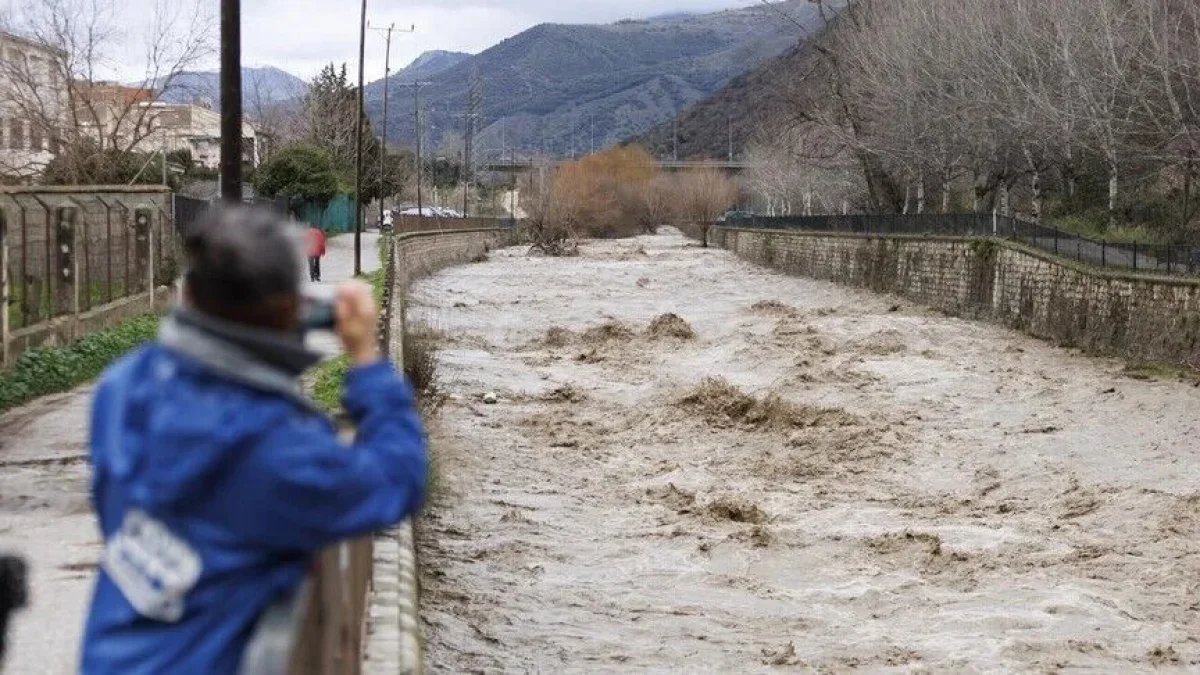
Unstable weather conditions have continued across the territory of the country. According to data as of 11:00 AM today, intense and heavy precipitation was recorded in various regions, with snow falling in mountainous areas.
The National Hydrometeorological Service provided this information to the Operative Information Center-OMM. Forecasters noted that the change in weather patterns has led to a significant decrease in temperature across the Republic of Azerbaijan.
Weather forecast
 20°
Baku nowOvercast
20°
Baku nowOvercast
-
Today
 23° 19°
-
Tomorrow
 22° 19°
-
Day after
23° 19°
Snow cover depth in mountainous regions
The height of the snow cover in the main mountain massifs was recorded as follows:
- Shahdag: 57 cm
- Gryz: 20 cm
- Khinalig: 17 cm
- Alibay (Zaqatala): 11 cm
- Kalbajar: 3 cm
Record precipitation levels in Baku and regions
In Baku and the Absheron Peninsula, precipitation exceeded the monthly norm within a single day. The amount of rainfall reached 29 mm, which constitutes 128% of the monthly average for the capital.
Precipitation levels in other regions of the republic were distributed as follows:
- Khachmaz: 46 mm (152% of the monthly norm)
- Gusar: 33 mm (69% of the monthly norm)
- Guba: 27 mm (56% of the monthly norm)
Other recorded amounts included: 23 mm in Gadabay, 22 mm in Sheki (Kishchay) and Qakh (Saribash), 19 mm in Dashkasan, 18 mm in Oguz, 17 mm in Shamkir and Shabran, 16 mm in Zaqatala, 14 mm in Khaltan, 13 mm in Balakan and Gabala, 12 mm in Goygol, 10 mm in Khizi, and 7 mm in Goranboy and Barda. Naftalan, Gobustan, Ismayilli, Mingachevir, and Yevlax recorded 6 mm.
5 mm of precipitation was recorded in the following areas: Aghdam, Tovuz, Agstafa, Shahbuz, Shamakhi, Tartar, Ganja, Goychay, Zardab, Bilasuvar, Lerik, Nakhchivan, Sharur, Ordubad, Sadarak, Imishli, Agsu, Beylagan, Kurdamir, Sabirabad, Neftchala, Salyan, Yardimli, Astara, Fuzuli, Khojaly, Shusha, Khankendi, Lachin, and Qubadli.
Wind speeds and atmospheric conditions
Strong north-west winds were reported in several districts. The maximum wind speed reached 23 m/s in Dashkasan, 19 m/s in Khizi, 18 m/s in Tovuz, Goygol, Shabran, and Lankaran, and up to 16 m/s in Sabirabad and Yardimli.
The National Hydrometeorological Service of Azerbaijan regularly monitors such weather shifts to provide early warnings for agriculture, transport, and public safety. These seasonal transitions are typical for the South Caucasus region, though the current intensity in Baku has surpassed historical averages for this period.