 OMM Redaksiyası

Poland has strengthened its air defence posture after a series of alleged incursions into its airspace, with Warsaw accusing Russia of testing NATO’s readiness amid the ongoing war in Ukraine, according to Al Jazeera.
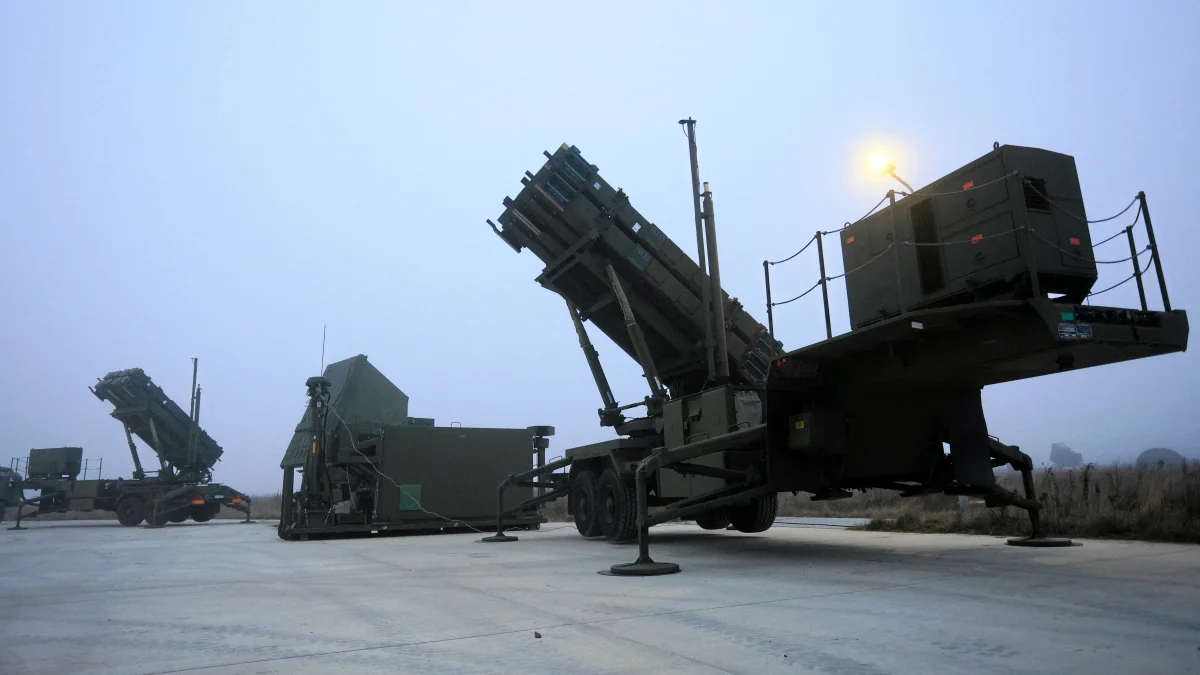
The Polish Air Force began preventive patrols on September 17 to protect the country’s eastern airspace. Defence Minister Wladyslaw Kosiniak-Kamysz said the measures included increased activity by F-16 fighter jets and helicopters.
“Following the latest Russian provocations and acts of aggression, I have made the decision to expand the protection of our airspace,” Kosiniak-Kamysz wrote on social media.
Poland warns of possible hybrid attacks
Prime Minister Donald Tusk told parliament that intelligence indicated Russia could use drones and missiles against countries supporting Ukraine, including Poland.
“The Russian plan also includes hybrid drone and missile strikes against countries supporting Ukraine, including Poland,” Tusk said, adding that the information was “consistent” and “convincing”.
He said the suspected incursions were intended to undermine NATO members’ willingness to invoke the alliance’s collective-defence provisions if one of its members came under attack.
On September 23, Poland reported that an Mi-8 helicopter had entered its airspace from Russia’s Kaliningrad region for 42 seconds. Poland’s Armed Forces Operational Command said Russia was once again testing the readiness of Polish air defences.
Moscow has denied targeting NATO countries. Poland’s most serious previous allegation involved a Russian Su-24 reconnaissance aircraft near the Baltic Sea in February 2025, an incident Russia reportedly acknowledged.
Concerns spread across NATO’s eastern flank
Suspected Russian drones were shot down twice in Moldova during the past week and once in Romania on September 24, according to observers.
Poland and Romania are NATO members bordering Ukraine and serve as routes for military supplies and Western officials travelling to the country. Hungary, another NATO member bordering Ukraine, has not permitted military supplies to pass through its territory.
The incidents have renewed fears of a possible Russian attack on NATO territory. European intelligence officials have warned about that prospect since January 2024.
Czech intelligence chief Michal Koudelka told The Guardian this week that a Russian attack could involve a limited incursion, false-flag operations or a large-scale influence campaign, and might occur within “months, not years”.
Ukraine reports continued Russian strikes
Russia carried out nightly drone attacks against Ukrainian cities during the past week, using missiles alongside drones on September 19, 22 and 24. At least eight people were killed and dozens injured, including a cleric at a monastery in Kherson. Two people were killed in a series of ballistic missile strikes on Kyiv, including an attack that hit a maternity clinic.
Ukrainian President Volodymyr Zelenskyy told the United Nations General Assembly that Russia had used more than 2,100 missiles against Ukraine since the beginning of the year, including more than 950 ballistic missiles. He said Russia had also launched 63,000 drones.
“We need to slow it down before we move to the next stage,” Zelenskyy said, warning that artificial intelligence could eventually begin influencing decisions on the battlefield.
Russia’s Defence Ministry said on September 19 that Russian forces had captured 5,300 square kilometres and more than 220 settlements in Ukraine since the start of 2026. However, the Institute for the Study of War, using geolocated open-source information, estimated that Russia had gained a net 147.7 square kilometres during the first eight months of the year.
The institute said Ukrainian forces had retaken at least 972.56 square kilometres during the same period. Ukrainian counteroffensives have taken place near Oleksandrivka, on the Donetsk-Zaporizhia border, and around Lyman in northern Donetsk.
Ukrainian officials said the second phase of the Vivaldi operation near Lyman had liberated 50 square kilometres in recent days.
Ukraine targets Russian refineries
Ukraine launched its largest combined air strike of the war on the final day of Russia’s parliamentary elections.
Moscow Mayor Sergei Sobyanin said on September 20 that Russian air defences had intercepted more than 1,600 Ukrainian drones during the previous 24 hours, including at least 450 heading towards Moscow.
Some drones reached their targets, reportedly disabling Moscow’s oil refinery for the second time this year. Videos shared online showed several fires. Ukraine also targeted the Kuybyshev refinery in Samara and the Bashneft refinery in Bashkortostan during the week.
Russia’s United Russia party won the Duma elections, increasing its majority from 315 to 355 seats in the 450-seat chamber. Russian officials presented the result as support for President Vladimir Putin’s course on the war.