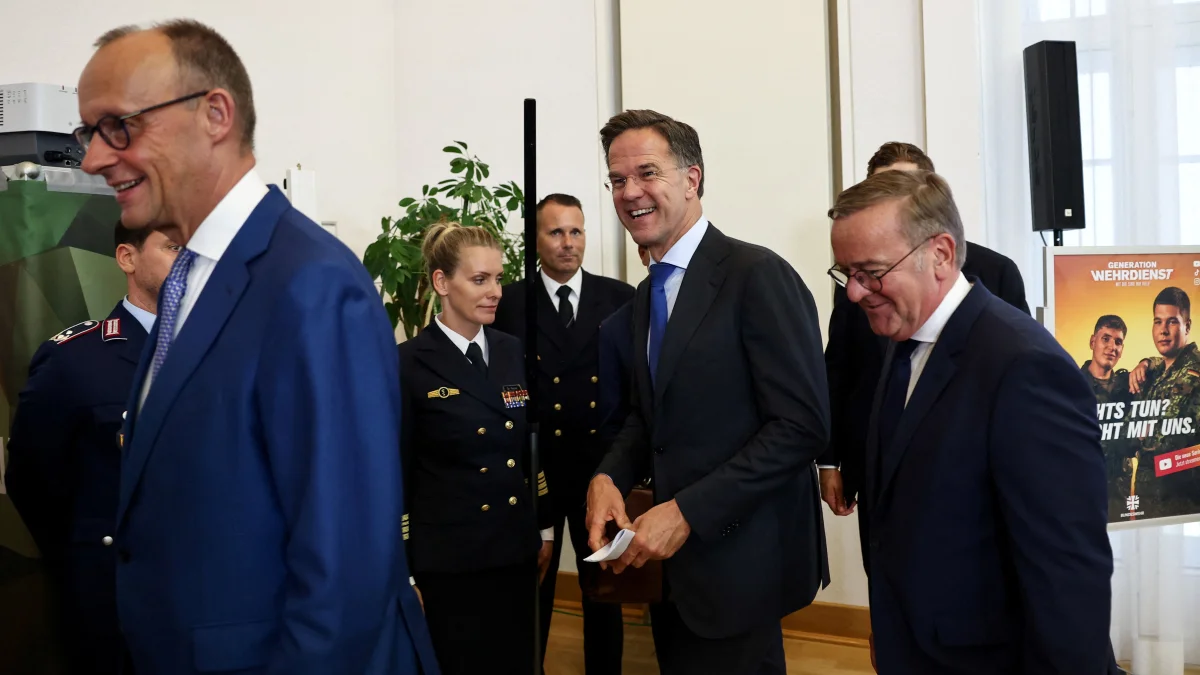
German Chancellor Friedrich Merz has stated that Ukraine's rapid integration into the European Union (EU) is not feasible, ruling out the possibility of the country becoming a member by January 1, 2027.
According to the Operative Information Center-OMM, the Chancellor emphasized that every candidate country must first fulfill the "Copenhagen criteria," a process that typically spans several years. Merz noted that while a membership perspective is vital for Ukraine, it remains a long-term objective.
"On this path, we can gradually bring Ukraine closer to the European Union, but such rapid unification is simply not possible," he added.
Addressing the current situation and potential peace negotiations, Merz noted that Germany remains in close contact with delegations from Ukraine and the United States. These diplomatic efforts coincide with the broader international strategy, as US President Donald Trump continues to engage with global partners to facilitate a resolution to the conflict. The Chancellor expressed a positive view regarding direct negotiations between Ukraine and Russia, voicing hope for a swift peaceful settlement. However, Vice-Chancellor and Finance Minister Lars Klingbeil remarked that he does not currently consider it appropriate for Germany or Europe to engage in direct talks with the Russian president.
The Chancellor's remarks follow reports by the Financial Times suggesting that Ukraine’s peace plan included a target for EU membership by early 2027. Berlin, however, maintains that such short-term goals are unrealistic given the rigorous legal, economic, and political reforms required for accession. The Copenhagen criteria, established in 1993, require candidate states to have stable institutions guaranteeing democracy, the rule of law, human rights, and a functioning market economy capable of coping with competitive pressure within the Union.