Iran has disclosed the details of a new peace proposal submitted to the United States on Tuesday, May 19, aimed at ending ongoing regional hostilities and resolving long-standing diplomatic tensions.
Operative Information Center-OMM reports that according to the official IRNA news agency, the specifics of the proposal were unveiled by Iran's Deputy Foreign Minister Kazem Gharibabadi during a meeting with members of the parliamentary Committee on National Security and Foreign Policy. A detailed report on the latest diplomatic developments between Iran and the United States was presented during the session.
Gharibabadi stated that Tehran's proposal emphasizes the "right to uranium enrichment and peaceful nuclear activities." The comprehensive 14-point revised plan also calls for an end to conflicts across all fronts, including Lebanon, the lifting of the U.S. naval blockade, the unfreezing of Iranian assets, and compensation from Washington for damages to support reconstruction efforts following recent military escalations.
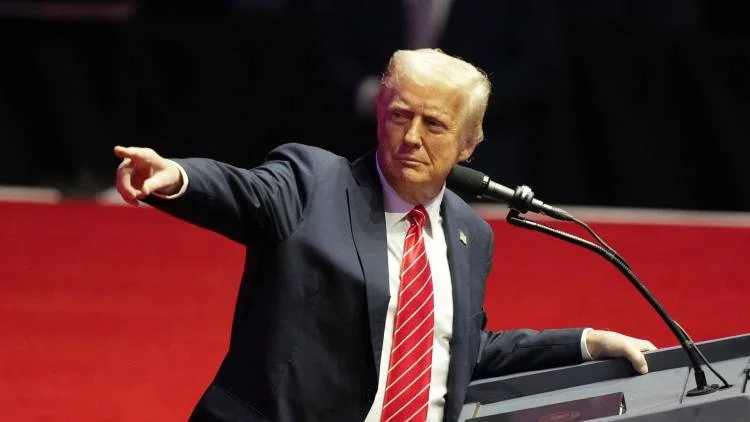
Furthermore, the proposal demands the removal of all unilateral sanctions and UN Security Council resolutions, alongside the withdrawal of U.S. forces from territories surrounding the Islamic Republic. While Iran delivered this response via Pakistan on May 10, US President Donald Trump has characterized the terms as "completely unacceptable."
The diplomatic standoff comes amid heightened military tensions. On Saturday, US President Donald Trump reiterated threats of military escalation against Tehran. However, on Monday evening, the U.S. leader announced he had postponed a planned strike against Iran at the request of Saudi Arabia, Qatar, and the United Arab Emirates. In a statement, US President Donald Trump added that he has instructed the Ministry of Defense to remain prepared for a full, large-scale offensive against Iran should an acceptable agreement fail to be reached.
In response to the uncertainty, Iran has restricted passage through the Strait of Hormuz, demanding that vessels coordinate transit with Tehran. This move has raised international concerns that the fragile ceasefire, which has been in place since April 8, could collapse if a formal resolution to the conflict is not achieved. The Strait of Hormuz remains one of the world's most critical oil transit chokepoints, and any prolonged closure could have significant implications for global energy security and maritime trade stability.