 OMM Redaksiyası

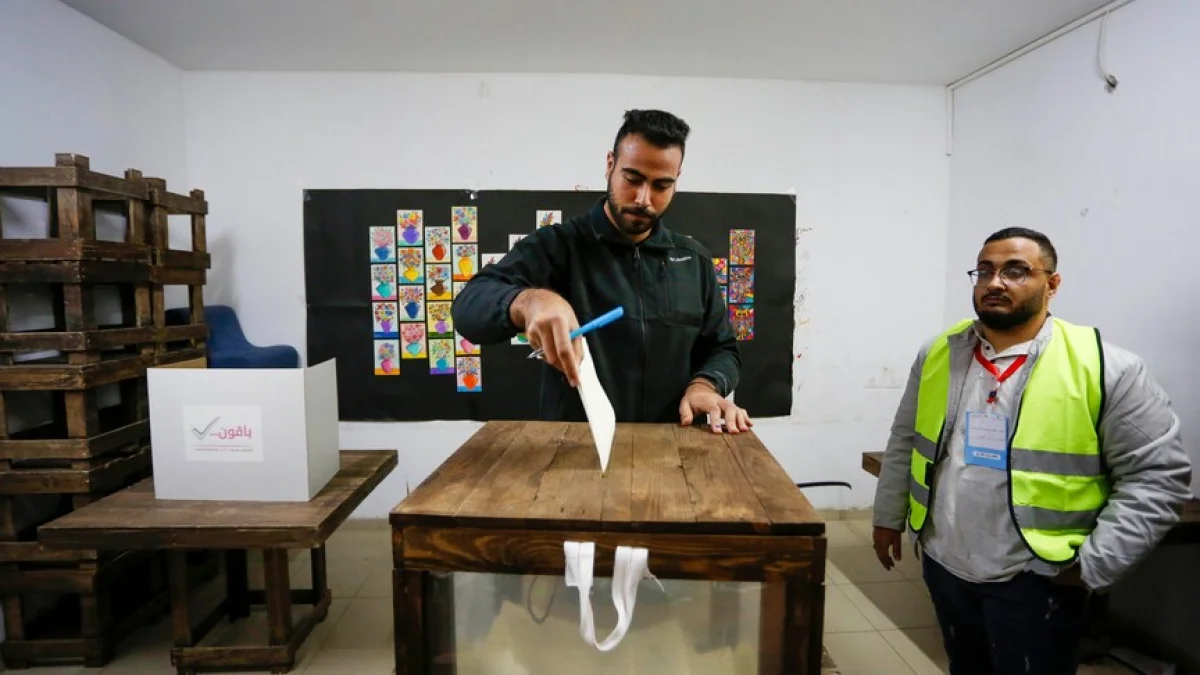
Palestinian election authorities are preparing between 100 and 110 polling centers in the Gaza Strip for about 1.25 million eligible voters ahead of legislative elections scheduled for Nov. 28, despite extensive destruction and continuing security concerns, Anadolu Agency reported.
Jamil al-Khalidi, the regional director of the Palestinian Central Elections Commission in Gaza, said preparations were progressing on technical and logistical matters, but that security remained the main obstacle to holding the vote.
Security remains the main challenge
Al-Khalidi said the commission was technically and logistically ready, but stressed that a safe environment was needed for voters, candidates, political parties, election workers and observers.
“The main concern is security,” he said.
He called on the international community to help create conditions under which all participants in the electoral process could work freely and safely. Al-Khalidi also expressed hope that international observers would be allowed to monitor the election alongside local observers.
Up to 110 polling centers planned
The scale of destruction in Gaza has made it difficult to identify suitable polling locations. The commission is working with the Education Ministry to locate accessible schools that could be converted into polling centers.
Current plans envisage around 100 to 110 polling centers across the enclave, serving approximately 1.25 million eligible voters.
Al-Khalidi said the destruction had not reduced public interest in the election and pointed to what he described as a strong determination among Palestinians to participate despite the hardships of recent years.
In April, municipal elections were held in Deir al-Balah in central Gaza, where tents were used as polling stations. It was the city’s first local election in 22 years.
Contingency plans for election materials
The commission has prepared alternatives in case ballot boxes, ballot papers or electoral ink cannot be brought into Gaza.
“If the sensitive election materials cannot be brought in, we have acceptable and practical alternatives that would allow the vote to be held in line with international standards,” al-Khalidi said.
He said the commission did not foresee technical obstacles that would prevent the election from taking place, provided security conditions allowed the process to proceed.
First legislative election in nearly two decades
The Nov. 28 vote would be the first Palestinian legislative election since 2006 and only the third since the Palestinian Legislative Council was established.
Al-Khalidi described the return to the ballot box after nearly 20 years as an important step toward restoring political stability.
“The experience of the past 20 years … has shown us that elections are the way out of our political crises and disagreements,” he said.
He cautioned that elections alone would not resolve every political dispute, but said they could provide a foundation for addressing political divisions, expanding participation and strengthening unified Palestinian decision-making.
Five lists apply in the first hour
Candidate registration opened on Saturday, with five party and independent lists submitting applications during the first hour, according to al-Khalidi. He described the early participation as a positive indication of public and political interest.
Registration will remain open until Oct. 7, while campaigning is scheduled to begin on Nov. 6. Security forces are due to vote on Nov. 26, two days before the general election.
Palestinian President Mahmoud Abbas issued a decree in July setting Nov. 28 as the date for legislative elections in occupied East Jerusalem, the occupied West Bank and the Gaza Strip.
The Palestinian Legislative Council has been inactive since 2007, following a Palestinian political split, and was formally dissolved by the Constitutional Court in 2018. Legislative and presidential elections scheduled for 2021 were postponed by Abbas, who cited the absence of Israeli assurances allowing Palestinians in occupied East Jerusalem to participate.