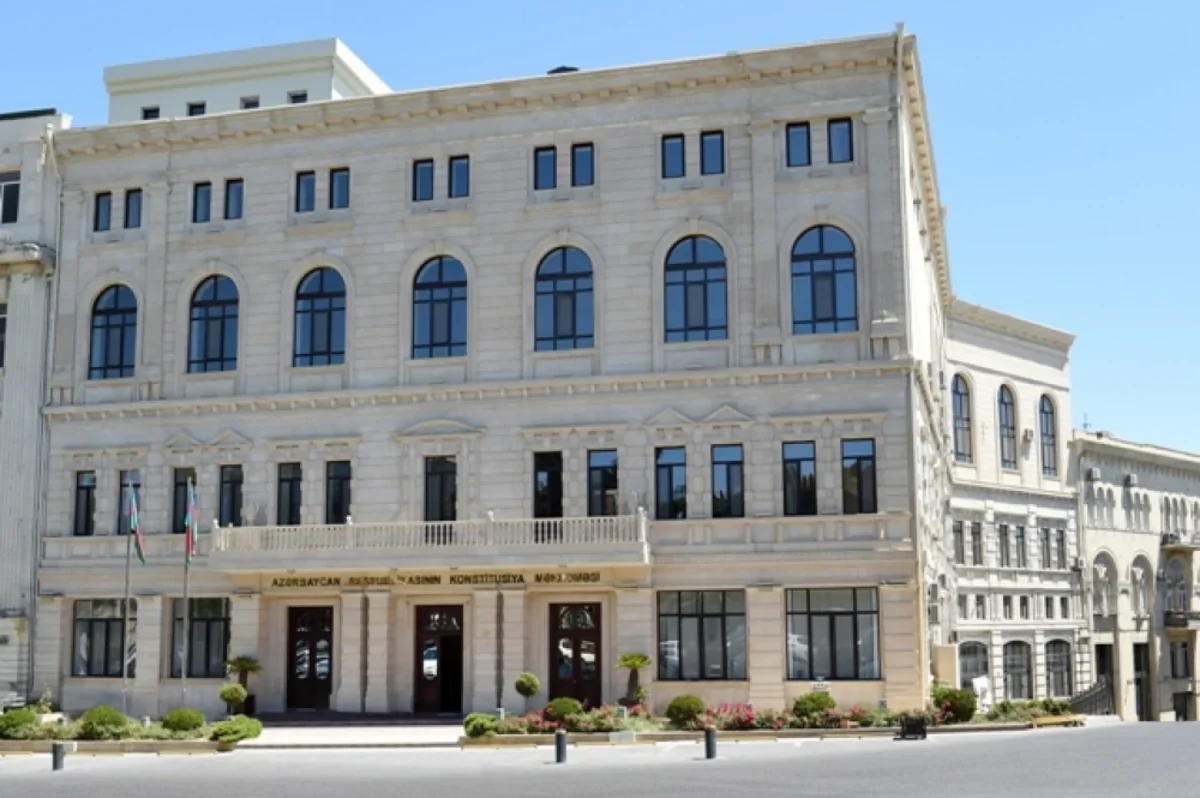
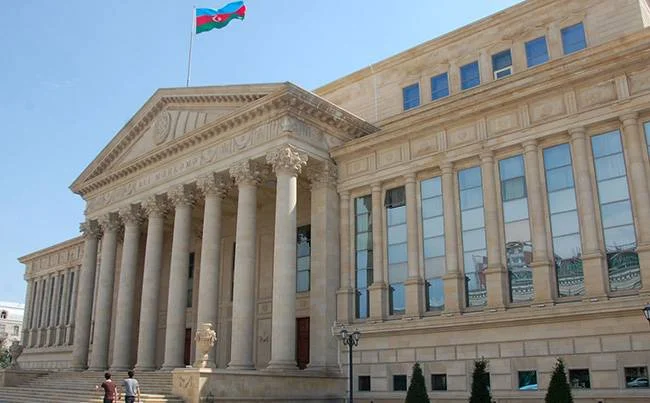
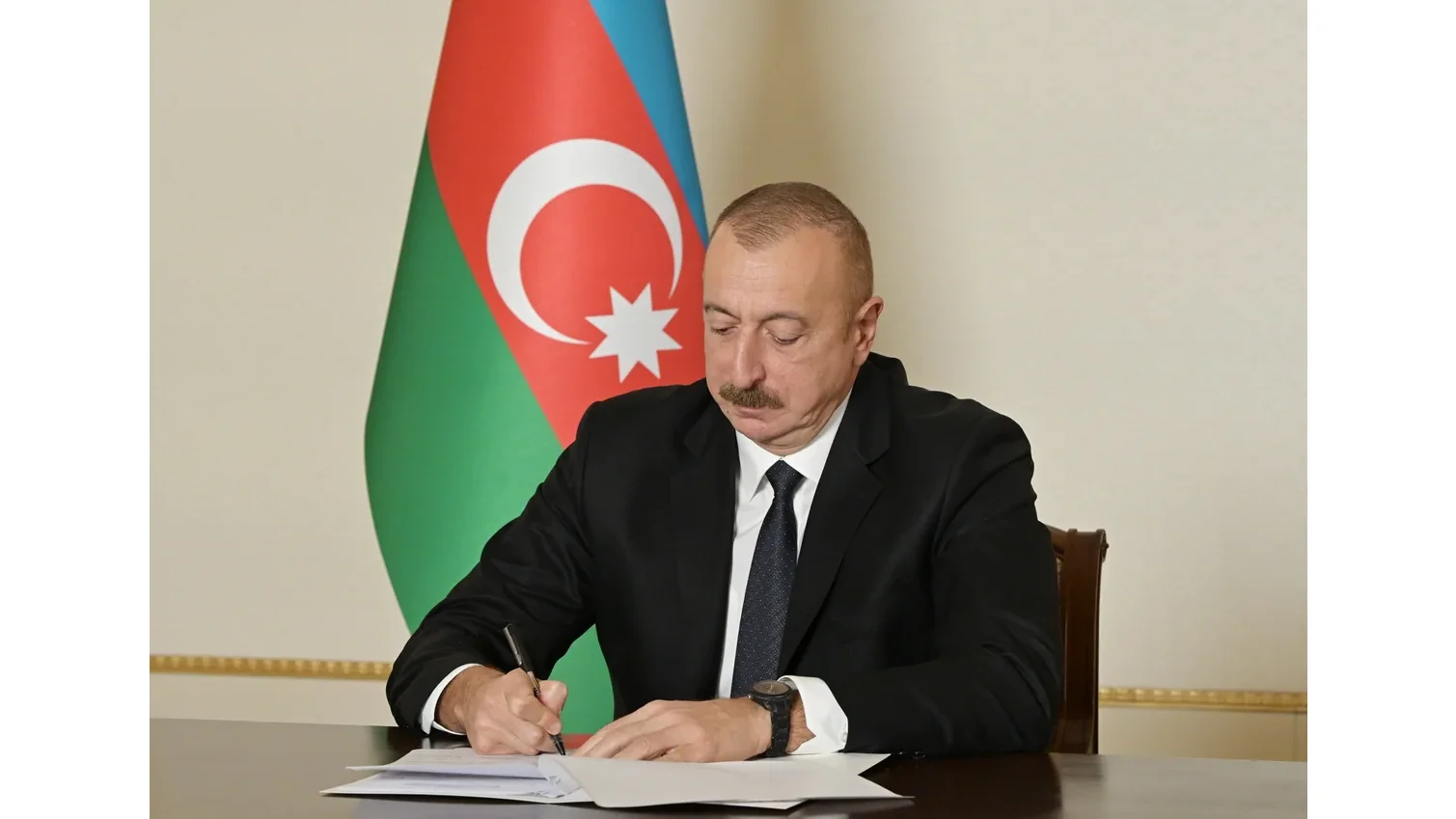
The Plenum of the Constitutional Court of Azerbaijan has held a session under the chairmanship of Farhad Abdullayev.
This was reported to the Operative Information Center-OMM by the press service of the Constitutional Court.
The session focused on a request from the Binagadi District Court of Baku regarding the interpretation of Article 598.7 of the Code of Administrative Offenses in conjunction with Articles 3.1 and 3.1.2 of the Law of the Republic of Azerbaijan "On Combating the Legalization of Criminally Obtained Funds or Other Property and the Financing of Terrorism," in light of the requirements of Article 71 (Part VIII) and Article 80 of the Constitution of Azerbaijan.
The Plenum reviewed the report by Judge F. Mammadov, the request from the Binagadi District Court, and opinions provided by the Apparatus of the Milli Majlis (National Assembly), the Supreme Court, the Baku Court of Appeal, the Central Bank, the Financial Monitoring Service, the State Tax Service under the Ministry of Economy, the Bar Association, and expert testimony from Professor S. Aliyev of the Baku State University Law Faculty.
The Court ruled that independent professionals providing accounting and tax advisory services are subject to obligations under the aforementioned law when assisting clients with operations specified in Article 3.1.2. Failure to comply with these obligations constitutes an administrative offense under Article 598.7 of the Code of Administrative Offenses.
The ruling further clarified that the concept of "participation in conducting operations" as defined in Article 3.1.2 encompasses actions that have real and functional significance in the structuring, legal modeling, formalization, or outcome formation of such operations.
The Constitutional Court of Azerbaijan serves as the supreme body of constitutional control, ensuring the supremacy of the Constitution and protecting the fundamental rights and freedoms of citizens. Its decisions are final, binding, and come into force upon publication, meaning they cannot be revoked, altered, or officially interpreted by any other body or individual.