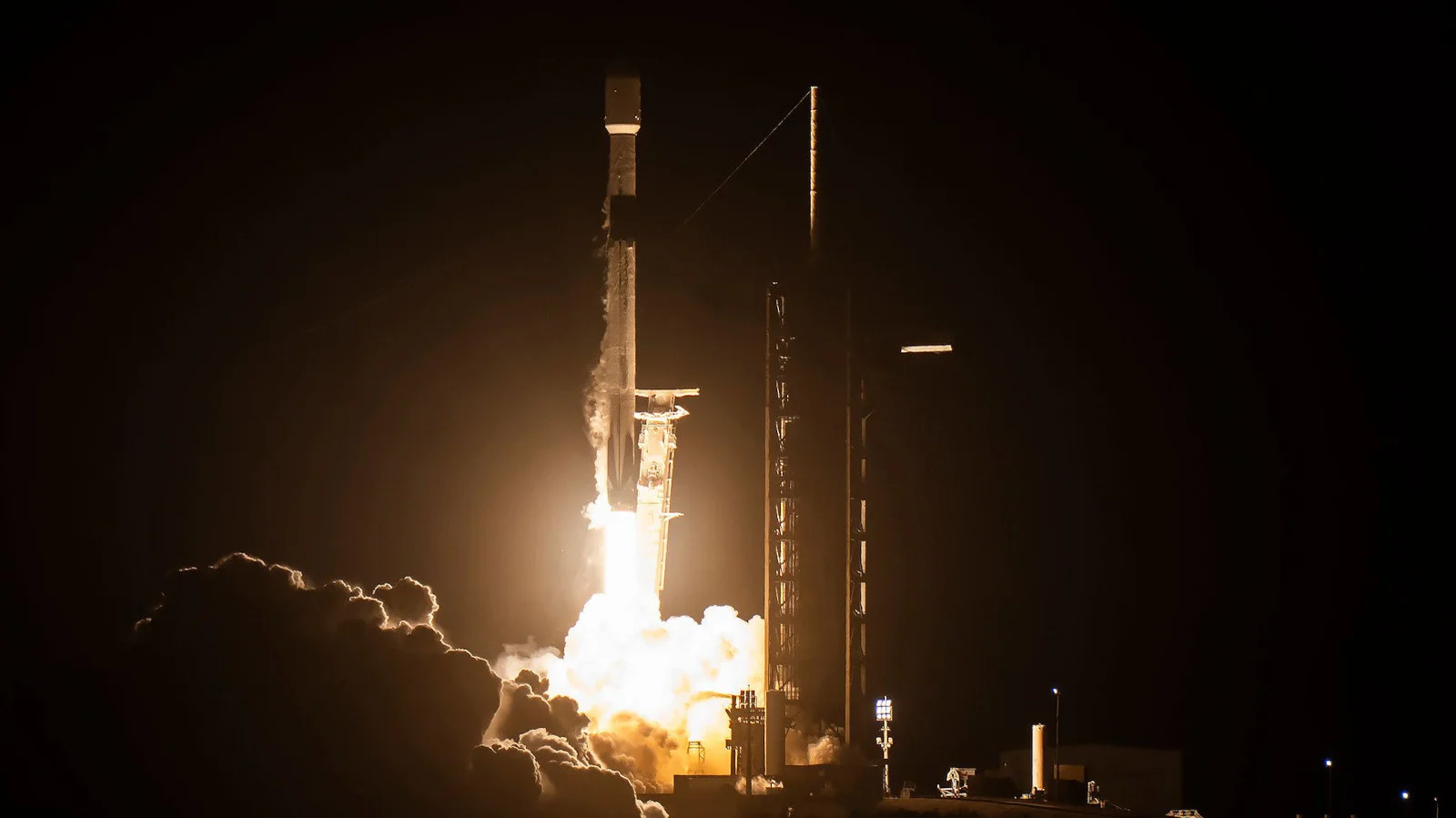
A second stage of a SpaceX Falcon 9 rocket, which had been drifting uncontrollably in orbit for approximately one year, has impacted the lunar surface. According to the Operative Information Center-OMM, international media outlets have confirmed the incident.
Although the collision occurred at a velocity of approximately 8,700 kilometers per hour, it was not directly observed in real-time. However, telescopes located in Chile successfully recorded the resulting dust and debris cloud following the impact. Experts had previously indicated that the impact of the rocket stage on the Moon was inevitable.
The event has brought renewed attention to the growing issue of space debris, particularly as the United States and China continue their competition in lunar exploration. This incident follows a similar occurrence in 2022, when a Chinese rocket stage also impacted the Moon in an uncontrolled manner.
SpaceX official Juliana Scheiman stated that the collision was not intentional. According to her, the rocket's trajectory was altered by a combination of solar activity and gravitational forces, directing it toward the Moon. The company has announced that it is collaborating with NASA to prevent similar incidents in the future.
Karl Schmidt, a scientist at Boston University, noted that his team's observations clearly captured the traces of the impact. The Very Large Telescope (VLT) of the European Southern Observatory in Chile observed clouds of sodium and lithium dispersing into space following the collision. Astronomers estimate that the rocket stage impacted an uninhabited area near the Moon's Einstein crater. To assess the size of the resulting crater and the extent of the impact, NASA's Lunar Reconnaissance Orbiter (LRO) is scheduled to capture high-resolution imagery of the site.
The Moon, Earth's only natural satellite, has long served as a focal point for space exploration. While lunar impacts from natural meteoroids are common, the increasing frequency of human-made debris impacting the Moon highlights the challenges of orbital mechanics and the necessity for stricter space traffic management protocols as global space agencies ramp up lunar missions.