During the preparation of the draft law on the "Execution of the 2025 State Budget," the Chamber of Accounts reviewed treasury reconciliation acts and supporting documentation covering 33.3 billion manat across more than 170 government institutions.
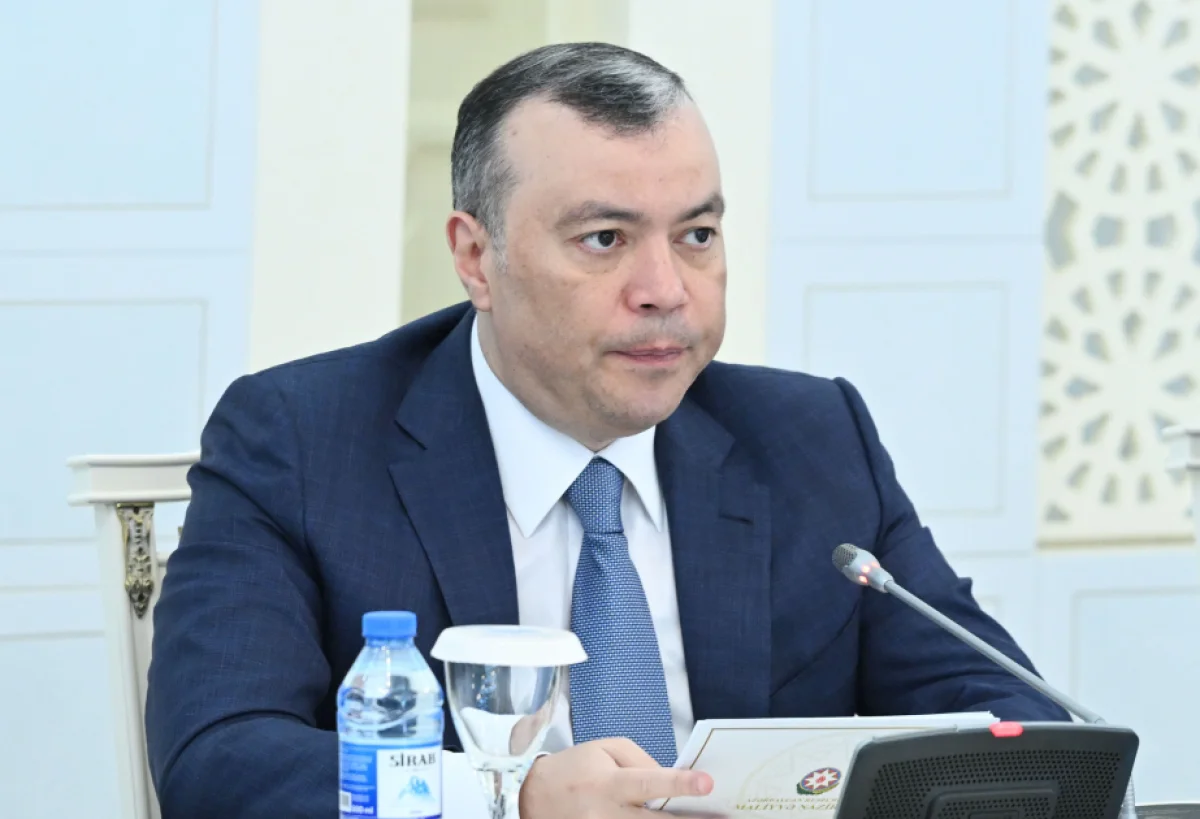
According to the Operative Information Center-OMM, Vugar Gulmammadov, Chairman of the Chamber of Accounts, announced these findings during a meeting of the Milli Majlis (National Assembly) Committee on Economic Policy, Industry, and Entrepreneurship.
"This figure represents 86.3% of the executed budget expenditures. Our analysis indicates certain discrepancies. Specifically, amounts exceeding 600 million manat, which were attributed to the cash execution of the state budget in the reporting year and previous years, remained in bank accounts. This creates an inconsistency with the definition of state budget cash execution under the Law on the Budget System," Gulmammadov stated.
The Chairman noted that reporting on strategic expenditures from the 2025 state budget has improved compared to previous years. In addition to prioritizing strategic measures, the breakdown by implementing agencies has also been provided. "Unlike previous years, the data submitted for the reporting year separately indicates financing costs for both other measures and investment-oriented measures, with the exception of the fourth priority," he added. Reports on budget execution indicate that 5.9 billion manat was allocated for the implementation of the "2022-2026 Socio-Economic Development Strategy." However, Gulmammadov pointed out that inconsistent approaches in project and execution documentation have complicated the assessment of forecasts and actual performance, with some instances of funding for completed measures or activities not directly outlined in the strategy.
The Chamber of Accounts of the Republic of Azerbaijan serves as the supreme audit institution, responsible for overseeing the efficient and transparent use of public funds. Its regular audits are a critical component of the country's fiscal oversight mechanism, ensuring that government spending aligns with legislative mandates and national development priorities.