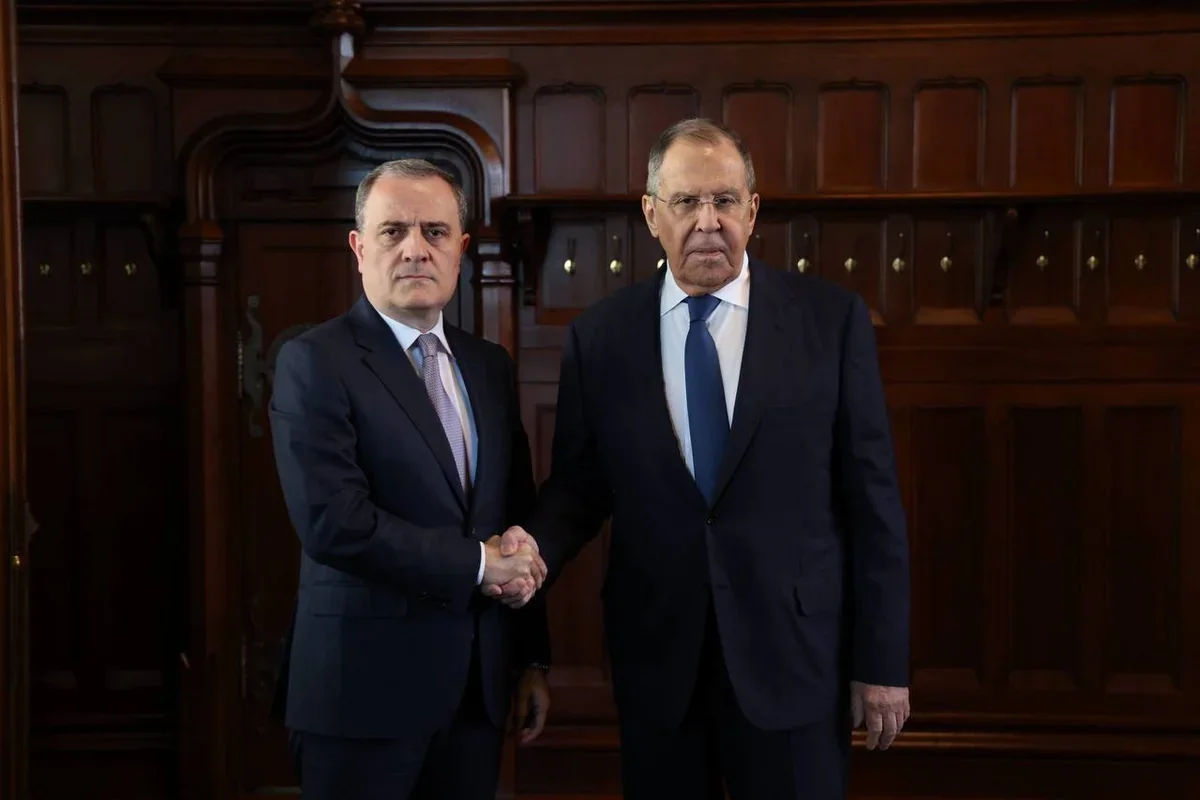
Russian Deputy Foreign Minister Mikhail Galuzin has criticized Armenia's policy of integration with the European Union while clarifying Russia's position on the so-called "Trump route" currently being discussed within the framework of the TRACECA (Transport Corridor Europe-Caucasus-Asia) project.
According to the Operative Information Center-OMM, Galuzin stated that it is unacceptable for Armenia to simultaneously pursue legislative goals for integration with the European Union while continuing to benefit from its membership in the Eurasian Economic Union.
Addressing the "Trump route" project, the Russian official emphasized that Moscow's participation would bring significant benefits to the initiative. According to the Deputy Minister, there is a strong possibility that the route will be constructed to match Russian railway gauge standards, ensuring seamless rail connectivity with Azerbaijan.
Galuzin reminded that Armenian railways are currently managed by the South Caucasus Railway CJSC, which operates as a subsidiary of Russian Railways. He added that transit operations through Armenian territory must strictly adhere to the norms and regulations of the Eurasian Economic Union, noting that Armenia has not expressed any intention to withdraw from this bloc.
Furthermore, the Deputy Minister pointed out that the proposed "Trump route" would traverse areas where Armenia's borders with Turkey and Iran are guarded by Russian border troops. "Consequently, the position of Russia and the Eurasian Economic Union must be taken into account in any scenario. We believe that Russia's involvement can only have a positive impact on the project," Galuzin concluded.
The "Trump route" is part of broader regional discussions regarding transport corridors in the South Caucasus. These projects are critical for enhancing regional connectivity, particularly as countries in the region seek to expand trade routes linking Central Asia, the Caspian Sea, and Europe. Russia's involvement in these logistics networks remains a significant factor due to its historical infrastructure ties and security presence in the region.