The world's most popular artificial intelligence chatbot, ChatGPT, will soon begin displaying advertisements. According to an official statement from OpenAI, this decision aims to make advanced AI tools financially accessible to a broader audience and lower the barrier to entry for users globally, including those in Azerbaijan.
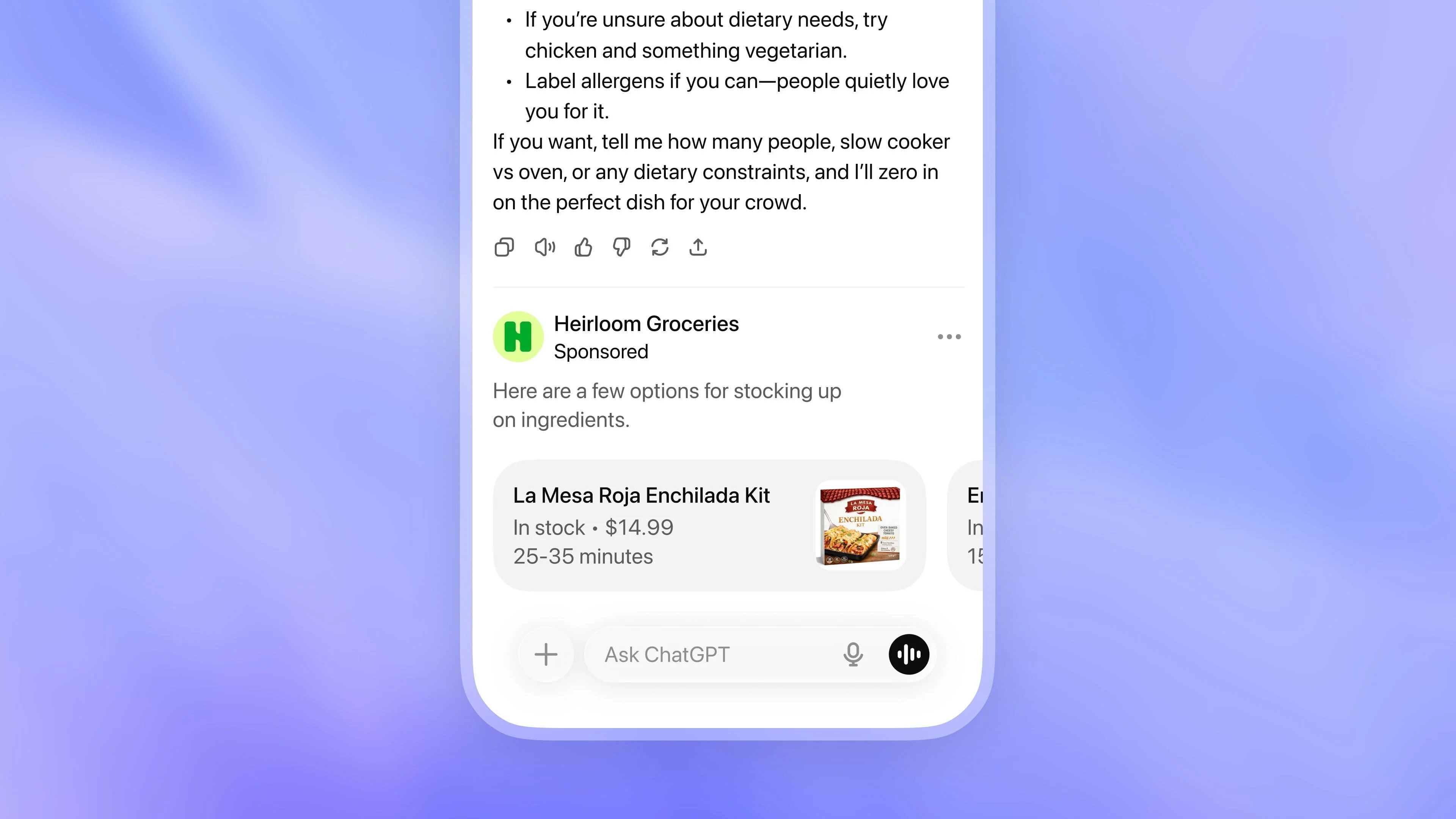
Testing of advertisement blocks is scheduled to commence in the United States in the coming weeks. Advertisements will be displayed at the bottom of the chatbot's responses, appearing only when the context of the conversation aligns with a relevant product or service. This update will apply to the following user groups:
- Free version users;
- Subscribers of the newly introduced budget-friendly ChatGPT Go plan.
The company stated that Plus, Pro, Business, and Enterprise subscribers will continue to enjoy an ad-free experience. OpenAI emphasizes that advertisements will not influence the objectivity of the AI's responses; all sponsored messages will be clearly labeled, and user data will not be sold to advertisers. Furthermore, the company pledged that ads will not be shown to individuals under the age of 18 or during conversations regarding sensitive topics such as politics or mental health.
Simultaneously, OpenAI has launched its previously announced ChatGPT Go tier on a global scale. Priced at $8 per month—compared to the $20 monthly fee for the Plus plan—this tier offers users increased message limits, image generation capabilities, file uploads, and access to the "memory" feature.
The introduction of an ad-supported model marks a significant shift in OpenAI's business strategy as it seeks to sustain the high operational costs associated with running large language models. Since its public release in late 2022, ChatGPT has revolutionized the tech industry, prompting global discussions on AI ethics, productivity, and the future of digital interaction. This move aligns OpenAI with other major tech platforms that utilize tiered subscription models to balance premium features with free, ad-supported access for the general public.