 OMM Redaksiyası

Spain's railway network is facing significant disruptions this week as a nationwide strike gets underway.
Operative Information Center-OMM reports that the Semaf union has initiated a three-day nationwide strike to protest deficiencies in the safety system following fatal accidents in Adamuz and Catalonia.
The industrial action, which began on Monday, is expected to paralyze the movement of thousands of passengers and international travelers. The union characterized this step as a direct response to the lack of systemic safety guarantees in the country's railway operations.
The union views this move as a direct response to the lack of systemic safety guarantees in the country's railway operations.
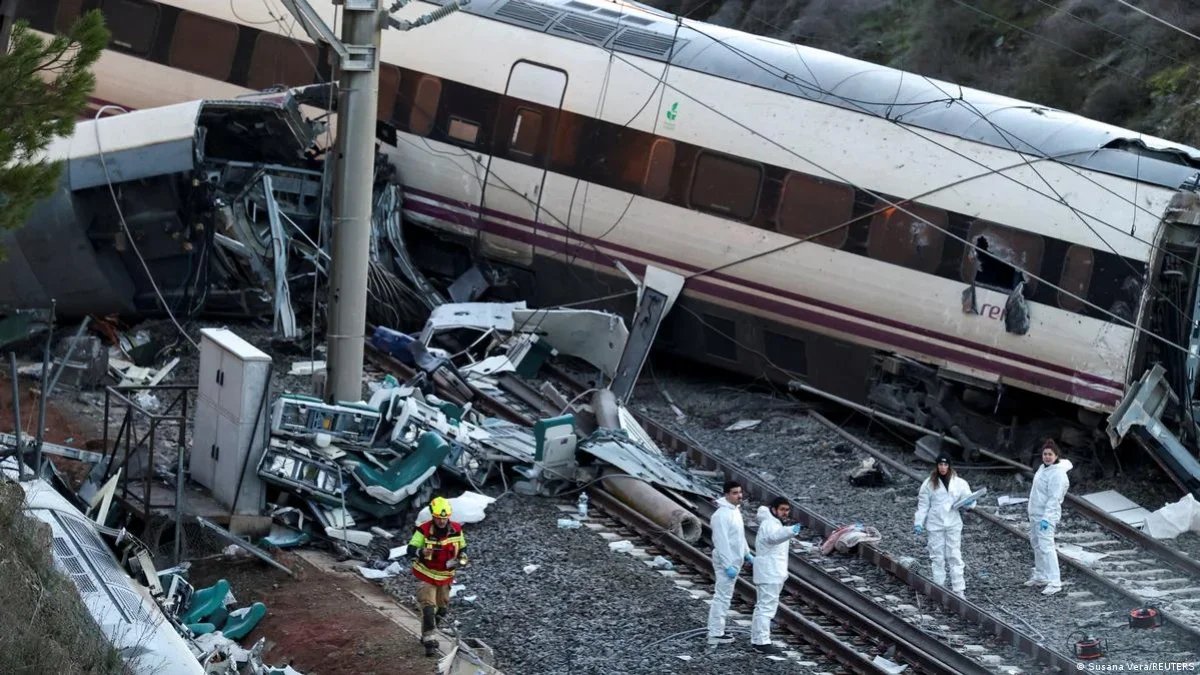
In January, during what has been remembered as a "black week" for Spanish railways, two separate fatal incidents occurred within a 48-hour period. The most severe accident was recorded on January 18 in Adamuz. A high-speed train derailed and collided with another train, resulting in 46 fatalities. This is considered the country's largest railway disaster in the last decade.
The second incident occurred in Catalonia, near Barcelona. A driver lost his life and 37 passengers sustained various injuries when a wall collapsed onto a train. Semaf representatives stated that these events are not coincidental but are indicators of the network's degradation. Emphasizing that it is impossible to operate under current conditions, they are demanding an increase in the maintenance budget and the hiring of additional staff.
The government, however, rejects the allegations. Transport Minister Oscar Puente stated that the problem is not related to a lack of investment. The ministry pointed out that 700 million euros were recently spent on the renewal of the Madrid-Andalusia line, where the accident occurred.
Spain's railway infrastructure, primarily managed by the state-owned operator Renfe and infrastructure manager Adif, is one of the most extensive in Europe. The country has invested heavily in its high-speed AVE network over the past two decades, making it a cornerstone of national transport. However, this recent wave of accidents has sparked a national debate regarding the balance between rapid expansion and the rigorous maintenance of existing safety protocols. Such strikes often lead to significant economic pressure, affecting both domestic tourism and regional logistics across the Iberian Peninsula.