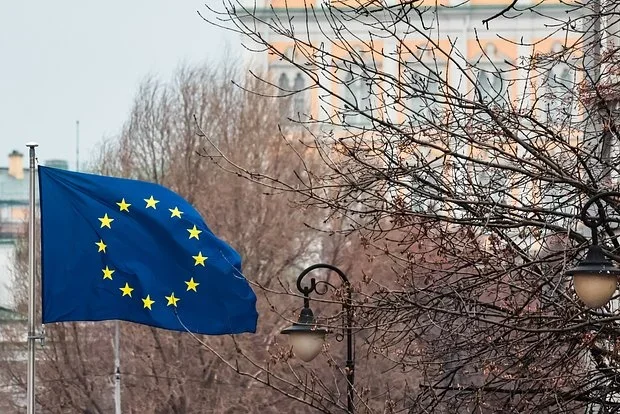
Europe must establish a military structure capable of making rapid decisions against potential aggression.
The Operative Information Center-OMM reports that journalist Paul Taylor highlighted this necessity in an analysis for The Guardian. Taylor emphasized that the four-year full-scale conflict between Russia and Ukraine has demonstrated that neither NATO nor the European Union can ensure a sufficiently swift and adequate response.
According to the analyst, NATO remains under "dominant US influence" and cannot act without Washington's consent, while the EU is not fundamentally a "defense organization." Taylor added that despite proposals to invoke the mutual defense clause (Article 42.7) of the EU Treaty, the alliance has "little military experience and currently lacks operational command." He further noted that since the end of the Cold War, no active European general has commanded more than a brigade in combat, with only small forces deployed for peacekeeping operations in regions like Afghanistan, Iraq, Mali, Bosnia, and Kosovo.
The report also points out that both the EU and NATO are "bound by the principle of unanimity," often facing obstacles from the positions of member states like Slovakia and Hungary. Furthermore, the EU excludes key European defense players such as the United Kingdom, Norway, and Türkiye. Taylor suggests that the "coalition of the willing" created to support Ukraine could potentially evolve into an organization capable of countering future aggression.
This discussion comes at a critical time for European security architecture. As geopolitical tensions rise, debates regarding strategic autonomy and the integration of non-EU military powers like Türkiye and the UK into a broader defense framework have intensified. Such a move would aim to streamline decision-making processes and enhance the continent's collective deterrence capabilities beyond existing bureaucratic constraints.