OMM Redaksiyası

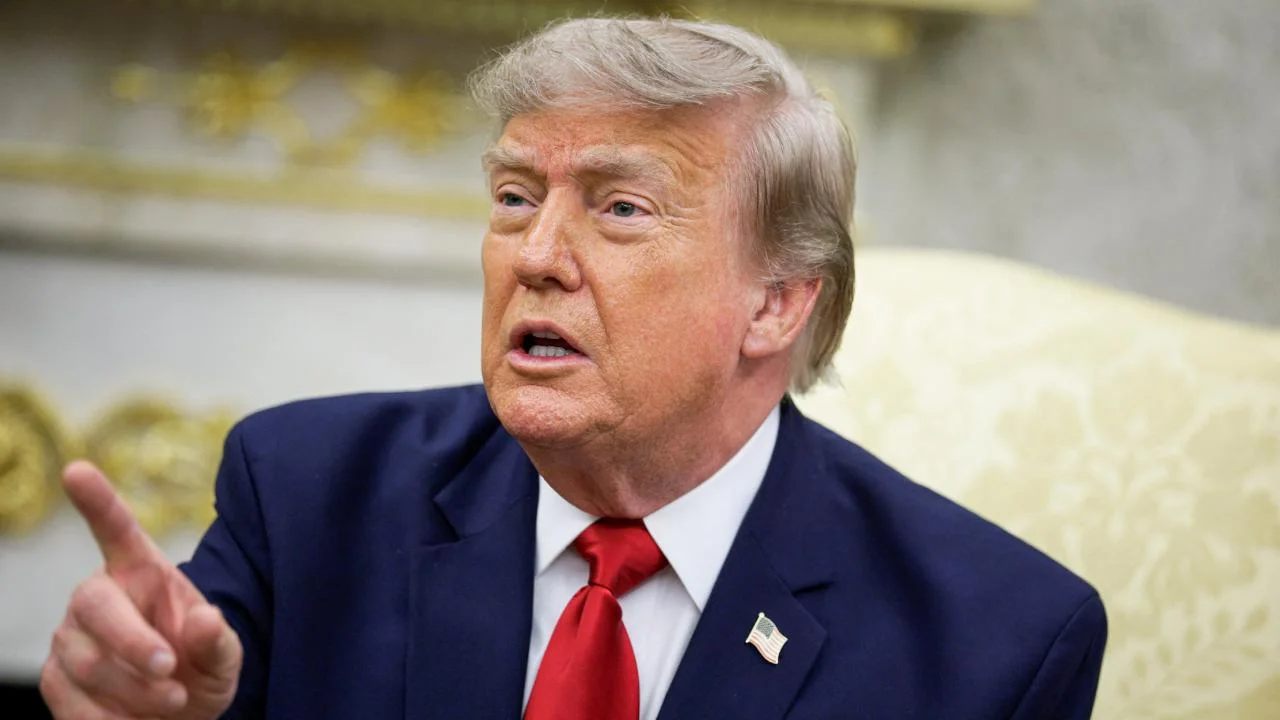
US President Donald Trump has issued a sharp critique of European allies regarding their lack of military support during the ongoing crisis in the Middle East. Speaking to reporters at the White House while receiving Irish Prime Minister Micheal Martin, the President expressed significant dissatisfaction with the alliance's current trajectory.
According to Operative Information Center-OMM, citing foreign media, US President Donald Trump emphasized that Europe has failed to provide the expected military assistance, particularly in ensuring the security of the Strait of Hormuz. He stated that NATO allies have failed this test, noting that the situation has caused him "great disappointment."
The President noted that while the United States possesses the capability to keep the strait open for international trade and does not depend on anyone's help, alliance members must still share responsibility in the region. According to US President Donald Trump, while Europe supports Washington politically regarding Iran, allies have retreated when matters shifted to the military sphere. He argued that the significant support provided to the alliance during the Ukraine crisis has not been reciprocated in the Iran issue, suggesting NATO is making a major mistake with this stance.
Discussing the security of the Strait of Hormuz, US President Donald Trump pointed out that only regional actors—Qatar, Saudi Arabia, the United Arab Emirates, Bahrain, and Israel—have provided strong support to Washington. He mentioned that despite the significant weakening of Iran's military power, the possibility of Tehran committing provocations via sea mines remains. The President stated that they requested ships from European countries at least for minesweeping operations, but this request remained unanswered.
Addressing questions regarding a potential US withdrawal from NATO, US President Donald Trump reminded that Washington has spent trillions of dollars on the alliance. He emphasized that this issue must be reconsidered, noting that he believes the authority to leave the alliance rests directly with the president and does not require Congressional approval. However, he added that he currently has no such plan.
The Strait of Hormuz remains one of the world's most strategic maritime chokepoints, through which approximately one-fifth of the world's oil consumption passes. Security in these waters is considered vital for global energy stability. The North Atlantic Treaty Organization (NATO), established in 1949, has traditionally focused on Euro-Atlantic security, but the US administration has increasingly called for the alliance to take a more active role in addressing global security challenges outside of its traditional geographic scope.