 Afət Ziyadqızı

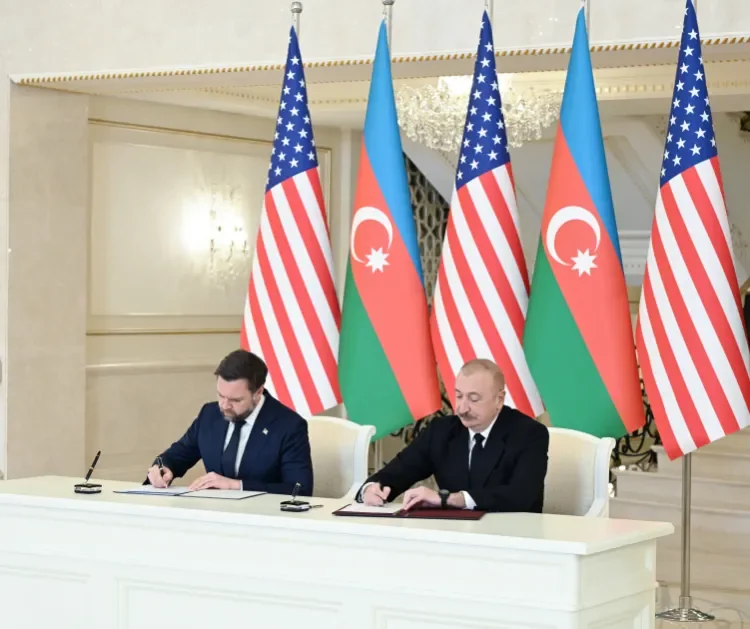
President Ilham Aliyev has conducted a state visit to Georgia today, marking a significant milestone in the bilateral relations between the two neighboring nations.
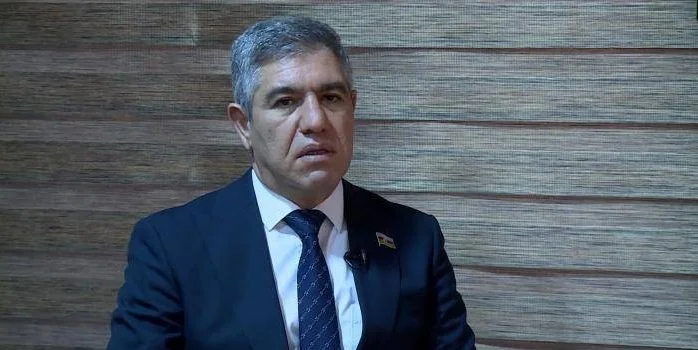
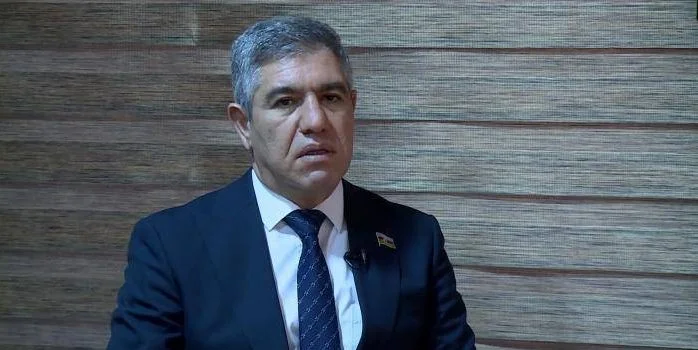
In a statement to the Operative Information Center-OMM, Vugar Bayramov, a member of the Milli Majlis (National Assembly), noted that the state visit of President Ilham Aliyev to Georgia and the high-level meetings held there have elevated the economic scale of the strategic partnership between the two countries to a new stage.
Commenting on the economic results of the visit and its significance for the region, MP Vugar Bayramov stated that the relations between Baku and Tbilisi are increasingly becoming a center for the implementation of global projects.

Positive balance of $544 million in trade turnover
The deputy noted that in 2025, the trade turnover between the countries increased by 9 percent compared to the previous year, reaching $881.4 million. Drawing attention to the structure of these figures, Bayramov emphasized Azerbaijan's advantage in foreign trade:
"Of the total turnover, $712.7 million accounts for exports from Azerbaijan to Georgia, while $168.7 million accounts for imports. This means that Azerbaijan maintains a positive balance of $544 million in mutual trade."
Transport hub and green energy exports
The MP stated that with the increasing attractiveness of the Middle Corridor, the strategic importance of both countries in international freight transport has risen. He identified the renewable energy sector as one of the primary targets for future cooperation.
According to him, the four-party agreement signed in Bucharest in 2022 has enabled Azerbaijan and Georgia to establish a "green energy" bridge to Europe:
"Eighty percent of the 3 gigawatts of wind and 1 gigawatt of solar energy to be produced annually after 2027 is intended specifically for export. This will reshape the energy map of the region."
Economic foundation for peace
Vugar Bayramov added that this deepening cooperation in various sectors of the economy is not only an indicator of prosperity but also one of the most important conditions for maintaining sustainable peace in the South Caucasus. Strategic economic ties further strengthen the security environment in the region.
Azerbaijan and Georgia have long maintained a strategic partnership characterized by large-scale regional projects, including the Baku-Tbilisi-Ceyhan (BTC) oil pipeline and the Baku-Tbilisi-Erzurum (BTE) gas pipeline. These initiatives have not only secured the energy independence of both nations but have also positioned the South Caucasus as a vital transit hub between Asia and Europe. The current focus on the Middle Corridor and renewable energy signifies a transition toward a more diversified and sustainable economic future for the region.