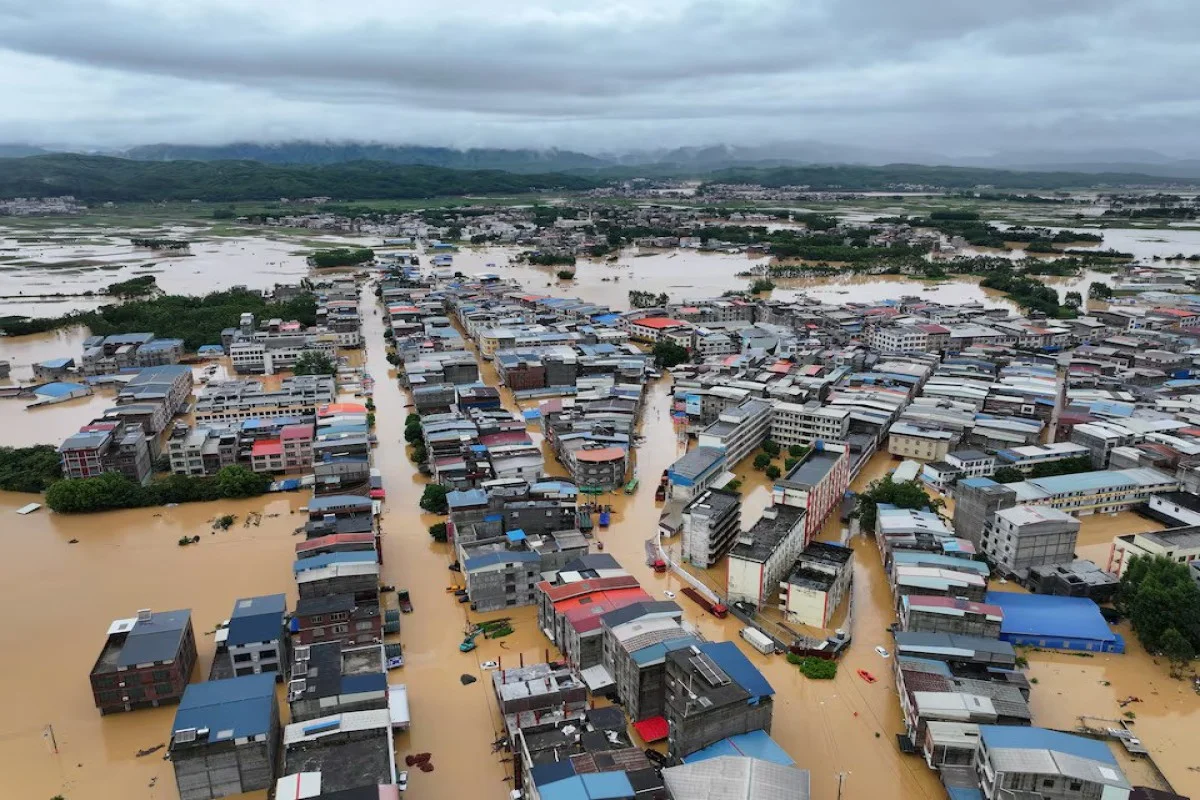
Typhoon Bavi has made landfall in China, prompting authorities to evacuate more than 1.8 million people to safer areas as a precautionary measure against severe weather conditions. The storm, which previously impacted the Sakishima Islands in southern Japan and passed near northern Taiwan, is currently moving toward the major city of Wenzhou.
Operative Information Center-OMM reports that while meteorologists indicate that Typhoon Bavi is gradually weakening and losing speed, it continues to pose a significant threat. The danger stems primarily from the massive volume of moisture and extensive rain bands associated with the storm; reports suggest that the typhoon's rain clouds cover an area roughly equivalent to the size of France.
Local authorities have issued urgent warnings to the population regarding the risks of potential flooding, landslides, and destructive winds. Typhoon Bavi is part of the active Pacific typhoon season, which frequently affects East Asia during the summer and autumn months. These storms are a recurring meteorological phenomenon in the region, often necessitating large-scale disaster preparedness and emergency response protocols to mitigate damage to infrastructure and protect public safety.