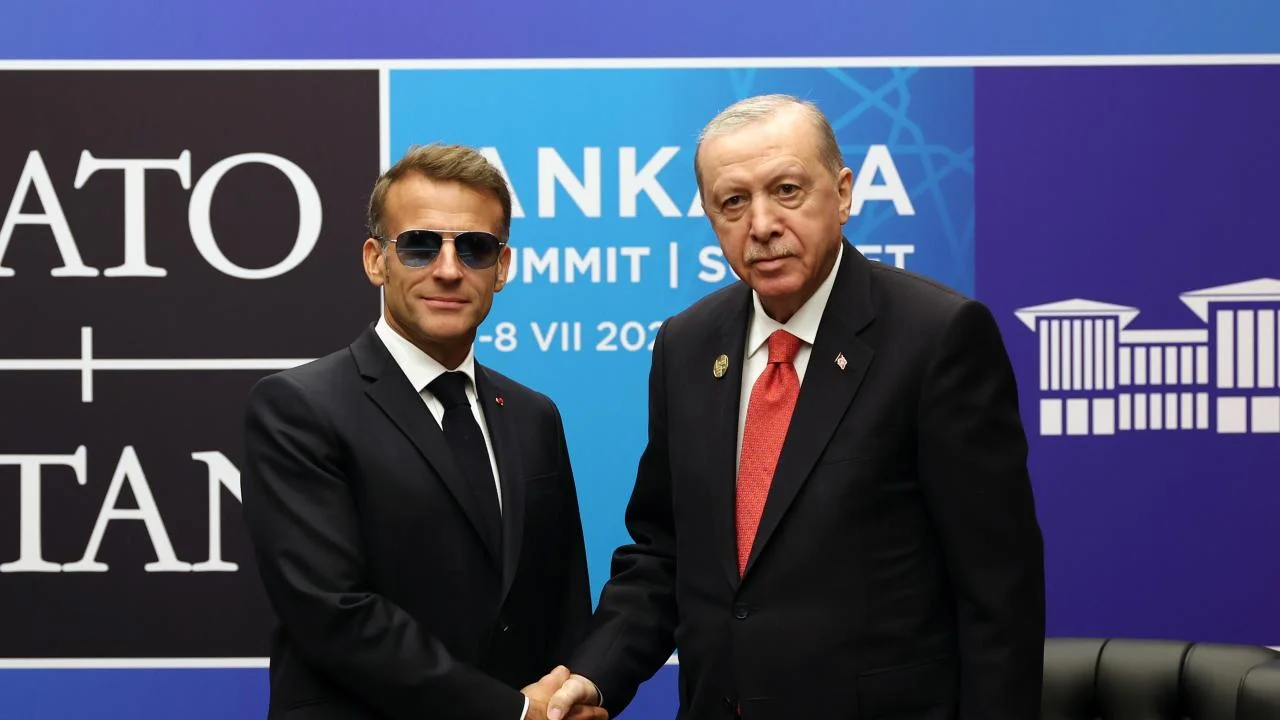
During the 36th NATO Summit of Heads of State and Government held in Ankara, a special panel was dedicated to the security of the Baltic region.
According to the Operative Information Center-OMM, the panel, jointly organized by the Presidential Administration's Directorate of Communications, the Munich Security Conference (MSC), and the Foundation for Political, Economic and Social Research (SETA), focused on the defense potential and current security risks facing the Baltic states.
The session, titled "Why Narva is not the next target: Analyzing assumptions about the vulnerability of the Baltic states," featured remarks from Latvian Foreign Minister Baiba Braze, Lithuania's Permanent Representative to NATO Darius Jauniskis, and Estonian Foreign Ministry Political Director Martin Roger.
Latvian Foreign Minister Baiba Braze stated that while Russia is not currently prepared for a direct confrontation with NATO, it continues to escalate tensions by creating various false dilemmas. She emphasized the necessity of strengthening cooperation in internal security, border protection, and intelligence, while maintaining the effectiveness of NATO's deterrence capabilities. The Minister also urged vigilance against disinformation campaigns aimed at weakening support for Ukraine.
Lithuania's Permanent Representative to NATO, Darius Jauniskis, argued that Belarus cannot be viewed independently from Russia. According to Jauniskis, Minsk is entirely dependent on Moscow for energy and financial resources, and provocative incidents at the border pose a serious risk to regional security.
Estonian Foreign Ministry Political Director Martin Roger highlighted the importance of cyber security, noting that efforts by state institutions in this area enhance societal resilience. He dismissed claims that the Estonian city of Narva would be Russia's next target, stressing that the deterrence system established by the country, in coordination with its allies, would prevent such an action.
The NATO Summit serves as a critical platform for member states to align their strategic priorities. The focus on the Baltic region underscores the alliance's commitment to collective defense and the implementation of the Article 5 principle, which dictates that an attack on one member is an attack on all, particularly in light of the evolving security landscape in Eastern Europe.