Technological changes occurring on a global scale are significantly impacting all areas of the education system, including arts education. Arts education, traditionally built on classical management principles, is being enriched with digital technologies and transformed into a more flexible, transparent, and result-oriented management model in Azerbaijan.
According to the Operative Information Center-OMM, citing Qafqazinfo, this transformation encompasses not only the teaching process but also fundamental areas such as management, assessment, communication, and resource planning. These reforms are closely linked to the priorities of the "Azerbaijan Culture – 2040" Concept, approved by a decree signed by President Ilham Aliyev on January 14, 2026. This concept identifies the application of modern technologies, the expansion of innovative approaches, and the acceleration of digitalization as primary goals alongside the preservation and development of national culture.
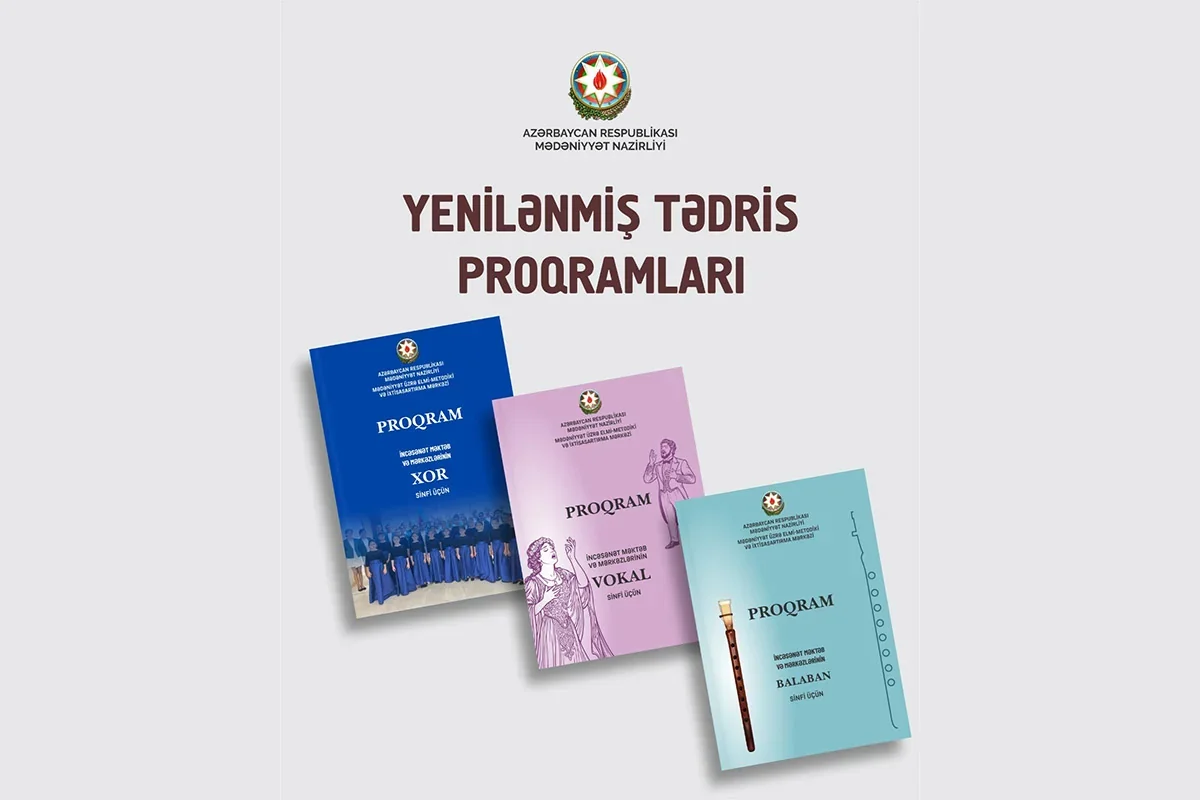
The digitalization initiatives implemented by the Ministry of Culture within the framework of the "e-Culture" digital development strategy play a vital role in modernizing management within arts education. The Ministry has prioritized increasing transparency and efficiency in educational institutions by expanding the application of innovative solutions. These projects, coordinated by the Ministry of Culture, serve the sustainable and systematic implementation of digital transformation in line with the objectives of the "Azerbaijan Culture – 2040" Concept. Historically, while classical management methods in art schools were effective for a certain period, they created challenges such as paper-based documentation, limited operational control, and weak parent-school communication. The new digital model addresses these gaps by encouraging data-driven decision-making and strengthening connections between all participants.
Currently, digital solutions in arts education are being implemented across several key areas. Electronic journals and diary systems, introduced in the pilot phase, ensure daily monitoring of the teaching process, allowing for the tracking of teacher activities and student achievements. Furthermore, the issuance of electronic certificates for graduates of the current academic year is planned to increase transparency and minimize human error. This digital shift also facilitates the assessment of teacher and student performance, allowing for the early identification of talent. Parents can now monitor their children's attendance and grades online, fostering a model based on mutual trust. These advancements represent a qualitative new stage for arts education in Azerbaijan, creating a sustainable and innovative system that aligns with the country's long-term cultural development strategy.