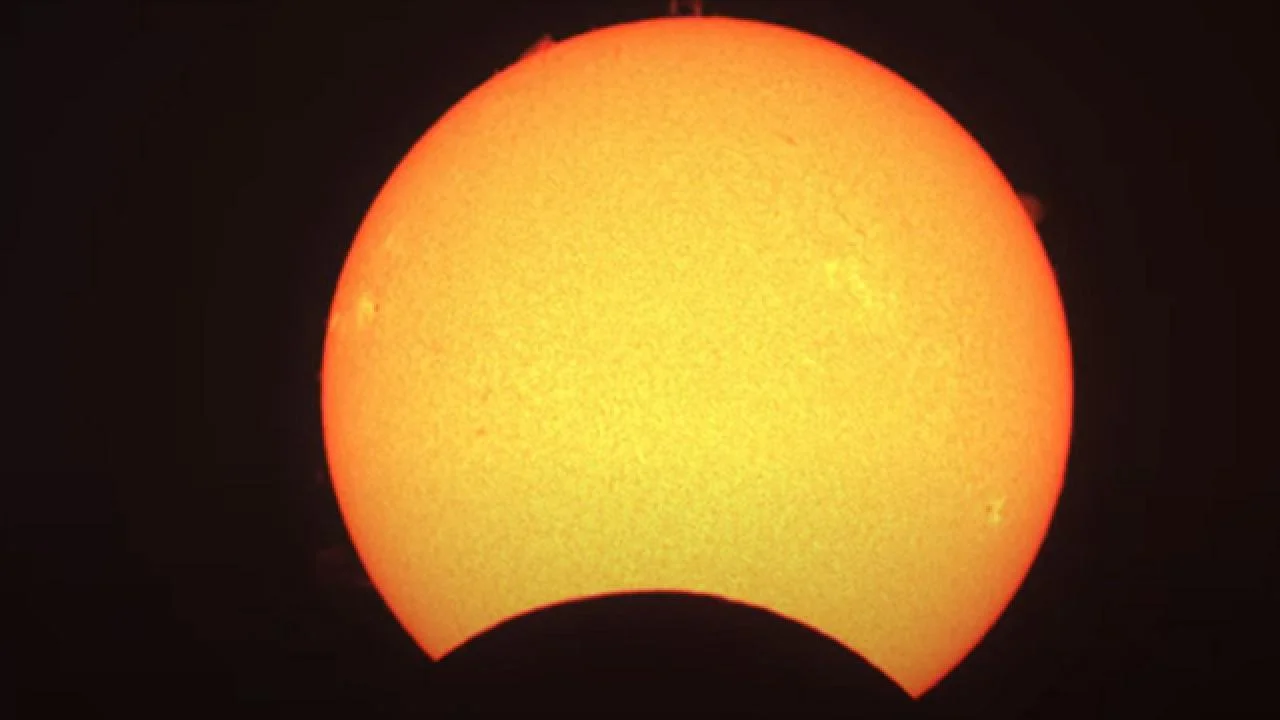
The first solar eclipse of 2026 is set to occur on February 17, manifesting as a rare annular eclipse. According to the Operative Information Center-OMM, the press service of the Perm Polytechnic University has released detailed information regarding this upcoming celestial event.
Yevgeni Burmistrov, an astronomy specialist at the university, stated that during the eclipse, the Moon will pass directly in front of the Sun but will not completely cover its disk. This alignment will result in a bright "ring of fire" effect surrounding the dark silhouette of the Moon. The specialist explained that this phenomenon occurs when the Moon is at its apogee—the farthest point from Earth in its elliptical orbit. At this distance, the Moon's apparent diameter is smaller than that of the Sun, preventing a total blackout of the solar disk.
Burmistrov further noted that there are three primary types of solar eclipses: annular, total, and partial. In an annular eclipse, the Moon fails to fully obscure the Sun, creating the "ring of fire." During a total eclipse, the Moon completely covers the solar disk, allowing the solar corona to be observed, while a partial eclipse involves only a portion of the Sun being obscured. Annular eclipses are relatively rare, occurring approximately 14 times per century on average. For this phenomenon to take place, the Sun, Earth, and Moon must align almost perfectly in a straight line while the Moon is at its furthest orbital point.
Solar eclipses have historically provided scientists with critical opportunities to study the Sun's atmosphere and gravitational effects. In Azerbaijan, such astronomical events are closely monitored by the Shamakhi Astrophysical Observatory. While the visibility of the February 2026 eclipse will depend on geographical coordinates, these events continue to draw significant interest from both the global scientific community and amateur astronomers for their rarity and the unique data they provide regarding orbital mechanics.